Take your garden to new heights with vining plants that add quick color to fence lines.
With their strong lines and solid structure, fences are just begging to be planted with vines and other climbing plants. Climbers add dimension and vertical movement to the garden, breaking up the monotony of fence lines. Different styles of fence lend themselves to certain types of climbers. White picket fences call for a delicate touch, allowing the visual appeal of the fence itself to shine through the planting, while chain-link fences typically warrant heavy coverage. The following list includes fast-growing climbing plants for a range of fence styles and design goals. Many climbing plants can be overly aggressive or invasive. The vines featured here are tame enough to grow
on a fence, but some are more vigorous than others.
Coral Honeysuckle
:max_bytes(150000):strip_icc():format(webp)/GettyImages-1446537105-2666bd0f8b7b4186889e03d46e8f998d.jpg "10 Climbing Plants That Will Cover Fences In A Flash 2")
- Botanical Name: Lonicera sempervirens
- Sun Exposure: Full sun
- Soil Type: Average, well-draining
- Soil pH: Acidic to slightly alkaline (5.5-8.0)
- USDA Plant Hardiness Zone: 4-9
This stunning native vine produces clusters of trumpet-shaped coral red blooms that hummingbirds can’t resist. Flowers nearly cover the plant in spring, followed by sporadic blooms throughout the season. This twining vine is perfect for fencerows, with its waxy blue-green foliage remaining evergreen in the deep South and semi-evergreen to deciduous in cooler climates. Small red berries late in the season attract fruit-feeding birds to the garden.
_____________________________________________________________________________
Read Also : A Soil-Science Revolution Upends Plans to Fight Climate Change
______________________________________________________________________________
Leatherflower
:max_bytes(150000):strip_icc():format(webp)/GettyImages-2152647428-fb8dafda034e486399a49ddb24c0dea1.jpg "10 Climbing Plants That Will Cover Fences In A Flash 3")
- Botanical Name: Clematis viorna
- Sun Exposure: Partial shade, dappled sunlight
- Soil Type: Any moist, well-draining
- Soil pH: Mildly acidic to slightly alkaline (6.0-8.0)
- USDA Plant Hardiness Zone: 4 to 9
The southeast is home to many native clematis species, close relatives of the showy hybrids. Named for its thick, fleshy petals, leatherflower is a particularly lovely native clematis. Plants bloom over a long season, producing bell-shaped purplish pink flowers from late spring through fall that support a diversity of wildlife including hummingbirds, bees, and butterflies. Also watch for birds feeding on the seeds.
Clematis
:max_bytes(150000):strip_icc():format(webp)/GettyImages-1314385860-4d1580ef9a254b1bb009199f8141452d.jpg "10 Climbing Plants That Will Cover Fences In A Flash 4")
- Botanical Name: Clematis hybrids
- Sun Exposure: Full sun, partial shade
- Soil Type: Moist, well-draining
- Soil pH: Neutral to slightly alkaline (6.5-7.5)
- USDA Plant Hardiness Zone: 4 to 9
Large-flowered clematis hybrids are fast-growing vines that include hundreds of varieties blooming in shades of blue, purple, pink, burgundy, and white. Clematis climbs by wrapping its short leaf stems around support structures and may initially require a string or wire to climb. Although plants bloom best when the foliage receives ample sun, they prefer to have their roots shaded. To achieve this balance, plant clematis between a fence and other plant materials to shade the base of the vine.
Climbing Rose
:max_bytes(150000):strip_icc():format(webp)/2323901_drape04_bg_1-2000-9904b3b45698408e9fafed7551207576-86ff20e5039d47e595f25cf7724707e8.jpg "10 Climbing Plants That Will Cover Fences In A Flash 5")
- Botanical Name: Rosa hybrids
- Sun Exposure: Full sun
- Soil Type: Moist, well-draining, rich
- Soil pH: Slightly acidic to neutral (6.0-7.0)
- USDA Plant Hardiness Zone: 5 to 9
A great diversity of climbing roses is available with varieties to suit any garden style. Some bloom once per year, while others flower continuously with deadheading. Climbing roses are not true vines. They don’t climb in the traditional sense but produce very long canes or stems that are commonly trained to a fence or other structure. Secure new growth to the fence with ties, then enjoy the fragrant blooms.
_______________________________________________________________________
Read Also : Green Energy – The Way Forward!
________________________________________________________________________
Passionflower
:max_bytes(150000):strip_icc():format(webp)/passion-vine-002-copy_phixr-5e20c8ea751445828be64564737df682.jpg "10 Climbing Plants That Will Cover Fences In A Flash 6")
- Botanical Name: Passiflora spp.
- Sun Exposure: Full sun to part shade
- Soil Type: Dry to moist, well-draining, average
- Soil pH: Mildly acidic to neutral (6.0–7.5)
- USDA Plant Hardiness Zone: 5 to 10
The tropical-looking flowers of passionflower make this aggressive grower well worth the effort to manage its suckering sprawl. Blooming over a long season, the fragrant, frilly blooms draw Gulf Fritillary and other butterfly species to the garden. Plants are host to fritillary caterpillars, making this vine a popular choice among butterfly gardeners. The edible fruits have the distinct flavor of Hawaiian Punch fruit juice .
Crossvine
:max_bytes(150000):strip_icc():format(webp)/2415402_5clim_3-1-68aa76cd03a04ca09a429c7f2d33967f.jpg "10 Climbing Plants That Will Cover Fences In A Flash 7")
- Botanical Name: Bignonia capreolata
- Sun Exposure: Full sun to part shade
- Soil Type: Medium, well-draining, average
- Soil pH: Neutral (6.8-7.2)
- USDA Plant Hardiness Zone: 5 to 9
Crossvine is a vigorous grower, making an excellent selection for covering large, unsightly fences. Allow plenty of room for this native to spread as its vines can reach lengths of 20 to 30 feet. Plants bloom early in the season, from March through May depending on location, producing an abundance of two-inch, trumpet shaped flowers with dark orange petals and a yellow throat. Flowers hang in clusters of two to five blooms and provide an early nectar source for hummingbirds and butterflies. In mild climates, the glossy green foliage remains evergreen. In cooler regions it takes on reddish-purple autumn hues before falling.
Spurred Butterfly Pea
:max_bytes(150000):strip_icc():format(webp)/GettyImages-2188848897-3bec716654294f9fb2b4564ea88e9dbe.jpg "10 Climbing Plants That Will Cover Fences In A Flash 8")
- Botanical Name: Centrosema virginianum
- Sun Exposure: Full sun to part shade
- Soil Type: Dry to medium, well-draining, average
- Soil pH: Mildly acidic to slightly alkaline (5.3–8.0)
- USDA Plant Hardiness Zone: 5 to 9
This southeastern native vine is surprisingly underutilized given its dainty-looking foliage and unique lavender blooms. This drought tolerant vine grows naturally on dry, sandy soils in pine forest openings and coastal uplands. The large petals provide a landing platform for bees, which are the plant’s primary pollinator. This compact vine fits well into even the smallest gardens.
Star Jasmine
:max_bytes(150000):strip_icc():format(webp)/GettyImages-675035710-2000-629859eed55841b2a703d8983325df65.jpg "10 Climbing Plants That Will Cover Fences In A Flash 9")
- Botanical Name: Trachelospermum jasminoides
- Sun Exposure: Full sun to part shade
- Soil Type: Moist, well-drained
- Soil pH: Acidic to neutral (6.0 to 7.0)
- USDA Plant Hardiness Zone: 8 to 10
With richly fragrant flowers and evergreen foliage, this vigorous grower is a favorite fence covering for the Deep South. White, star-shaped blooms open late spring to early summer, perfuming the entire garden. Star jasmine is moderately salt tolerant but not cold hardy. Plants are used to create privacy screens in coastal gardens and frost-free areas of the South. Look for varieties with improved cold tolerance.
Carolina Jessamine
:max_bytes(150000):strip_icc():format(webp)/yellow-flowers-on-vine---carolina-jessamine---jasmine---jasminum-1130609793-788287b93b71452eb1d2241ebe74110a.jpg "10 Climbing Plants That Will Cover Fences In A Flash 10")
- Botanical Name: Gelsemium sempervirens
- Sun Exposure: Full sun to partial shade
- Soil Type: Moist, well-drained, rich
- Soil pH: Acidic to neutral (6.0 to 7.5)
- USDA Plant Hardiness Zone: 6 to 10
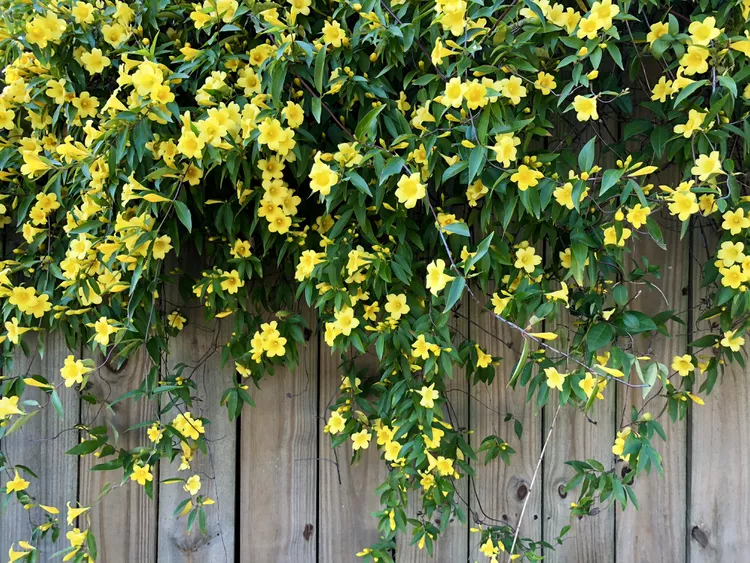
The golden bell-shaped blooms of Carolina jessamine are a welcome sight in early spring, marking the end of winter and the onset of spring bulbs and ephemerals. The showy, fragrant blooms provide an important early source of nectar for hummingbirds, butterflies, and other pollinators. The evergreen to semi-evergreen foliage provides shelter to wintering birds. Carolina jessamine is fast-growing and resistant to deer browsing.
Black-eyed Susan Vine
:max_bytes(150000):strip_icc():format(webp)/blooming-black-eyed-susan-vine-586078699-7aabc7d9618042e6a0cf936244202af9.jpg "10 Climbing Plants That Will Cover Fences In A Flash 11")
- Botanical Name: Thunbergia alata
- Sun Exposure: Full sun to part shade
- Soil Type: Moist, well-drained
- Soil pH: Mildly acidic to neutral (6.6 to 7.7)
- USDA Plant Hardiness Zone: 10 to 11
The cheerful golden yellow to orange flowers of black-eyed Susan vine have a dark eye like their namesake but are unrelated to the common garden perennial. This African vine is commonly grown as an annual from seed and quickly reaches 3 to 6 feet tall and wide. Vines flower spring through fall for months of color and enjoyment. Plants seed readily in the garden and can become weedy in frost-free areas where seeds survive the winter.
NOTE – This article was originally published in southernliving and can be viewed here