Arugula is somewhat the underdog of the cruciferous family. No one knows its potential until they try it out. Its health benefits may include weight loss, reduced risk of cancer, healthy bones, and improved eyesight. This plant has antioxidant properties and is also good for the skin. It also helps in boosting the brain, improving metabolic functions, mineral absorption, and boosting the immune system.
What is Arugula?
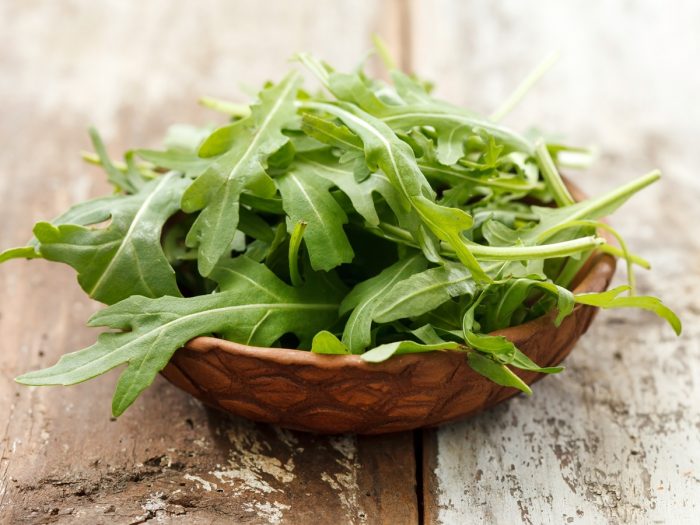
Arugula is a leafy green plant that is popularly used in salads. Arugula has several names, depending upon where in the world you are located. These various names include salad rocket, garden rocket, rucola, roquette, and colewort. It belongs to the genus Eruca and the family Brassicaceae. It is closely related to radish, kale, and cauliflower, and has a slightly peppery, spicy taste.
_______________________________________________________________________
Read Also : What is Plasma Gasification – And It’s Significance
________________________________________________________________________
Arugula grows to a height of 20-100 centimeters and is recognizable by its small, white flowers. The leaves of arugula are lobed, with 4-10 lateral lobes and a longer terminal lobe. It is grown on a large scale for commercial consumption, but it also exists as a wild species throughout the world. It is predominantly used in the Americas, Europe, and North Africa.
To a novice eye, arugula might just look like fancy lettuce, but wait till you discover this green veggie.
| Serving Size : | |
|---|---|
| Nutrient | Value |
| Water [g] | 91.71 |
| Energy | 25 |
| Energy [kJ] | 105 |
| Protein [g] | 2.58 |
| Total lipid (fat) [g] | 0.66 |
| Ash [g] | 1.4 |
| Carbohydrate, by difference [g] | 3.65 |
| Fiber, total dietary [g] | 1.6 |
| Sugars, total including NLEA [g] | 2.05 |
| Calcium, Ca [mg] | 160 |
| Iron, Fe [mg] | 1.46 |
| Magnesium, Mg [mg] | 47 |
| Phosphorus, P [mg] | 52 |
| Potassium, K [mg] | 369 |
| Sodium, Na [mg] | 27 |
| Zinc, Zn [mg] | 0.47 |
| Copper, Cu [mg] | 0.08 |
| Manganese, Mn [mg] | 0.32 |
| Selenium, Se [µg] | 0.3 |
| Vitamin C, total ascorbic acid [mg] | 15 |
| Thiamin [mg] | 0.04 |
| Riboflavin [mg] | 0.09 |
| Niacin [mg] | 0.31 |
| Pantothenic acid [mg] | 0.44 |
| Vitamin B-6 [mg] | 0.07 |
| Folate, total [µg] | 97 |
| Folate, food [µg] | 97 |
| Folate, DFE [µg] | 97 |
| Choline, total [mg] | 15.3 |
| Betaine [mg] | 0.1 |
| Vitamin A, RAE [µg] | 119 |
| Carotene, beta [µg] | 1424 |
| Vitamin A, IU [IU] | 2373 |
| Lutein + zeaxanthin [µg] | 3555 |
| Vitamin E (alpha-tocopherol) [mg] | 0.43 |
| Vitamin K (phylloquinone) [µg] | 108.6 |
| Fatty acids, total saturated [g] | 0.09 |
| 12:0 [g] | 0 |
| 16:0 [g] | 0.07 |
| 18:0 [g] | 0 |
| Fatty acids, total monounsaturated [g] | 0.05 |
| 16:1 [g] | 0 |
| 18:1 [g] | 0.05 |
| Fatty acids, total polyunsaturated [g] | 0.32 |
| 18:2 [g] | 0.13 |
| 18:3 [g] | 0.17 |
| 20:4 [g] | 0 |
| Sources include : USDA [1] | |
Arugula Nutrition Facts
According to the USDA National Nutrient Database, arugula is a leafy green plant which is known to be packed with vitamins, minerals, and antioxidants. Amongst minerals, it provides calcium, potassium, phosphorus, magnesium, and sodium. It has high levels of vitamin C, and folic acid, fat-soluble vitamins A, E and K (but not D), and small amounts of other B vitamins. [2]
It is packed with antioxidants, phytochemicals, and carotenoids. As compared to other leafy greens, arugula is low in oxalates, which are chemicals that inhibit the absorption of minerals into the body. All in all, arugula is a low-calorie, nutrient-rich food.
_______________________________________________________________________
Read Also : Agave Power: How a Revolutionary Agroforestry and Grazing System in Mexico Can Help Reverse…
________________________________________________________________________
Health Benefits of Arugula
The vitamins, minerals, phytochemicals, and antioxidants packed in every leaf of arugula are certainly beneficial to those who incorporate it into their diet.
Possibly Rich in Antioxidants
Arugula is known to be a great source of antioxidants and can greatly increase a person’s ORAC value (oxygen radical absorbance capacity), a method for measuring possible antioxidant capacities. Antioxidants function to maintain a healthy balance of enzyme reactions within cells, while actively seeking out and destroying the disease-causing free radicals that can attack your system. This helps raise immunity levels in the body.
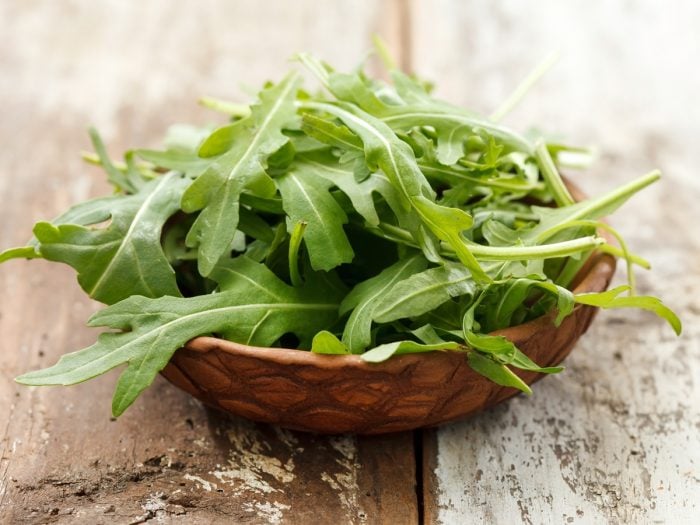
Add arugula leaves to your pasta to make it healthier. Photo Credit: Shutterstock
May Boost Bone Health
Arugula is rich in vitamin K, which is beneficial to bones. A 2003 study published in the American Journal of Clinical Nutrition [3] reinforces that vitamin K plays a critical role in promoting bone health and bone formation. It may increase in the intake of vitamin K can help to slow the gradual degradation of neural pathways owing to age.
Arugula’s combinative effects of low oxalate levels (allowing more minerals into the system) and the presence of so many minerals in the plant itself make it a strong support system for healthy bones. People with osteoporosis can see improvements, and arugula can be used as a preventative step as well, ensuring bone health and strength before age/activity-based effects of bone degeneration become serious.
May Help Improve Immune System
Arugula is possibly loaded with vitamins and minerals that in some way bolster the defenses of the body’s immune system. The body is stimulated to create white blood cells from the copper in these salad leaves, and the plant has several other ways to improve the strength of your immune system.
Vitamin C is one of the best defenses for your body to seek out dangerous, inflammatory free radicals and eliminate them from your body before they can cause real damage. This well-known vitamin is found in large quantities in arugula and helps maintain good health by giving an extra boost to your immune system.
May Have Anticancer Properties
The European Journal of Nutrition [4] has published a study that has found that certain phytochemicals, found in arugula, may inhibit the activity of cancer-causing cells. Phytochemicals are substances like thiocyanates, sulforaphane, or indoles that are effective in countering cancer-causing tendencies in the body’s processes. A study in the PLOS One Journal suggests that these compounds help fight prostate, breast, cervical, colon, and ovarian cancers. However, the mechanism of action is not well-understood, so further ongoing research is needed. [5] [6] [7]
Can Act as Prenatal Care
For expectant mothers, arugula is a wonderful choice to add to their diet. Folates, a classification that includes folic acid, have been shown to decrease occurrences of certain mental defects in newborns. It is rich in folates, as are many leafy vegetables. [8]
_______________________________________________________________________
READ ALSO : DECODING SUSTAINABLE FASHION: SHIFT TO SLOW DESIGN MODELS, CHANGE IN CONSUMER MINDSET IMPERATIVE, SAY…
________________________________________________________________________
Possibly Increases Metabolism
Another benefit of arugula is the presence of small amounts of B-Complex vitamins that assisting in promoting metabolism. Eight B-vitamins participate and aid in all different cell activities, including energy production, fat synthesis, the production of red blood cells, and many other vital processes for cell and metabolic health.
May Improve Eyesight
Dr. Elizabeth J. Johnson, in her study on the role of carotenoids, states that they help improve eye health when consumed in natural form (not supplemental). Arugula is a well-known source of carotenoids, which are naturally occurring pigments that have long been famous for improving a person’s ability to see properly. Carotenoids slow down the process of macular degeneration, which is when the center of a person’s field of vision becomes compromised. By increasing the number of carotenoids in your diet, you may be able to slow down this symptom of old age. [9]
May Increase Mineral Absorption
Arugula is known to have a very low level of oxalates as compared to other popular leafy vegetables like spinach. Oxalates inhibit the absorption of minerals by the body’s systems, which is counterproductive to consuming minerals in the same bite. So minerals, like copper and iron, which you get from the plant, are more easily absorbed by the body for efficient use. [10]
May Aid in Weight Loss
The inclusion of arugula in a diet is the same as any other low-calorie, vitamin or nutrient-rich plant; and it will inevitably have a positive effect on attempts at weight loss. By satisfying so many nutritional needs with calorie-density food, it is an easy way to watch your health and keep your system balanced, without making drastic changes to your diet.
May Treat Erectile Dysfunction
Arugula has long been used as a medicine for enhancing sexual desires in men.
Sildenafil is a vasodilator that can help treat erectile dysfunction (ED) and high blood pressure. It is commonly sold in the form of prescription medicines like Viagra and Revatio.
Research published in the Neuroendocrinology Letters journal suggests that arugula, when taken in combination with Sildenafil, can improve the effectiveness of the drug on people with ED. [11]
May Improve Overall Health
Vitamin A has a significant presence in arugula, which means the ‘garden rocket’ eaters should have an improved condition of their bones, teeth, and eyes. The flavonoid compounds in all leafy vegetables similar to arugula have been shown to protect against carcinogens of the skin, lungs, and other organs.
Arugula Recipes
There are many ways in which arugula can be incorporated into your daily diet. Let us look at some quick and easy recipes.
The first recipe on the menu is simply a bowl full of all the greens that your mom would make you eat. This one is tasty though.
NOTE – This article was originally published in organicfacts and can be viewed here
Tags: #Arugula, #copper, #energy, #ErucaSativa, #fiber, #fitness, #gardenrocket, #getgreengetgrowing, #gngagritech, #health, #immune system, #potassium, #saladrocket, #vitamine, greenstories