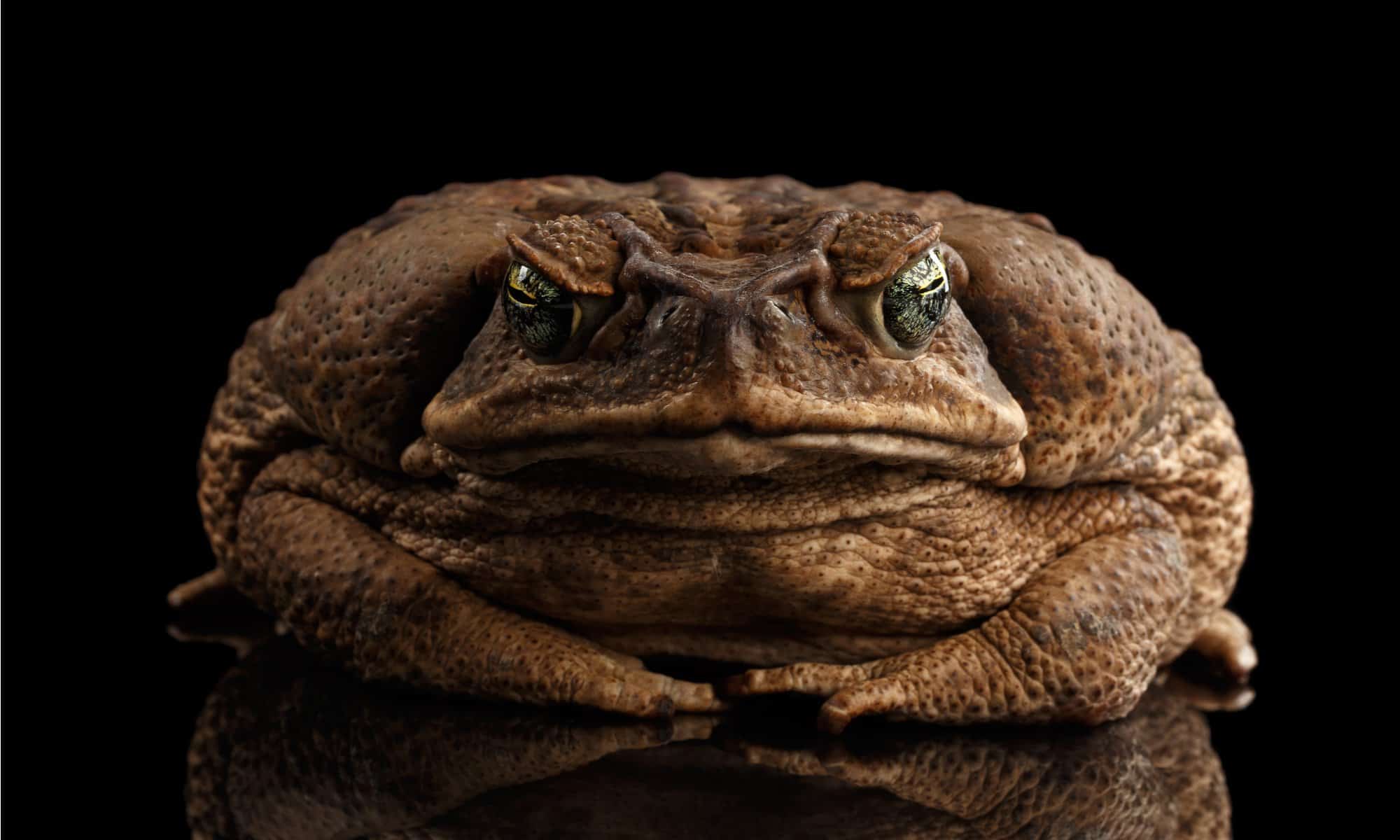
Quick Take
- Cane toads were introduced to Australia in 1935 to control sugarcane beetles, but the toads ignore the beetles while decimating the ecosystem they were meant to protect.
- Instead, they became a highly toxic invasive species with no natural predators.
- Cane toads threaten many native reptiles, mammals, birds, and amphibians.
- Despite decades of effort, large-scale control of cane toads remains nearly impossible.
In 1935, native beetles were wreaking havoc on Australia’s sugar cane crops in Queensland. The beetle larvae lived in the soil and chewed on sugarcane roots, stunting growth or killing the plants. Seeking a natural solution to kill the grubs, the Australian government imported cane toads from Hawaii, with the hope that the toads would eat the grubs and save the sugarcane. Unfortunately, the worst-case scenario occurred. The toads did not keep the beetle populations in check. Instead, they became one of Australia’s most destructive invasive species and an ecological disaster.
The History of Australia’s Disastrous Cane Toad Introduction
Sugarcane had become a key crop in Queensland in the late 1800s. Settlers found that Queensland’s humid and warm climate was ideal for growing the plant. However, farmers faced a battle with the grubs of native beetles, especially the greyback cane beetle (Dermolepida albohirtum), as the larvae were eating the roots of the sugarcane and decimating crops. To help the farmers, the government established the Queensland Bureau of Sugar Experiment Stations (BSES) in 1900.

©Fyletto/iStock via Getty Images
Entomologists working for the BSES studied multiple methods for controlling the beetles, finally settling on a relatively new science: biological control. At the time, entomologists were experimenting with the new idea of bringing in natural predators to control pests. Thus entered the cane toad.
________________________________________________________________________
Cane Toads to the Rescue
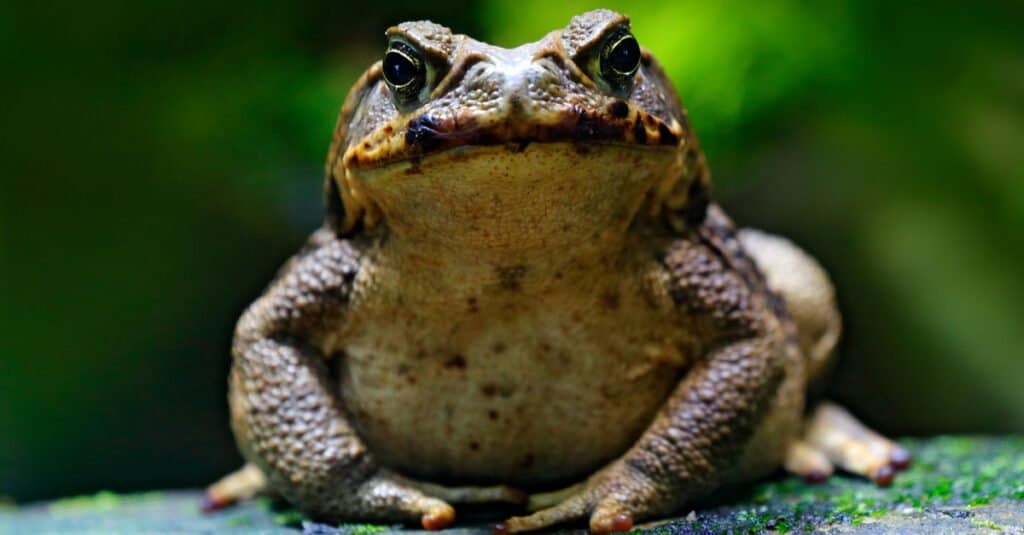
Cane toads (Rhinella marina) are the largest toads in the world. They are opportunistic predators and eat a diet of insects, small animals, plants, and even pet food and garbage. Cane toads grow up to 10 inches long and weigh up to 4 pounds. These massive toads are also highly poisonous, even as eggs and tadpoles. The toads secrete a toxic substance called bufotoxin, which can kill animals that try to eat them and can irritate the skin or burn the eyes of humans who handle them.
As you can imagine, introducing cane toads to Queensland brought more problems than they solved. Cane toads are native to Central and South America. However, in the 1920s and 30s, they were introduced around the world to control pests. Today, they are considered invasive species in Australia, the Caribbean islands, Hawaii, and Florida.
©Ondrej Prosicky/Shutterstock.com
In August 1935, the BSES released 2,400 cane toads into sugarcane plantations in Gordonvale, North Queensland. This wasn’t a well-thought-out plan. According to the National Museum Australia, “Remarkably, no studies of the potential impact on the environment had been carried out. Nor had the Bureau of Sugar Experiment Stations even determined whether the toad would actually eat the cane beetles.”
The cane toads thrived in the warm environment. However, they did nothing to control the beetles. Today, beetle grubs are controlled on sugarcane farms with the use of soil-based insecticides.
What Species Are Most Affected by Cane Toads?
By 1950, the Australian government declared the cane toad an invasive predator. Dangers from the toads include poisoning animals that prey on them, outcompeting native species for resources, and their voracious appetites.
According to the Queensland Government, 75 species of Australian crocodiles, lizards, and freshwater turtles are threatened by the toads. Some of the animals that are in danger of dying after they eat a cane toad include Australian monitor lizards, quolls, tiger snakes, and freshwater crocodiles. Many of these animals are designated as threatened species.

©Jess Latimer/Shutterstock.com
A research study showed that native tadpoles suffered mass mortality shortly after the toads were introduced to Queensland. The study found 1,300 tadpoles from 10 different species had died in one season. Birds are also affected by the toads. For example, cane toads eat the eggs and nestlings of the rainbow bee-eater bird. Research has shown that cane toads have caused a third of the bee-eaters’ nests to fail.
Finally, cane toads have an indirect effect on native species by changing the ecosystem when they arrive in an area. The toads have large appetites and eat many insects. Eventually, the invertebrate population begins to dwindle, which reduces the amount of resources for other species. These cascading changes can have broad implications for complex food webs.
Why Cane Toads Are So Difficult to Control
By 2010, the Australian government announced, “There is unlikely to ever be a broadscale method available to control cane toads across Australia.” What was introduced as a benefit to sugarcane farmers has become a plague that is rapidly spreading across the continent. Scientists estimate the range of cane toads expands at a rate of 25 to nearly 40 miles per year.

©Victor Photo Stock/Shutterstock.com
Cane toads have no natural predators or diseases that threaten them in Australia. In Central and South America, they are kept in check by natural predators that evolved along with them. For example, many South American snakes are either immune or have some level of immunity to the bufotoxin of the cane toad.
Also, cane toads are opportunistic feeders and will eat just about anything, even pet food and people’s trash. They breed opportunistically, usually during warm and wet conditions, and can reproduce multiple times a year. Females lay 8,000 to 30,000 eggs at a time. To understand how cane toad populations can explode, consider that most native Australian frogs lay around 1,000 to 2,000 eggs in an entire year.
Efforts to Control the Cane Toad Continue
Experts offer ways to control cane toads if they are found in a small area or a small pond. They suggest collecting and disposing of cane toad eggs from the water or humanely disposing of the adult toads. Community groups offer information on how to recognize adult cane toads and humanely remove them from the environment. However, these control measures are only feasible for small areas and cannot be applied to large populations of cane toads.
©Miroslav Srb/Shutterstock.com
Despite the challenges, researchers are looking for novel ways to control the toads. Scientists found they can edit a cane toad egg’s DNA to stop it from growing beyond a tadpole. If scientists can find a way to gene-edit large numbers of eggs, they may have found a solution to control the cane toad population’s growth.
In another study, scientists had success in conditioning taste aversion (CTA) in freshwater crocodiles. Some populations of crocodiles in Australia have declined by more than 70% due to poisoning from ingesting cane toads. In the study, researchers placed cane toad carcasses with the toxin removed, but a nausea-inducing chemical was added. While crocodiles at control sites continued to eat and become sick from poisoned cane toads, those at the treatment sites stopped trying to eat cane toads.
Another project that began as a citizen science initiative involves a tadpole trap design that can catch thousands of tadpoles. And in an effort to protect the Pilbara from the hopping invaders, scientists are looking into ways to prevent the toads from accessing water. Cane toads cannot survive more than a few days without access to water.
NOTE – This article was originally published in A-Z Animals and can be viewed here