One “mummy” fossil preserved skin and its last meal.

Over the past decade, paleontology has entered a new era of rapid discovery and scientific transformation. Breakthrough fossils unearthed across Asia, South America, North America, and Europe have dramatically expanded our understanding of dinosaur evolution, biology, and behavior.
These finds—remarkable for their preservation, size, or scientific implications—showcase how much remains to be uncovered about life in the Mesozoic. The following seven discoveries, made between 2015 and 2025, stand out for the way they challenge existing theories and open new lines of inquiry into the age of dinosaurs.

1. The Bat-winged dinosaur from China (2015)
Researchers in Hebei Province, China, found the remains of Yi qi, a small theropod dinosaur. Regarded as one of its kind, the remains of the creature consisted of membranous, bat-like wings supported by an elongated rod of bone extending from its wrist.
This design is entirely different from feather-based wings seen in birds and many other dinosaur species. The extraordinary anatomy suggests that dinosaurs experimented with multiple forms of aerial locomotion.
Rather than representing a direct ancestor of modern birds, Yi qi appears to be the result of a separate evolutionary pathway, one that may have been short-lived. However, it highlights the diversity of flight-related adaptations during the Jurassic.
2. Ubirajara jubatus (2020)
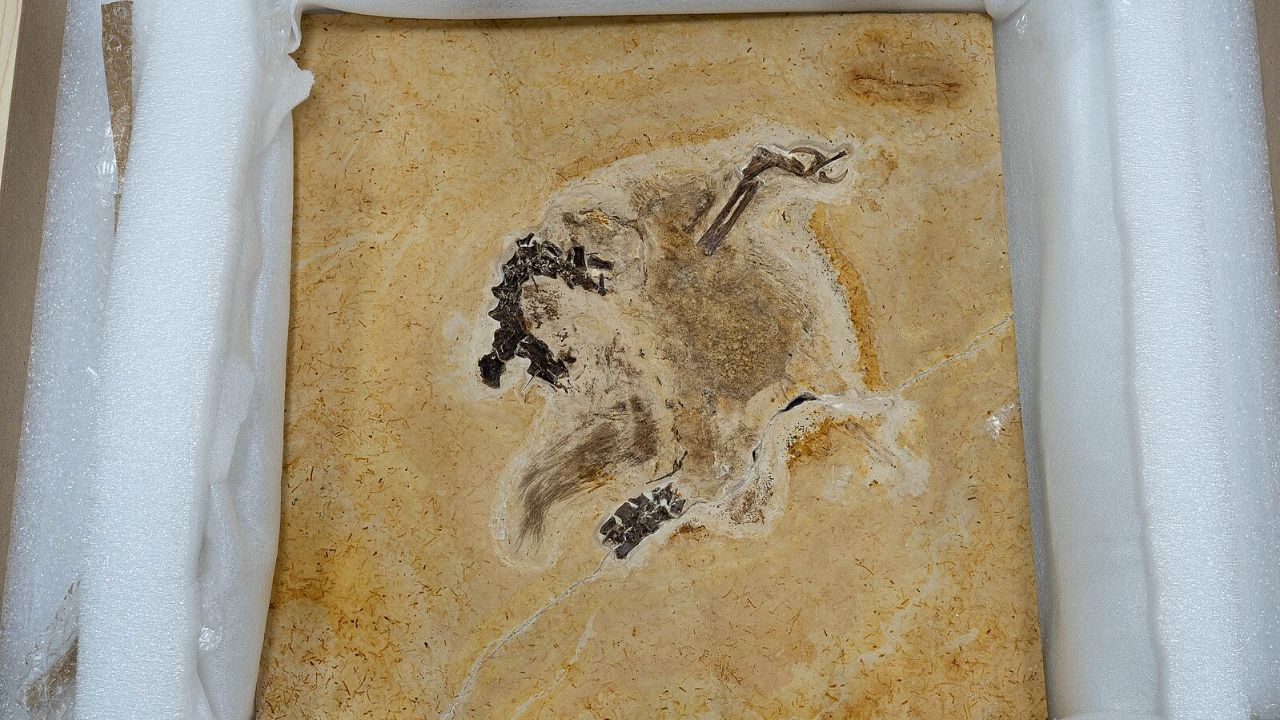
Paleontologists have described Ubirajara jubatus, a small feathered dinosaur from Cretaceous deposits in Brazil.
The Ubirajara’s ornate, ribbon-like display feathers projecting from its shoulders and a distinctive mane-like covering along its back – the first such structures found in a non-avian dinosaur from South America.
The discovery also sparked international debate regarding fossil ownership, underscoring the broader ethical and cultural questions intertwined with modern paleontology.
3. Patagotitan mayorum (2017)
Two years later, in Patagonia, paleontologists uncovered the remains of Patagotitan mayorum, a massive titanosaur that quickly became a contender for the title of the largest land animal ever discovered. Estimated to exceed 120 feet in length and weigh around 69 tons, this colossal saurpod offered new insight into the size limits of terrestrial vertebrates.
The exceptional completeness of the fossilized skeletal remains enabled scientists to reconstruct better how titanosaurs supported their immense bulk and how these giants evolved in South America. This discovery has served as a cornerstone of understanding sauropod diversity, growth, and biomechanics.
4. Soft-shelled dinosaur eggs (2020)
In 2020, two research teams revealed evidence that some of the earliest dinosaur eggs – specifically those associated with Protoceratops in Mongolia and Mussaurus in Argentina – were soft-shelled rather than hard and calcified.
This discovery busted the long-held assumption that dinosaurs laid hard-shelled eggs similar to modern birds. The finding explains why early dinosaur eggs are exceedingly rare in the fossil record.
More importantly, the research suggests that hard-shelled eggs evolved independently multiple times within dinosaur lineages, reshaping the understanding of reproductive strategies and the evolutionary origins of birdlike reproduction.
5. Ceratosuchops and Riparovenator (2021)
In 2021, paleontologists identified two new spinosaurid species – Ceratosuchops inferodios and Riparovenator minerae – from sediments on the Isle of Wight in the United Kingdom.
These semi-aquatic predators, adapted for hunting fish, expanded the known diversity of spinosaurs in Early Cretaceous Europe. Their discovery challenged the assumption that spinosaurs originated primarily in Africa, suggesting that the group may have evolved first in Europe before dispersing to other continents.
Both species revealed unique anatomical traits suited to life along waterways, highlighting the ecological variety within this enigmatic family of predators.
6. Borealopelta markmitchelli (2017)
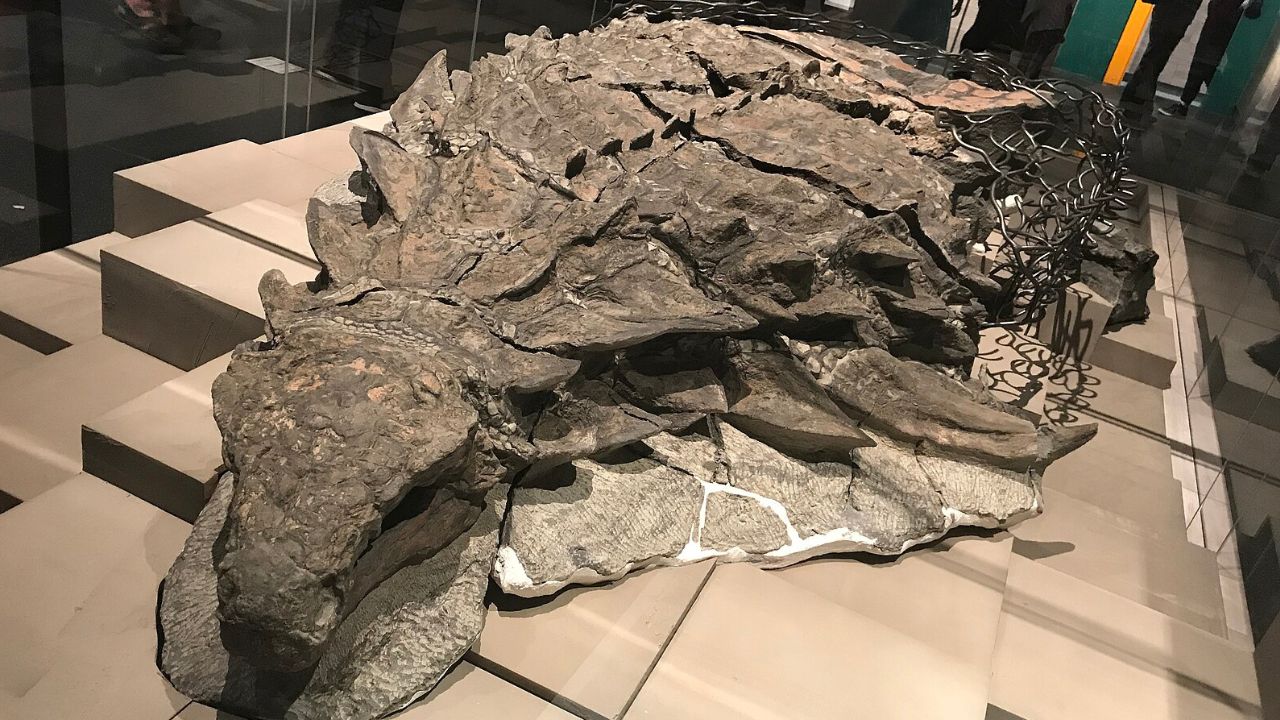
Workers in northern Alberta uncovered the preserved fossils of Borealopelta markmitchelli from a mine. It is referred to as a “dinosaur mummy” because of its intact armor, skin impressions, and the remnants of its final meal.
The stomach analysis provided a rare insight into the diet and environment of a Cretaceous herbivore, revealing details about the plants it consumed.
The preservation was so exceptional that the researchers could identify countershading patterns, indicating this armored dinosaur relied on camouflage despite its heavily defended appearance.
_______________________________________________________________________
Read Also : Scientists identify a dinosaur species that survived mass extinction 200 million years ago
________________________________________________________________________
This fossil is considered one of the best-preserved dinosaur specimens ever discovered.
7. Lokiceratops rangiformis (2024)
The most recent of the seven discoveries came in 2024 with the discovery of Lokiceratops rangiformis, one of the largest ornamented horned dinosaurs ever found. Unearthed in Montana, this ceratopsian displayed striking, asymmetrical, blade-like horns on its frill. These features set it apart from all previously known relatives.
Its extravagant frill ornamentation suggests rapid evolutionary turnover among horned dinosaurs of Laramidia and underscores the powerful role it plays in driving ceratopsian diversity. The fossil further emphasizes the regional differences in dinosaur evolution across North America.
A decade of transformation
Together, these seven discoveries illustrate the vibrant pace of modern dinosaur research. From experimental wing structures and monumental sauropods to exquisitely preserved mummies and revelations about reproduction, each find reshapes our understanding of Mesozoic ecosystems.
As fossil recovery, imagination, and analytical methods continue to advance – and as new sites are explored – the next decade promises even more extraordinary insights into the ancient world of dinosaurs.
NOTE – This article was originally published in Interesting Engineering and can be viewed here