ID:250534612
Stubble Burning
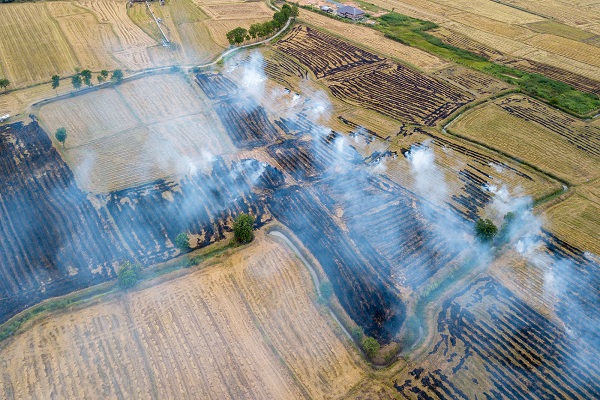
Stubble burning is an age-old practice of intentionally setting the crop residue on fire after the farmers harvest the crops. This practice helps to kill slugs and other pests as well as reduce nitrogen tie-up. But at the same time, it leads to loss of nutrients in the soil, increased air pollution, and the risk of these fires spreading out of control.
So, after the 1990s, the practice of stubble burning has been heavily restricted by governments around the world. Countries like India and China imposed a complete ban on this practice, European Union countries discourage this practice under the Common Agricultural Practices. In Australia, it is not the preferred method. But, it is allowed under certain circumstances.
_______________________________________________________________________
Buy Organic Products Online at best prices at https://www.getgreen.co.in .
_______________________________________________________________________
Stubble Burning in India
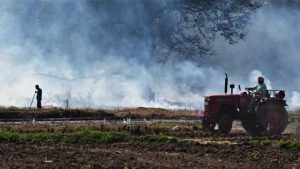
Picture Source: Shantanu Das/ TOI Chandigarh, BCCL
As mentioned earlier, stubble burning in India is banned. It is a crime under Section 188 of the Indian Penal Code and the Air Pollution of 1981.
However, the Government has failed to keep a check on this practice, and stubble burning remains rampant in most parts of northwest India, especially Rajasthan, Punjab, U.P, and Haryana.
Recent satellite images from NASA (National Aeronautics Space Administration) show that the farmers in the northern part of India, especially in the states Punjab and Haryana, are already burning their stubble. Each year, farmers from these regions burn an estimated 35 million tons of crop residue from their paddy fields as it is a cheaper alternative for straw-disposal to reduce turnaround time between summer and winter crops.
Such large-scale burnings of crop waste not only affect the soil quality, and cause fire-related incidents, but it is also responsible for several environmental hazards in our country. From environmental pollution, hazing in Delhi, and unnatural melting of Himalayan glaciers.
________________________________________________________________________
Read Also : Small, smart, community-owned solar farm on cards for NSW High Country
________________________________________________________________________
Why is it so Rampant in Our Country?
Even after most of the countries have been successful in reducing this stubble burning, this practice is still rampant in most of India, especially the northwestern part.
The first reason as to why this practice is so prevalent in our country is to reduce the break period between summer and winter crops. Once the farmers harvest their summer crops, burning down the residue to make way for winter crops is the cheapest and fastest method. So, to save money and in hopes of early winter harvests, the farmers take the risk of burning their fields.
The next reason is the lack of policy implementation from the Government’s side. The Union Government released the National Policy for Management of Crop Residue back in 2014. But this issue still exists in our country, even after six years after this policy has released shows the lack of proper implementation at the grass-root level.
The third reason behind it is the lack of funds in the hands of the farmers of our country. There are several alternatives to get rid of crop residue, but most of them require advanced machinery and equipment, which most of the farmers of our country cannot afford.
Available Solutions
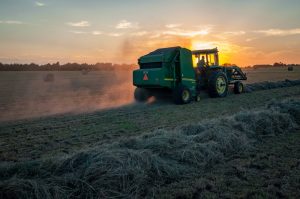
With the advancement in agricultural sciences, there have been several alternative methods to get rid of crop waste in a more eco-friendly manner. Some of these alternatives are as follows:
- Happy Seeder: It is a tractor-mounted machine that cuts and lifts rice straw and sows wheat into the bare soil. It allows the plantation of wheat seeds without them getting jammed by the rice straw. Thus, eliminating the need to get rid of rice crops altogether.
- Rotavator: It is a tractor-drawn implement that is used to prepare seedbed within one or two passes and is suitable for removing and mixing residuals of sugarcane, maize, wheat, etc.
- Zero till Seed Drill: It is a domestically developed machine by the G.B Pant University of Agriculture and Technology, Pant Nagar. This machine helps to reduce crop cycle delay by reducing the seedbed preparation time.
- Baler: This machine is used for post-harvest straw collection and to convert the paddy stubble easily into bales for easy transporting.
- Paddy Straw Chopper: This is another tractor mounted machine used to cut paddy stubble for easily mixing with the soil.
- Reaper Binder: This has evolved from two separate machines, the reaper, used for cutting the paddy, and the binder, used for tying them into bundles. This tractor mounted machine can perform both the task and help ease the process of paddy removal from the fields after the harvest.
________________________________________________________________________
Read Also : 2020 is on course to be the warmest year on record,
_______________________________________________________________________
As an alternative solution to crop stubble burning, Mr. Bhupesh Baghel, the chief minister of Chattisgarh, has suggested the conversion of the crop residue into biofertilizers.
Studies suggest that 100kg of stubble can produce approximately 60kg of pure organic fertilizer, and in India, roughly 35 million tons of crop stubble in burnt every. If this is converted to fertilizer instead, we can produce approximately 2.10 crore tons of organic fertilizers.
In Conclusion
Even with all these advancements in technology, as discussed earlier, stubble burning remains a crucial environment and agricultural issue in our country. Mainly because of the lack of funds in the hands of our farmers. So, to fight this issue, we need better funding and support systems to promote the use of such non-primitive and eco-friendly methods of stubble clearance.
Tags: #chocking, #chokingvictim, #futo, #getgreengetgrowing, #gngagritech, #greenstories, #jute, #kinbaku, #kink, #kinkygirls, #kinkyshit, #love, #police, #rope, #ropebottom, #ropebunny, #ropebunnyandrigger, #s, #shibari