The damage on crops induced by fluctuations in temperature and rainfall, impact crop yield and deepen debt burden, pushing poor farmers to suicide. For temperatures above 20°C, a single day increase of 1°C causes an average of 70 suicides.16
Another study highlights the correlation between drought onset and suicides. It’s precisely in those five states of India which have the highest percentage of drought prone areas where farmers’ suicides are the highest.17
Industrial agriculture and new technologies contributing to climate change
When it comes to climate change agriculture is simultaneously one of its main victims and its perpetrator. Methane is produced from rice cultivation and ruminant animals, while nitrous oxide emissions are discharged mainly from soils, fertilisers, manure and urine from grazing animals. Both these gases have considerably higher global warming potential than carbon dioxide.
What often goes unsaid, however, is that most of these emissions are largely generated by industrial farming practices that rely on the heavy use of nitrogen-based fertilisers and pesticides, heavy machinery run on petrol, and highly concentrated industrial livestock operations that produce methane waste.18 These along with deforestation, refrigeration, and long distance transportation are all integral parts of the industrial food system.
Its dependency on fossils fuels, chemicals and on a globalised food system that is energy intensive makes of industrial farming a major contributor to climate change. Despite this, there is a push across the world to promote and expand high carbon intensive agriculture in the name of a second Green Revolution, gene revolution, and now, in the name of our climate.
Encouraged by corporate interests, this new phase of industrial agriculture is based on risky technologies. On one hand, it’s presenting genetically engineered (GM) crops for drought, saline or frost resistance. While on the other it offers industrial agrofuels, geo-engineering and synthetic biology.
All these mechanisms and new technologies in agriculture being promoted as climate change resistant are based on large-scale mono-cropping, hi-tech investment and a chemical input system, which require big capital and centralised control.
These misleading solutions to climate change are actually aimed to guarantee continued profits for corporations instead of tackling the climate crisis.
The new Green Revolution pushed in Africa, or AGRA (Alliance for a Green Revolution in Africa), with its synthetic fertiliser, hybrids seeds and monoculture farming has already demonstrated how this approach greatly undermines farmers’ efforts to adapt to climate change.19
False climate solutions are meant to commodify and privatise functions of nature and destroy ecosystems – forests, soil, wetlands, rivers, mangroves and oceans – upon which life depends. As we have seen in AGRA, these markets based solutions are designed to alienate local communities from their lands and natural resources.
These current trends towards technology fixes have also increased the marginalisation of women in farming and have significantly impacted women’s ability to earn a living for themselves and their families.
Herbicides and herbicide resistance crops are being promoted in the name of zero tillage (or No-till) farming as an important component of climate smart agricultural practices. It allegedly reduces carbon dioxide emissions by sequestering more carbon in the soil, since the use of herbicides avoids plowing.20
However, these false solutions do not reduce emissions nor address the social crises caused by climate change, but rather allow business as usual and boost corporate profits. What’s more, the women agricultural workers in India who worked weeding are losing their income.
Climate smart agriculture: Not a ‘smart’ solution
Climate Smart Agriculture (CSA) is being promoted by governments and corporations alike as a magic wand to deal with all climate related issues in agriculture. Showcased as something innovative, CSA is however just a rebranding and a continuation of industrial Green Revolution practices which have contributed greatly to the global climate dilemma we are in now.
Perhaps to no one’s surprise, the same actors who promoted the Green Revolution, like the World Bank, are now imposing CSA as a solution to climate change, with the same failed logic. In the climate negotiations, CSA was promoted as one of the eight focus areas of the Low Carbon Technology Partnerships Initiative (LCTPi) of the World Business Council for Sustainable Development (WBCSD), which brought together all the major multinational food and agriculture related corporations to influence the climate negotiations in Paris and beyond.21

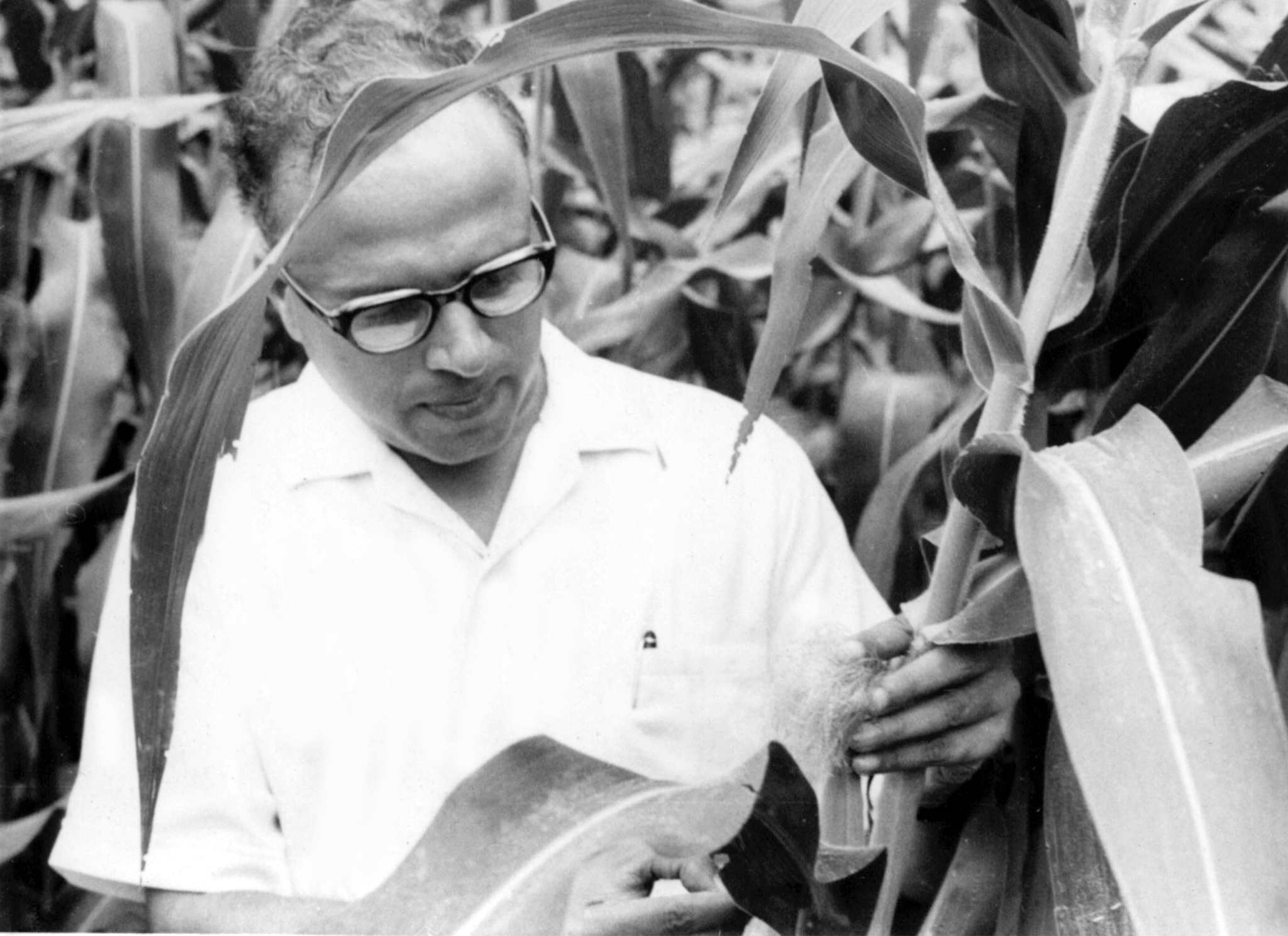
MS Swaminathan, 1956. Photo: MS Swaminathan Research Foundation
CSA has an inclination for genetically engineered (GM) crops, especially those that are salt, flood and frost resistant, a fact that is consistent with its predecessor’s architects. Prof. MS Swaminathan, father of India’s Green Revolution, affirms that “GM technology helps us to produce varieties which are climate-smart.”22
A belief that has also been picked up by the Food and Agriculture Organisation of the United Nations (FAO), which has come out and said that biotechnologies, both low-and high-tech, can help small-scale producers, in particular, to be more resilient and to adapt better to climate change.23 This statement from the FAO is being hailed by GMOs defenders as an acknowledgment of “climate-smart” biotech crops.
This obsession of CSA with new technologies ignores tried and tested traditional farming techniques and indigenous seed varieties, while it creates dependency on climate smart technologies, inputs and credit.
Several local initiatives exists which combine acquired-scientific-knowledge with traditional wisdom but governments in Asia have shown little interest to support them and are instead falling for false-solutions packaged as climate-smart by the corporate sector.
The same way the Green Revolution demanded the imposition of agrochemicals as a precondition to access loans and technical support, CSA is now imposing transgenics and biotechnology.
Companies already notorious for provoking disastrous social impacts on farmers and communities, driving land grabbing or promoting GM seeds, are now self-proclaimed ”climate-smart”.24
Evidence from the ground: Peasants solutions to the climate crisis
In the longest-running side-by-side comparison of organic and chemical farming system trail (FST) documented by the Rodale Institute, over 27 years of organic practices increased soil carbon by almost 30%.
Soils rich in carbon conserve water and support healthier plants that are more resilient to drought stress, pests and diseases. Globally, organic agriculture could sequester nearly 40% of current CO2 emissions.25
There are enough local community-based evidences which indicate that peasant-based agroecological approaches have immense mitigation and adaptation potential and can make significant contributions towards reducing GHG emissions.
Agroecology uses low fossil fuel-based inputs and has a better carbon footprint than industrial agriculture-based practices. The wide array of agricultural practices that are part of agroecology which include permaculture, agro-forestry, organic farming, biodynamic farming and zero budget natural farming, make it optimal in soil carbon sequestration and thus a powerful tool to help mitigate climate-related risks.
Small farmers across the world are continuously adapting their way of living and farming, enabling them to withstand the climate breakdown and minimize GHG emissions. After experiencing climate impacts – drought, irregular rains, hailstorm, reduced monsoon and increased pest attacks – small farmers are developing their own strategies to combat the climate crisis. These include:
-
water harvesting systems,
-
better irrigation techniques that include drip irrigation,
-
the use of traditional seeds, bio-fertilisers and bio-pesticides,
-
mulching, multiple cropping and mixed cropping practices,
-
gathering information on timely weather reports,
-
proper planning of agricultural practices,
-
biodiversity conservation and
-
the increased use of solar energy.
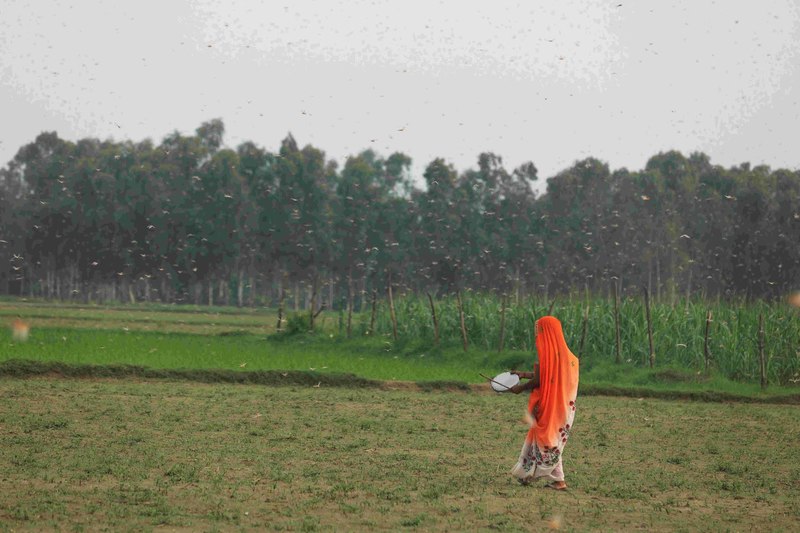
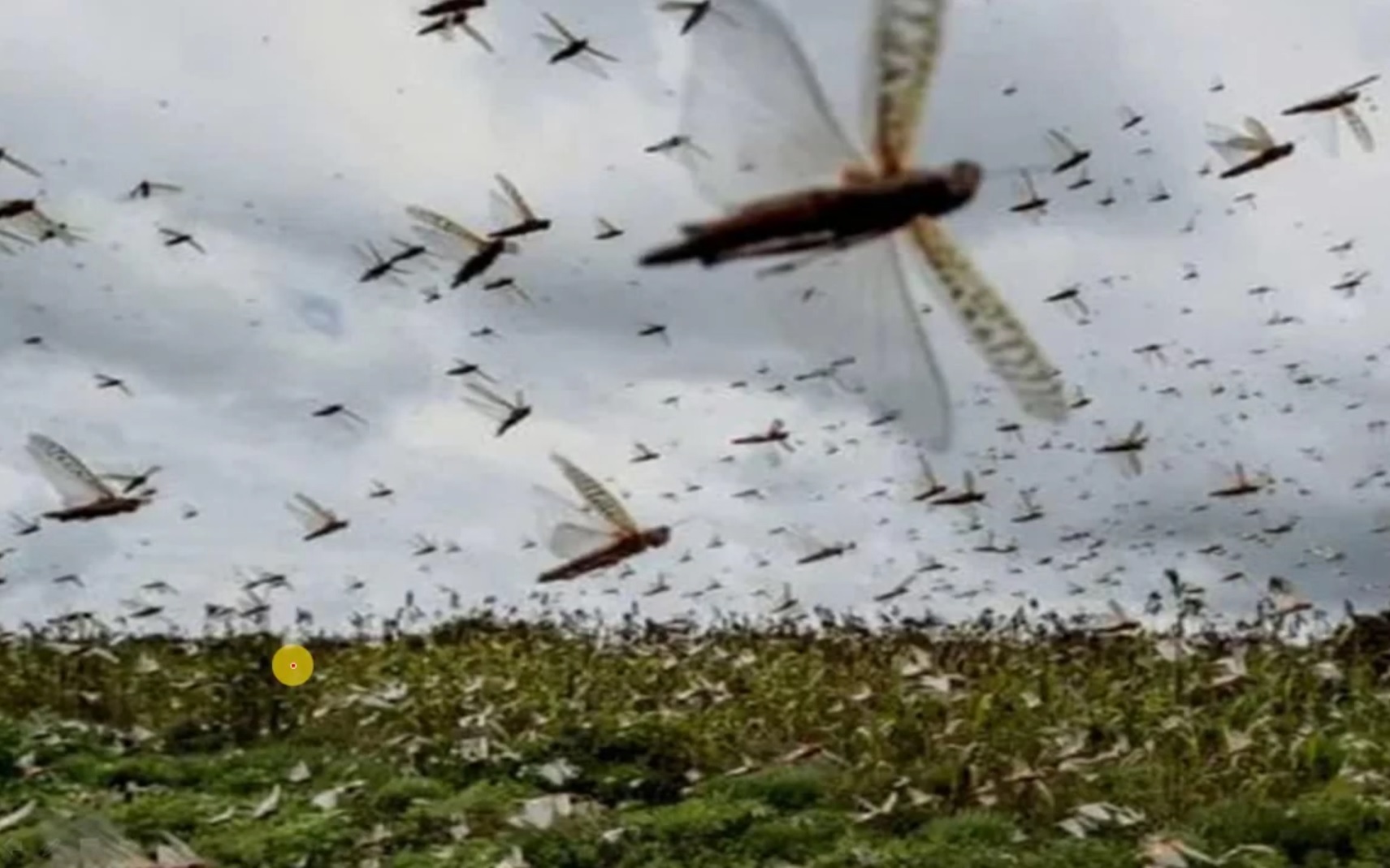
Most of the time, they have done it so successfully that it has gone unnoticed. When locust pests swarmed India in 2020, affected state governments ordered aerial sprayers and drones to sprinkle chemicals, but small farmers had already designed their own zero fossil fuel local techniques to drive away pests, like with the use of drums and loud sound producing techniques.
As an alternative to hybrid and GMO seeds, which can perform better only with fossil fuel based chemical inputs, several seed networks conserving indigenous varieties have sprung up across South Asia and South East Asia, which offer climate resilient seeds to deal with harsh weather conditions.
Seed saver networks help farmers to creatively cultivate ever more crop varieties to deal with the many different challenges of soils, climates, nutrition, flavour, storage, pests and diseases. Women farmers, in particular, play a significant role as seed savers or custodians of traditional seeds. These seeds offer strong resistance to extreme climate.
Across Asia, indigenous populations are faced with increasing climate change challenges such as disappearing animals, food and tree species, forest fragmentation, impacts of rapid development and more. However, using traditional wisdom and practices, they have developed their own local food sovereignty strategies to deal with climate change.
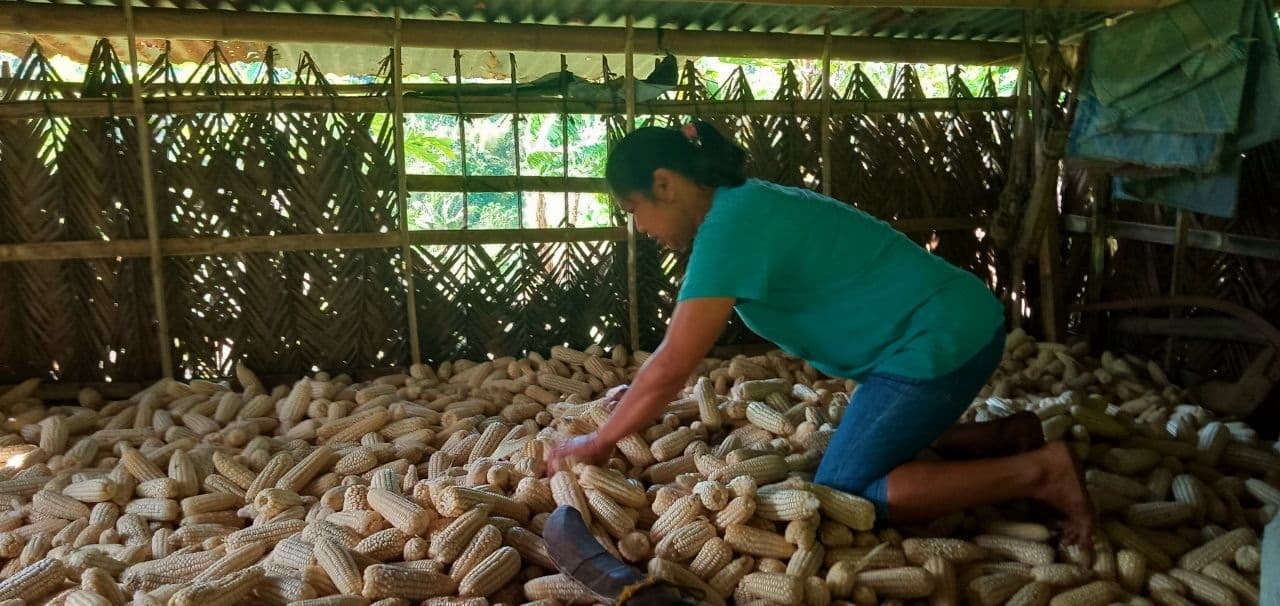
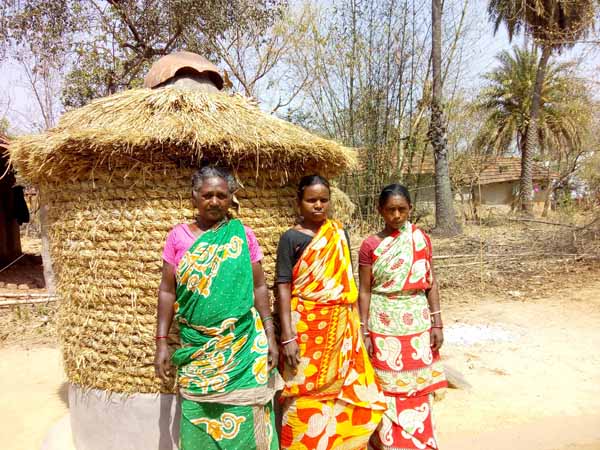
Grain bank installed and maintained by the Bangora Sagun Mahila group at Bongara village, Kasipur block, Purulia , India. Photo: DRCSC
The Kond people of Odisha in India, for example, use agroecological practices to maintain climate resilient agrobiodiversity, allowing insects, pollinators, flies and birds to thrive on their farmlands.
An indigenous women farmer, Sunamain Mambalaka, cultivates over 80 varieties of crops in her 2 hectares farm, including pearl millet and sorghum which are ideal for regions which are prone to drought and extreme heat, as well as indigenous short duration upland rice varieties, which consume less water and make them resilient to drought-like conditions.26
In Odisha, farmers are also practicing rice straw-based potato farming where farmers save the financial and environmental cost of stubble burning, as well as from leveling or tilling the field. Farmers plant potatoes tubers among the leftover straw and stubble after harvesting the rice, which reduces water requirement by 80%, since rice straw retains moisture for long periods, and helps as well in controlling weeds.27
MASIPAG, a farmer-scientist organisation in the Philippines, has shown that mitigation and adaptation to climate change are possible through biodiversity based agroecological farming.28
According to MASIPAG, indigenous farming practices by small-scale subsistence farmers have proven to be healthier, cheaper and resilient to climate change. They have chosen local indigenous seed varieties that grow more quickly, resist dryness or survive in excessive waters, with water management systems developed to deal with floods and to keep soils humid during the dry season.
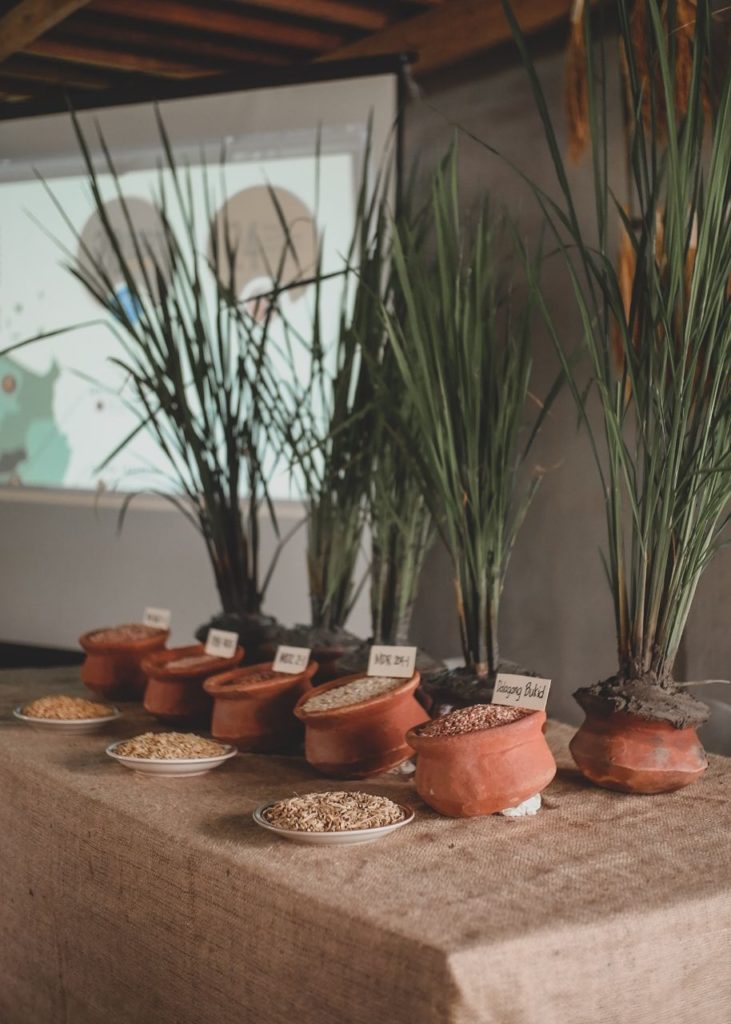
In the last 3 decades, MASIPAG farmer communities have developed a collection of 2,000 plus rice cultivars and with its programs on rice breeding and seed improvement, it managed to identify 18 drought-tolerant varieties, 12 that are flood-tolerant, 20 salt-water tolerant and 24 that are pest and disease tolerant.29
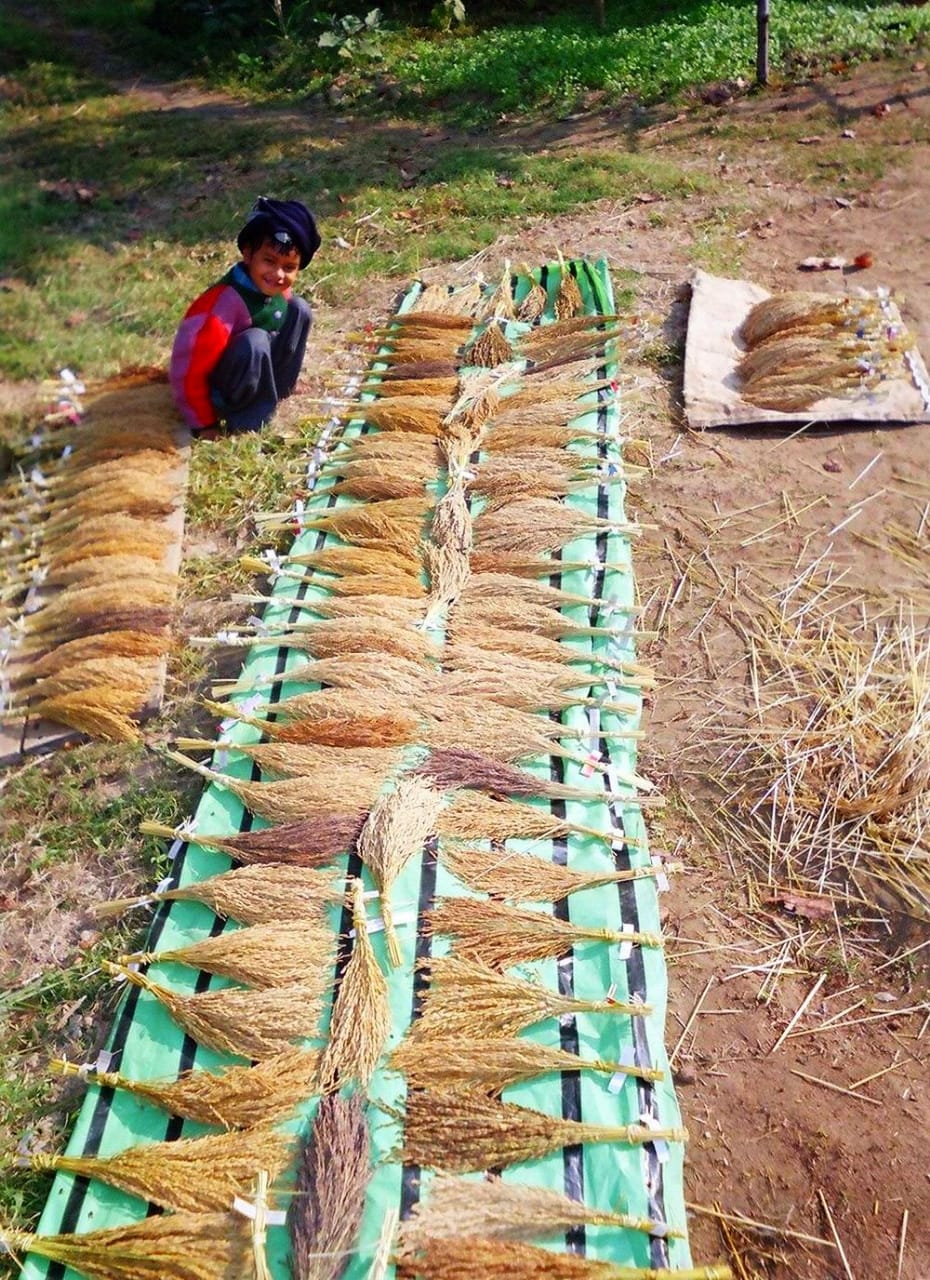
MASIPAG collection of climate resilient local rice varieties. Photo: MASIPAG
Beyond climate adaptation, MASIPAG farmers contribute in emission reduction as well, by completely banning the use of chemical fertilisers and pesticides in their rice production, thus significantly reducing carbon emission from the farm.
Another important strategy being applied is to grow diversified or multi-crops and trees because they reduce the risks of total crop loss during floods, drought and saltwater intrusion caused by cyclones.
This biodiverse system also provides different kind of foods at different times and other multifunctional benefits like fodder, green manure, firewood, hedge, erosion control, wildlife habitat and more.
MASIPAG farmers apply this concept to grow a large number of different varieties better adapted to climatic and geographical-specific conditions. Some farmers also integrate livestock into the farming system as an alternative source of income.
These agroecology-based diverse, productive and resilient farming systems put forth by MASIPAG are fundamental to maximize the adaptive capacity of farming communities to climate stresses, strengthening their unity and social fabric in the process.
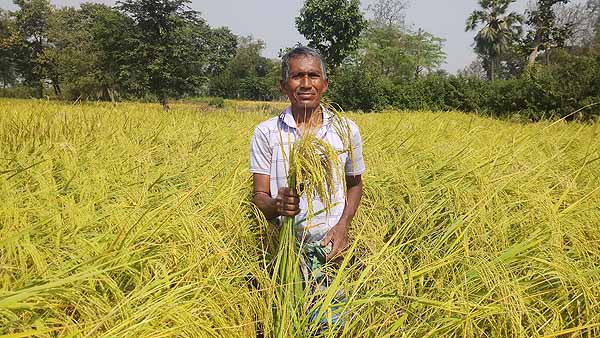
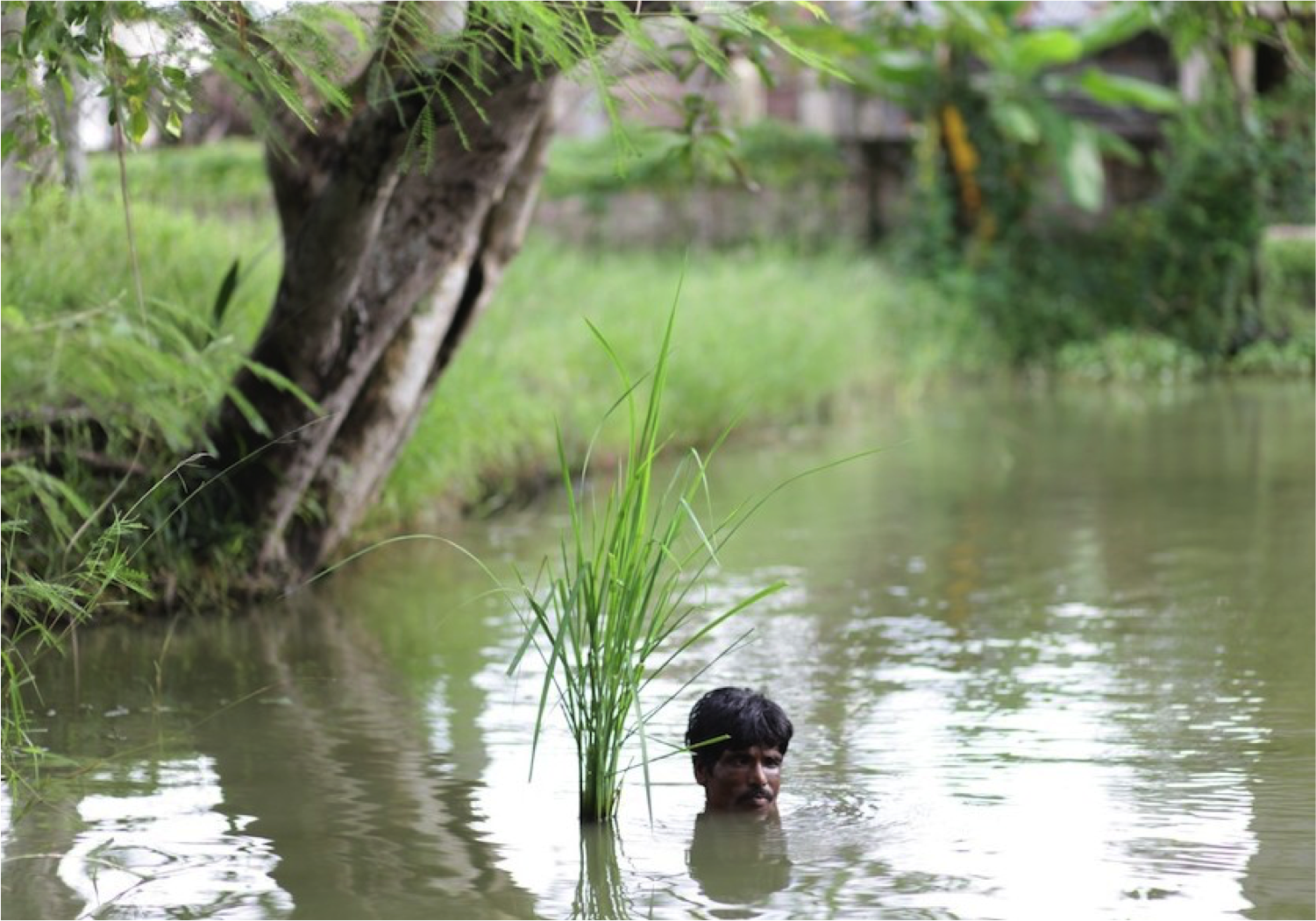
Flood tolerant rice from Basudha, India. Photo: Dr. Debal Deb
Similarly, Southeast Asia Regional Initiatives for Community Empowerment (SEARICE), together with farming communities in the Philippines and Cambodia have developed community managed seed systems to make them more resilient.
The SEARICE climate change adaptation programme, empowered local communities in both countries to manage rice diversity and strengthen local seed systems, all meant to increase communities’ adaptation skills.30
In Cambodia, SEARICE helped local communities to set up farmers’ field schools and trained farmers to adapt to climate change by selecting and planting short maturing rice varieties and to grow two crops in a season if there were threats of drought.
In the hilly regions of the Philippines, farmers adopted terrace farming to deal with soil erosion. In coastal areas, where seawater intrusion is common, farmers used local saline resistant rice varieties to deal with soil salinity.
They managed to do this thanks to their access and control of indigenous seeds, which they learned to adapt and make more resilient to the different challenges. SEARICE has managed to conserve over 50 varieties of rice, in their community seed banks in the Philippines and Cambodia, which have proved to be quite useful in extreme climate conditions.
More than 3 000 farming families had access to the crop genetic diversity. A valuable treasure for future generations for dealing with changing climate conditions.
Basudha- Vrihi Rice varieties collection. Photo: Dr. Debal Deb
In the meantime in India, the Basudha farm and Vrihi (Sanskrit for rice) community seed bank in Odisha, set up by Dr. Debal Deb, holds India’s largest in situ selection of one crop diversity, conserving more than 1 400 rice varieties. These climate-resilient varieties are suited to every kind of climate, soil and water source and tolerant to adverse conditions. Vrihi rice seeds, collected and conserved for over 3 decades in the Basudha in-situ farm and exchanged with hundreds of farmers every year provide immense possibilities for dealing with changes in temperature and climate, differences in soil nutrients and water stresses. The Vrihi collection includes flood-resistant rice varieties which can grow taller in floodwater, while some varieties can also grow in submerged conditions. Other varieties can withstand fluctuations in rainfall timing, or thrive in highly saline soils.31 Diversity in the food systems is essential against the climate crisis and extreme weather patterns.
When cyclone Aila struck Sudarbans villages on the Bay of Bengal coast in 2009, Vrihi saline resistant indigenous seeds saved local farmers whose crops were destroyed and suffered from high levels of soil salinity. These varieties have such high salt tolerance that farmers cultivated them without any embankments to keep salt water out. Not only were they resistant to salinity but these varieties also provided a better yield than hybrids seeds, which farmers were growing before the cyclone hit, yielding 240-kg in less than one-tenth of a hectare of land.32 Some of the rice varieties in Vrihi have multiple cultural and medicinal properties as well, and some are quite rich in a range of micronutrients like iron, zinc, vitamins, and antioxidants, thus ensuring the nutritional security of the farming communities along the way.33
Agroecological farmers from Barangay Bisaya, Batangas, the Philippines. Photo: MASIPAG
For the last 30 years, a farmer based organisation in West Bengal, the Development Research Communication and Services Centre (DRCSC), has been developing the sustainable management of natural resources through disaster-resilient and climate-friendly models in various agroecological regions of West Bengal, which includes integrated farming. The bio-diverse integrated farming model combines at least 5-6 types of food crops, 10-12 types of vegetables, trees yielding food, fuel and fodder, and medicinal plants throughout the year. The DRCSC uses farm saved indigenous seeds, local organic fertilisers from biogas slurry and promotes multi-tier mixed cropping systems like the rice-fish-duck-azolla integrated method.34 35
The Indian part of rural Bengal normally faces acute food scarcity twice a year, which gets worse due to droughts, floods or storms. Here the DRCSC trains farmers in several districts to preserve the village grain bank, which is kept on high land, safe from floodwater.36 The rice is accessible to peasants at a low interest rate which they pay on the next harvest. In Birbhum villages, farmers are encouraged to plant food fodder trees, tubers, wild vegetables and edible weeds which ensure a supply of food- for both humans and animals- when affected by floods, storms or droughts.
Gobinda Bhog native Rice variety, farming through SRI Method. Photo: DRCSC
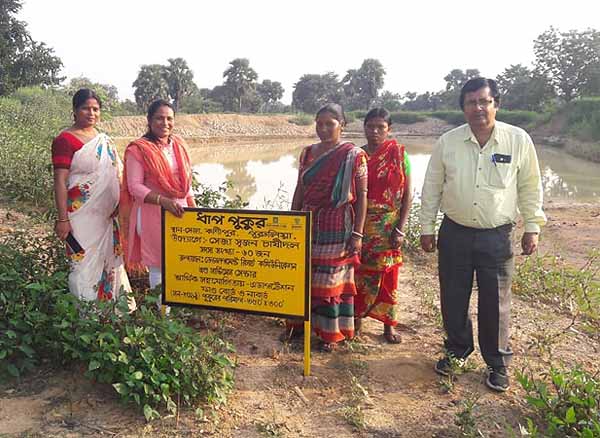
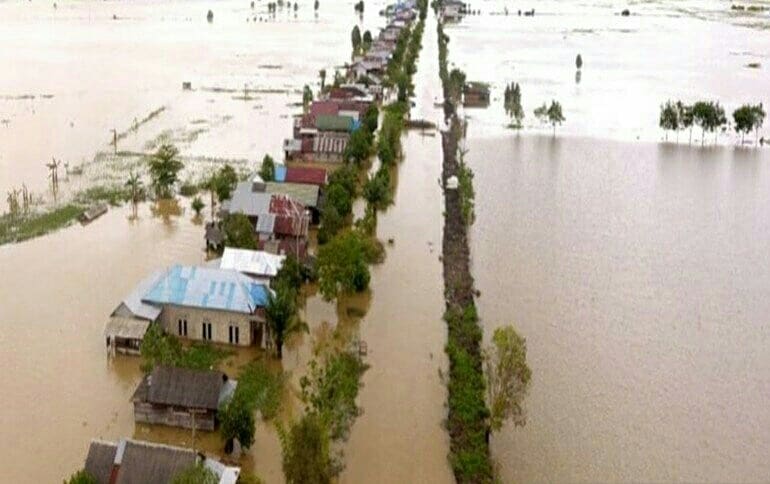
Back in West Bengal, faced with an increasingly deficient freshwater supply, villagers have had to transform and adapt their management of the resource. Their current approach to the cultivation of boro rice is a clear example. This crop requires large amounts of water, which is normally extracted from the ground using diesel/electric pumps. This technique, however, ends up depleting the ground water supply. Farmers have therefore adopted SRI (Systematic Rice Intensification) methods. With SRI, a single rice sapling is sown instead of in bunches, requiring a lesser amount of seeds and the rice fields do not have to be kept continuously flooded. This reduces the required amount of water, which in turn reduces GHG emissions. But in West Bengal, villagers are not stopping there. They are also harvesting rainwater. By digging ponds, villagers are able to gather enough water not only to irrigate their crops- minimising ground water pumping- but also for fish farming. The whole structure is optimised and creeper vegetables are planted on all sides of the pond. As the water level goes down, different kinds of seasonal vegetables and pulses, even boro rice, are grown. This adaptation practices has been developed to build long-term resilience to climate impacts.
A step pond and embankment at Seja village, block-Kasipur, dist-Purulia. Photo: DRCSC
Similar climate adaptation practices and strategies have been found in indigenous communities in other parts of Asia. Biodiverse multi crop cultivation in the same plot has been used for generations in Sabah, Malaysia, which minimizes the risk of crop failure due to changing weather patterns. While in Bangladesh, indigenous communities are building floating vegetable gardens or ‘Baira Cultivation’ in the flood prone areas of the country, while others practice the shifting cultivation method and move to new locations less susceptible to climate shifts. In Nepal, new rice varieties like Aryan and Makawanpure have been introduced that are less dependent on water. In Vietnam, farmers plants hedges on the coast to diffuse tropical storm waves. Whereas harvesting rainwater has become quite common for households and farmers in many regions of South Asia. And the climate adaptation examples across the region go on.37


 Flood tolerant rice from Basudha, India. Photo: Dr. Debal Deb