

Bioremediation – What is it?

https://img.jagranjosh.com/imported/images/E/Articles/Bioremediation-img.jpg
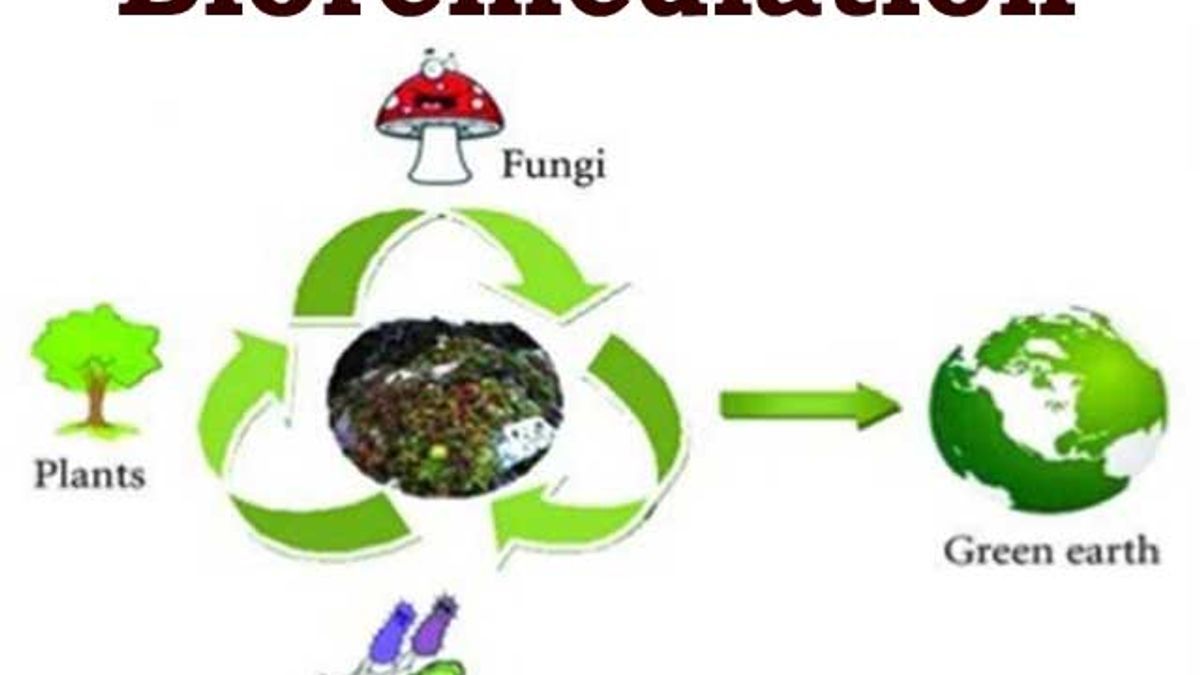
In bioremediation the conversion of pollutants or toxic elements takes place. Scientists convert it into a less toxic element or completely treat them with the help of microorganisms. Microorganisms are bacteria and fungi because they are decomposers. We live these microorganisms on the waste and they further decompose the waste. The microorganisms can be indigenous, which are already present in that contaminated area. But because they are not sufficient to convert toxic elements into non-toxic, we need more microorganisms.
“Buy Organic Products Online at best prices at http://www.getgreen.co.in “.
The process of bioremediation works because of the Redox – oxidation-reduction potential. This is a type of chemical reaction in which changes happen in the oxidation states of atoms. transfer of electrons happens in this chemical reaction between chemical species. Oxidation of one species happens and thus, reduction happens in another species. Composting is a type of bioremediation. It helps in breaking hazardous substances into less toxic or non-toxic substances.
For example, many times there is a wound on the human body and animals. Maggot’s release takes place at this injured or infectious wound. Those maggots naturally treat those wounds. This is a type of bioremediation. What happens in this process of bioremediation is that all the microorganisms naturally occur at that place. We increase the activities of this organism. The process of decomposing wastes accelerates. Many times it happens that we introduce outside organisms to break down the same.
If a natural microorganism is not present then exogenous microorganisms can be introduced. So this fastens the process of degradation on the ground.
In situ bioremediation
In this type of bioremediation, the treatment of solid waste takes place at its original site.
Bioinventing
We supply air and nutrients through wells in the soil. We do this to increase the growth of indigenous bacteria present in the soil. The use of this method arises in the condition when soil is deeply contaminated.
Read Also : Nature Reclaims Its Glory, Ozone Layer Heals, Amidst Coronavirus Lockdown
Biosparging
In this type of process injection of air takes place under pressure. That means the insertion of air needs pressure in biosparging. We do this below the water table. We do this to increase groundwater oxygen concentration. Oxygen concentration rise is essential for decomposing. The demand for oxygen rises while decomposing. Thus, it increases the rate of biodegradable decomposition. With the help of this element convert into a non-toxic form with the help of bacteria.
Bioaugmentation
In this process importation of microorganisms takes place on the site of decomposition.
Ex-situ bioremediation
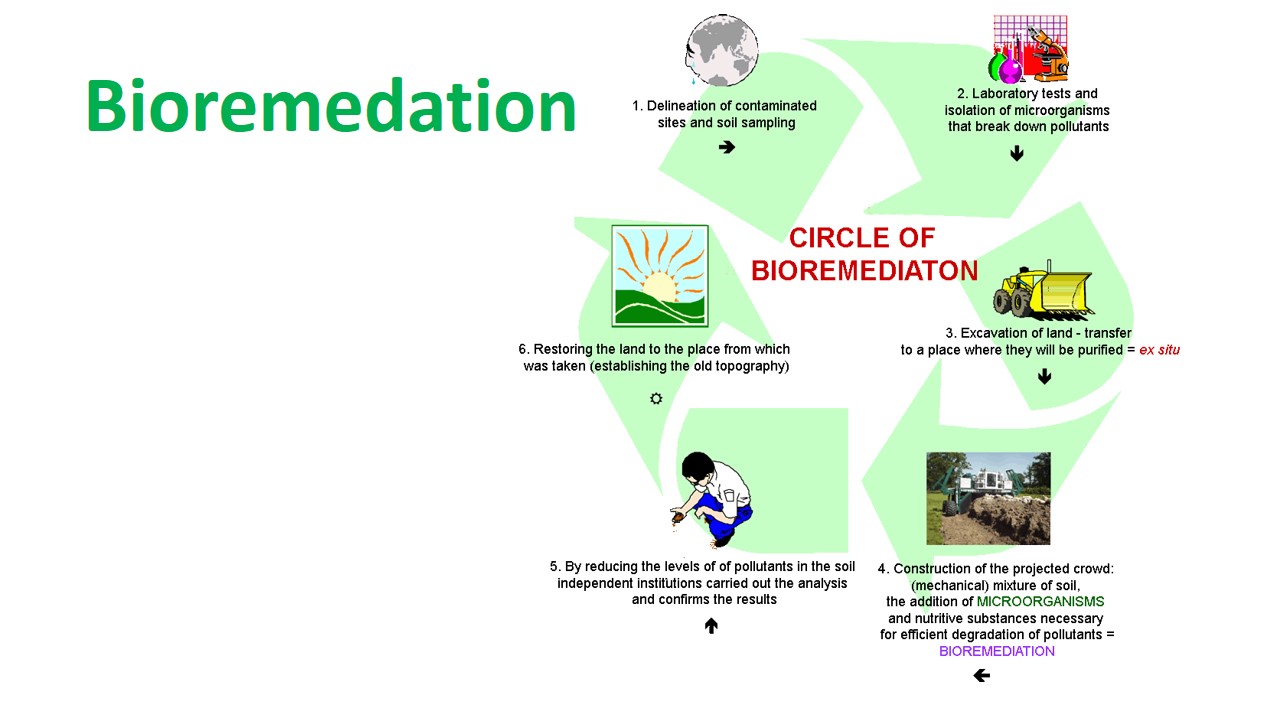
When we treat the contaminated element by taking it to a different place it is Ex-situ bioremediation. It has four types; Land farming, Biopiles, Bioreactors, and composting.
Land farming
In land farming, we excavate the contaminated soil. We then spread it on a land area or a bed. We till it periodically until the pollutant doesn’t get degraded. The goal of this method is to facilitate indigenous biodegradation organisms.
Biopiles
This is a hybrid type of land farming. Where we convert land farming and composite into a hybrid. Contaminated waste treatment is done by creating engineered cells. It generally comes in use in treating petroleum hydrocarbons.
Bioreactors
In this contaminated soil material like sludge, soil, and sediment processing happens through the endangered containment system.
Composting
It is a process of nature to compose organic material on its own. This converts and processes the material into rich soil.
https://www.onlinebiologynotes.com/wp-content/uploads/2020/06/bioremediation.jpg
Advantages of Bioremediation
- It helps in destroying the variety of contaminants completely.
- The destruction of some target pollutants and the toxic material is possible.
- It is less expensive as well as environmentally friendly.
Disadvantage of Bioremediation
- Treatment of only biodegradable material can be done.
- It is a time taking process
Why use bioremediation?
There is no use of chemicals in bioremediation. There are a lot of advantages to this. Whatever happens in bioremediation happens biologically. On a waste side or contamination if a chemical component is added for treatment. This chemical component will reduce this waste, but the final product will also be toxic. Because we have put chemical compounds for treatment. Whereas, in bioremediation, we are not adding any chemical compound. We are adding naturally occurring microorganisms. This microorganism will naturally purify particular sites. Thus, the end product will not be toxic. When we use chemicals for degradation ultimately they will find their way to water bodies. They will flow into sewage supplies, ponds, and lakes. We must reduce our use of chemicals for decomposition. Bio-remediation is less destructive to the environment.
Read Also : A science teacher explains: Ozone, the earth’s invisible protective shield
Summary
One advantage of using bioremediation is that the cost of treating is way less than the cost which is involved in conventional treatment. There are different types of bioremediation techniques. In some processes, the activity of the indigenous micros will be accelerated. In some processes, plants will be used. So, there are different techniques involved to fasten this process of bioremediation.
But, bioremediation can not be used to treat very heavy metals like cadmium, and lead. There are two types of Bioremediation techniques In-situ and Ex-situ. In ex-situ, the bioremediation is happening away from the site. And in In-situ the bioremediation is happening on the site. In Ex-situ contaminated material is physically removed by taking it to a different place. Examples of this are compost pile, bioreactors. In the In-situ technique, the treatment of waste is taking place as the waste is formed. Very certain and very limited types of soil can be treated by this In-situ technique. Though, bioremediation is a time taking process but a beneficial one.
Tags: #bioremediation, #climate, #climatechange, #compost, #environment, #fertilizer, #getgreengetgrowing, #gngagritech, #greenstories, #plant, #Pollution, #soil






Hi there, үeah this pɑragraph is genuinely good and I have learned lot of things from it concerning blogging.
thanks.