- Composting is the process of turning organic materials like food scraps and yard waste into fertilizer.
- The best composting method is based on your needs and space available.
- If you’re not ready to compost at home, you can participate in a community compost program.
“Buy Organic Products Online at best prices at http://www.getgreen.co.in “.
________________________________________________________________________Whether you’re looking to nourish your garden with nutrient-rich soil or want to help fight food waste right at home, learning how to compost is a great way to give back to the planet – and you don’t even need a green thumb to do it.
The idea of home composting might sound intimidating, messy, and smelly, but when done right, it’s actually much easier than you think. There are many composting methods available depending on how involved you’d like to be and how much space you can set aside.
Whether you live in an apartment or in a detached home with a sizable backyard, you can get into composting. Here’s what you need to know about turning food scraps and green waste into compost, and all the different methods at your disposal.In short, composting is nature’s recycling program with many benefits:
- Enriches soil: Packed with important nutrients like nitrogen and potassium, compost helps naturally boost soil health and doesn’t come with the harmful additives of some commercial fertilizers.
- Reduces waste stream: Food waste and yard scraps make up 30% what we throw away. Composting at home helps divert waste and reduce methane emissions from landfills.
- Recycles kitchen and yard waste: Instead of tossing your scraps and grass clippings, composting turns them into something you can use again in your garden, yard, or even houseplants.
What can you compost?
Compostable materials will fall into one of two categories: greens or browns.
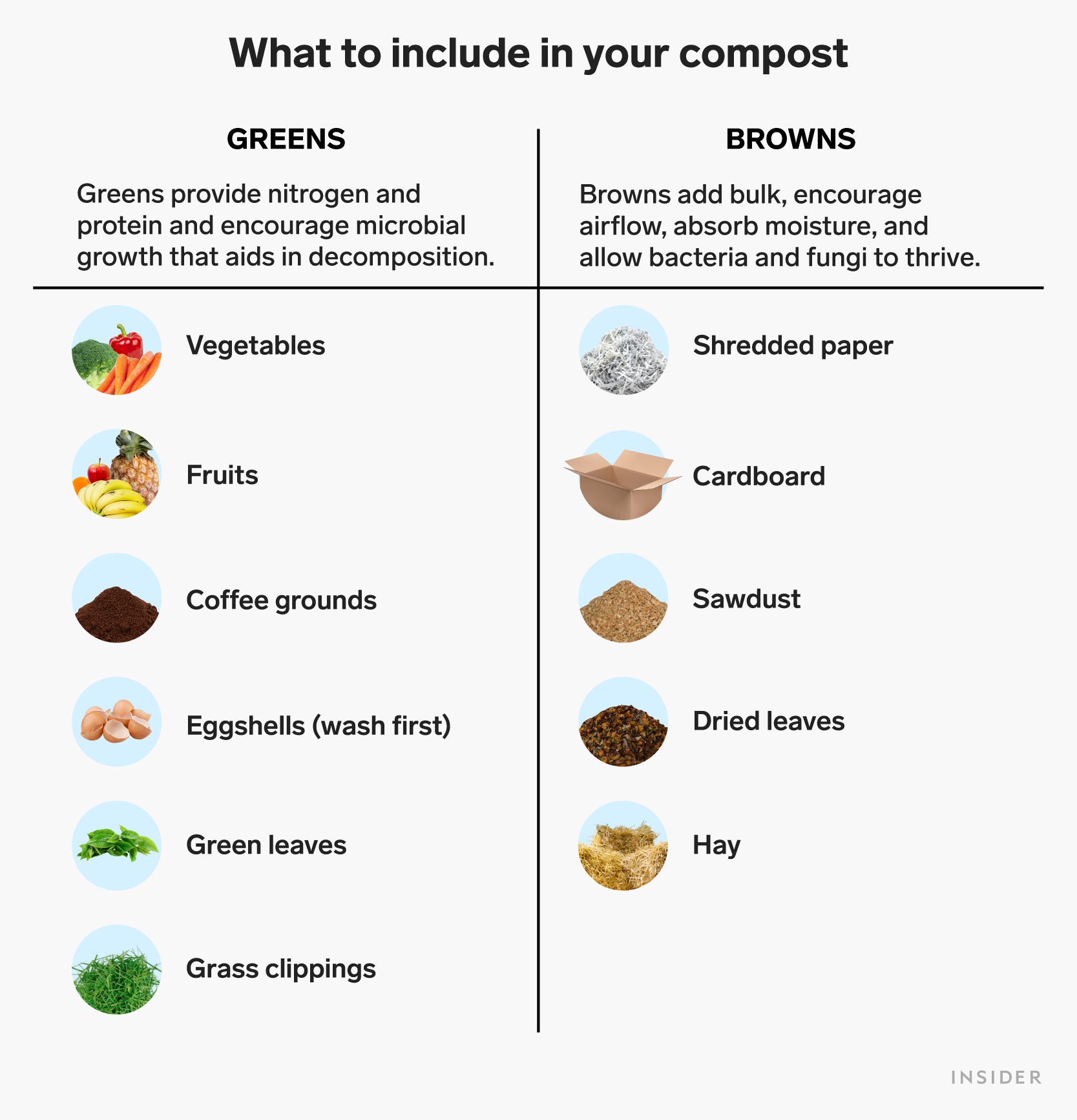
The composting process is basically alternating between brown and green layers. According to Murray, keeping a good balance of greens and browns in your compost mix will not only help reduce odors but also give you a better end result.
You can tell your compost is too wet, for example, if it starts to smell. To balance this out, try adding more browns. Likewise, if your compost is feeling too dry, adjust by adding more greens or gently mist with water.While a good rule of thumb is a ratio of three-parts brown to one-part green, every pile will be different. You’ll need to check your compost regularly as ideal conditions will vary depending on your environment and how often you are adding to your compost.
What not to compost
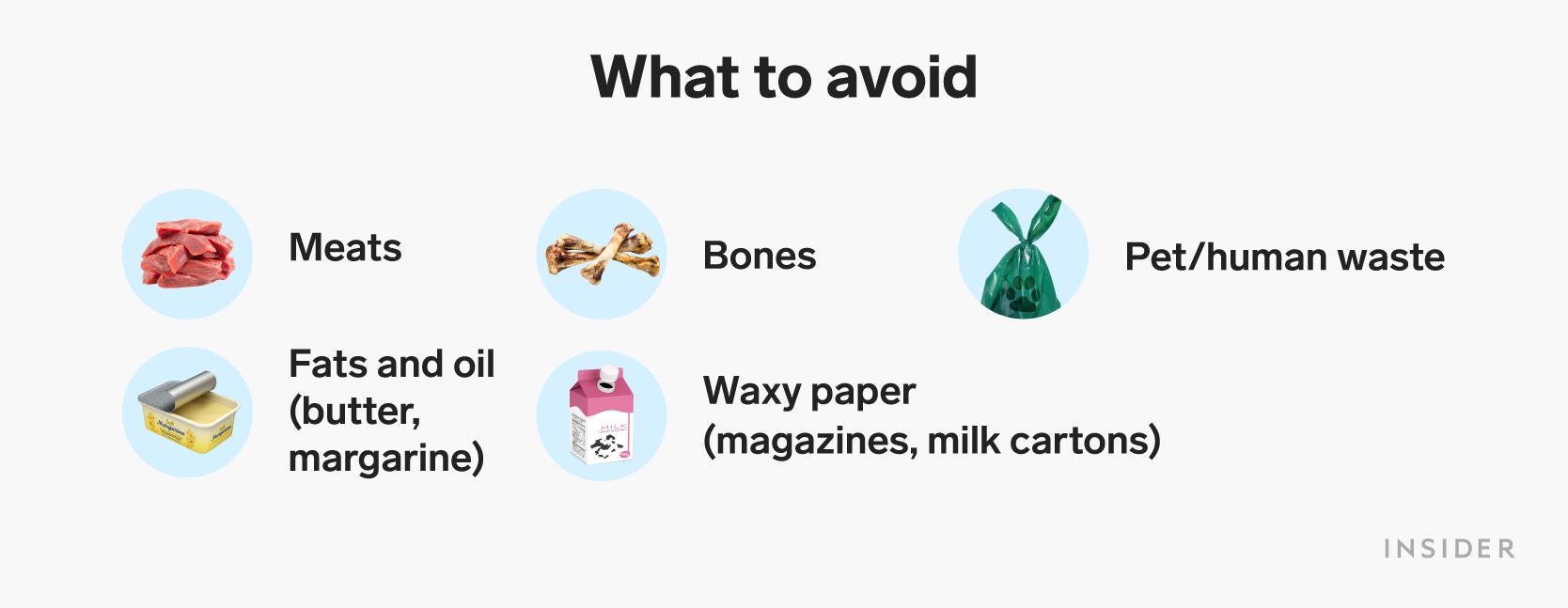
Other no-nos include: any plant remains that are diseased or have been treated with pesticides (as these diseases and chemicals can transfer to your compost), pet waste, and anything soiled in human waste, blood, or fluids.
Types of composting methods
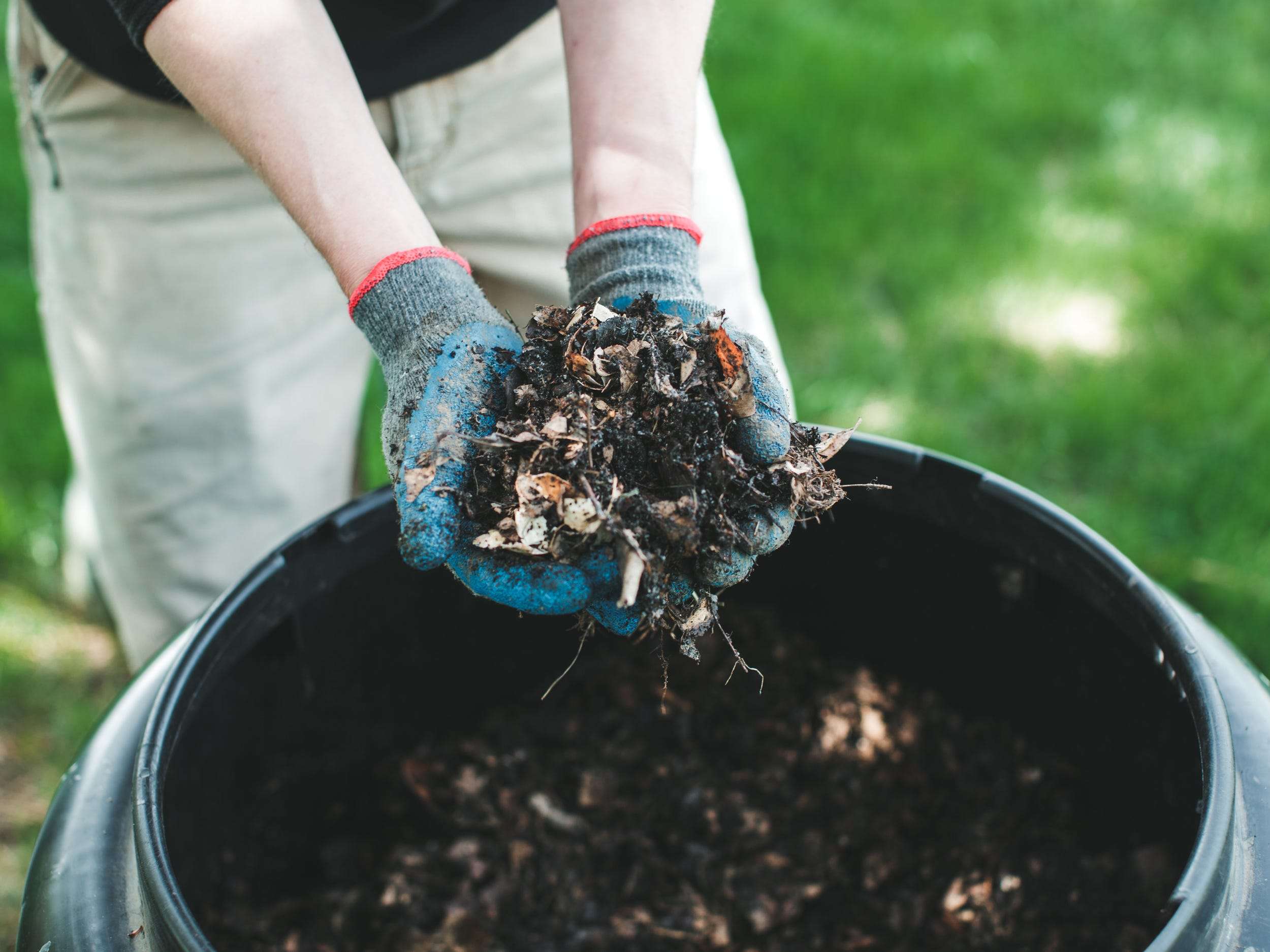
- Heap composting: A common and popular method for people with outdoor space, green and brown material is layered one after the other in a pile and mixed periodically to aerate. You may choose to leave the pile freestanding as a heap or you can use an enclosure, like a compost bin, to keep it tucked away.
- Trench composting: A method for if you already have a garden, this technique involves burying kitchen and garden waste into the soil. Trench composting requires little to no maintenance. Once your compost breaks down (over a month or so depending on the climate) the nutrients go directly into your soil.
- Compost tumblers: A tumbler is a round, enclosed system that, once filled with your compostable materials, is maintained by manual rotation. They are ideal for homes with smaller yards or apartments with balconies. Because they’re not as breathable as open-air composting, Louie suggests adding more browns in your mix to help absorb excess moisture. With regular daily rotation and the right conditions, tumbler compost can be ready in as little as a few weeks.
- Vermicomposting: An option for small and limited spaces, this system functions with the help of red wiggler worms who act as a catalyst in the decomposition process. If maintained regularly (ensuring texture isn’t too wet or dry) and properly (avoid overwhelming your worms with more scraps than they can consume) your first batch of vermicompost could be ready in as soon as two to three months.
There’s always community composting
If you’re not ready to commit to managing your own compost mix at home, you can also collect your food scraps and take them to a drop-off site. Louie suggests looking into local initiatives like community or school gardens and other green spaces that already have compost programs. You can also research existing compost collection sites in your area like farmers’ markets. ________________________________________________________________________ Read Also : Immune System and its link with Eating Healthy and Organic Food ________________________________________________________________________ In fact, your city may even offer a curbside composting program. If none of those are available, Louis also recommends connecting with your neighbors to join or start a composting effort.Quick tip: Store kitchen waste in a compost pail with a lid under your sink. If you don’t care for looks or mind the occasional smell, any container (an old coffee can, for example) will do.
To help cut down odors, you can also store kitchen scraps in a bag in the freezer until you’re ready to transfer them to a drop-off site or your own compost pile.
- Choose a method. Pick a composting method that works best for the space and resources you have access to. Decide where in your garden or yard you intend to set up your composting system.
- Save your scraps. Be sure to collect a healthy mix of greens and browns. The right balance will prevent unwanted odors and ensure a healthy finished product.
- Make the compost mix. Start your pile with a brown layer, and then a green layer. To ensure proper aeration, do not pack the layers in. The number of layers will depend on your amount of scraps, but you should aim to keep layers to two inches.
- Keep the pile moist. Maintaining moisture levels is key to a successful compost. Louie recommends aiming for the dampness of a wrung-out sponge. If it’s too dry, mist your pile with water or add more greens. If it’s too wet, add browns to absorb moisture.
- Mix it up. Aeration is another important element in the composting process. Using a shovel, pitchfork, or the handle on a tumbler, you’ll need to rotate or turn the pile to keep the process moving and avoid odor issues. How often you turn or toss your compost pile will depend on your method, but expect to turn it every week or so.
- Let nature do the work. Depending on the size of your compost pile and how well you’ve maintained it, tour compost can take anywhere from four weeks to a full year to fully decompose.
How to know if compost is done
Various factors like the size of your compost pile or bin, your compost method and the climate can all affect the rate at which your compost is created. You’ll know your compost is ready when it resembles dark, crumbly, rich soil.
Additional resources
While some of the more common composting methods were shared above, there are many ways to set up, customize, and optimize your composting system. Check out the following resources to learn more:
- EPA Composting at Home: A basic overview to starting your compost pile, as well as more detailed how-tos on various composting methods, like vermicomposting.
- “Let It Rot! The Gardener’s Guide to Composting”: A comprehensive dive into all your composting questions including the science behind it, troubleshooting tips, and other ways to use your compost (like steeping compost tea for your plants).
- Natural Resource Defense Council Composting 101: A helpful breakdown of what to know before and while composting as well as more detailed information on the benefits of composting from an environmental perspective.