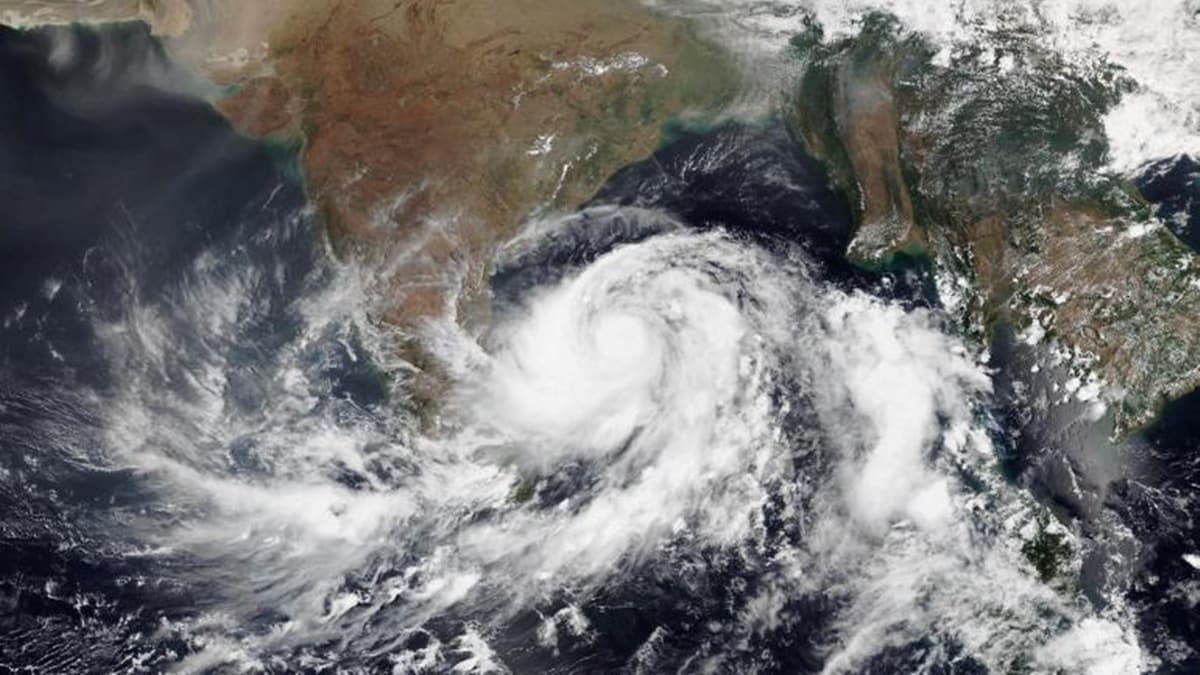
Cyclones have a long and deadly history in India. When it comes to tropical storms, the Indian subcontinent is one of the worst-affected places on the planet. It is especially vulnerable because of its 4,670-mile coastline, which is home to a major portion of the country’s population.
Between April and November each year, cyclones commonly occur in the North Indian Ocean. In most years, a primary peak occurs in November and a secondary peak occurs in May. Storms have the potential to affect India’s entire coast. The east coast, on the other hand, is more vulnerable than the west.
_______________________________________________________________________
Read Also : Experts Say This Is the Safest Mode of Transportation During COVID-19
________________________________________________________________________Over the years, the country has been battered by a number of devastating cyclones. Here are some of India’s most famous cyclones throughout history:
Cyclone Yaas 2021
A powerful cyclonic strom just passed through India. Yaas started from a tropical disturbance that the Indian Meteorological Department first observed on May 23. It is the second very strong cyclonic storm of the 2021 North Indian Ocean cyclone season. Yaas strengthened to a Category 1-equivalent tropical cyclone and a very severe cyclonic storm on May 25 as it moved northeast. On May 26, Yaas, a very powerful cyclonic storm, crossed the northern Odisha coast roughly 20 kilometres south of Balasore.
________________________________________________________________________
Read Also : ‘India’s west coast is likely to see more intense cyclones in the near future’
________________________________________________________________________
Cyclone Amphan 2020
On May 2020, the Super Cyclonic Storm Amphan was a devastating and devastating cyclone that wreaked havoc in Eastern India and Bangladesh. It’s the most powerful cyclone to hit the Ganges Delta since Sidr in 2007, and the first super cyclone to hit the Bay of Bengal since the Odisha Cyclone in 1999. Cyclone Amphan has surpassed Cyclone Nargis as the costliest cyclone ever recorded in the North Indian Ocean. Cyclone Amphan is the first cyclone to intensify within 12 hours, with a lowest pressure of 925 mbar. It made landfall in West Bengal, with coastal parts of Odisha and Kolkata being affected.
2018 North Indian Ocean cyclone season
The North Indian Ocean cyclone season of 2018 was one of the most active in the region since 1992. It generated 14 depressions and 7 cyclones between April and December, with two large maxima in May and November. The 7 cyclones that erupted during this time period were Cyclone Sagar, Cyclone Mekunu, Cyclone Daye, Cyclone Luban, Cyclone Titli, Cyclone Gaja, and Cyclone Phethai.
The Cyclone Fani made landfall in Odisha with a central pressure of 932 mbar. This was one of the most powerful cyclones to hit Odisha since 1999, and it was caused by a tropical depression that formed in the Indian Ocean west of Sumatra on April 26. On April 30, it quickly became an exceedingly violent cyclonic storm with favourable circumstances. Fani, a cyclonic storm with a peak nearly equal to that of a Category 4 major hurricane, made landfall on May 2nd, degenerated into a residual low on May 4th, and dissipated the next day.

Cyclone Hudhud 2014
Cyclone Hudhud was a powerful cyclone that struck eastern India and Nepal in October 2014, causing widespread destruction and loss of life. On the 8th and 9th of October, Cyclone Hudhud strengthened into a storm, with its lowest pressure of 940 mbar. On October 12, it reached its apex before reaching landfall in Visakhapatnam, Andhra Pradesh. This cyclone also brought severe rainfall to Uttar Pradesh and snow to Nepal.
Cyclone Lehar 2013
Cyclone Lehar was a powerful cyclone that wreaked havoc on India’s Andaman and Nicobar Islands and the state of Andhra Pradesh. It was the second most powerful cyclone of the year, trailing behind Cyclone Phailin. The origin of Cyclone Lehar may be traced back to an area of low pressure that emerged in the South China Sea on November 18, 2013, with its lowest pressure of 980 mbar. On November 23, it gradually drifted towards the Bay of Bengal, where it developed into a depression. It became a cyclonic storm on November 24, approaching the strength of a category 1 hurricane, and peaked on November 26.
Cyclone Phailin 2013
Storm Phailin was the most intense cyclone to make landfall in India since the 1999 Odisha Cyclone. The Cyclone Phailin caused India’s largest evacuation in 23 years, with its lowest central pressure of 940 mbar. In Odisha and Andhra Pradesh, around 550000 people were relocated from the shore, with total losses estimated at Rs 260 billion.
Cyclone Thane 2011
Cyclone Thane originated as a tropical disturbance within the monsoon trough to the west of Indonesia and grew into a catastrophic cyclonic storm. It grew in size and direction over time, eventually turning west. On December 30, it made landfall between Cuddalore and Puducherry on the north Tamil Nadu coast.
1999 Odisha Cyclone
The cyclone that hit Odisha in 1999 was one of the most powerful and devastating in the North Indian Ocean. The cyclone formed a depression in the Andaman Sea on October 25 and quickly developed the next day, culminating in a super cyclonic storm on October 28. This storm made landfall on Odisha on October 29th, gradually weakening for two days due to dry air and prolonged land contact before settling over the Bay of Bengal on November 4th.
Read Also : Ever wondered how do Cyclones get their names? WION explains.
1990 Andhra Pradesh Cyclone
The Andhra Pradesh cyclone of 1990, also known as the Machilipatnam Cyclone, was the biggest natural disaster to strike South India. It began as a depression on 4 May 1990, but by the 8th, it had grown into a super cyclonic storm with a minimum pressure of 920 mbar. Before making landfall in Andhra Pradesh, India, this cyclone diminished. The cyclone killed about 967 persons and 1 lakh animals. The entire cost of crop destruction is expected to be more than $600 million.
1988 Bangladesh Cyclone
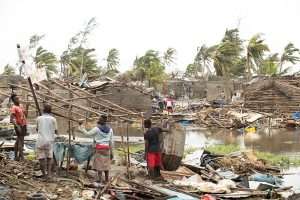
Although the storm primarily impacted Bangladesh, it also claimed the lives of 538 people in West Bengal, India, on November 29, 1988. The 1988 Bangladesh Cyclone made landfall at the Bangladesh-India border, with a lowest pressure of 972 mbar.
1981 North Indian Ocean cyclone season
The tropical cyclone season in the North Indian Ocean in 1981 was part of a regular cycle of tropical cyclone development. It spawned a total of 12 depressions during the season, commencing on June 20th in the northern Bay of Bengal and ending on November 8 to 10 in southwest Myanmar.
1970 Bhola Cyclone
The 1970 Bhola Cyclone, which had a low pressure of 966 ar, was one of India’s most severe cyclonic storms. It reached India’s West Bengal on November 3rd, 1970, formed over the central Bay of Bengal on November 8th, and moved northward, increasing to reach its peak on November 11th, following which it made landfall on East Pakistan’s coast (Bangladesh). The 1970 Bhola Cyclone was one of the deadliest tropical cyclones ever, with a death toll of 5 lakh people.
Conclusion
So, we’ve covered the history of major cyclones in India in this article. This is the third and last article in the series. I believe you have understood all of the points. If you haven’t read the Part-1 and Part-2 then please read those article also. And also if you have any doubt then leave a comment bellow.
Tags: #amphan, #cyclone, #cyclonenation, #cyclones, #ford, #getgreengetgrowing, #gngagritech, #greenstories, #india, #monsoon, #mustang, #nature, #odisha, #rain, #rainfall, #rainy, #s, #storm, #thunderstorm, #tropicalcyclone, #typhoon, #weather, #wind