
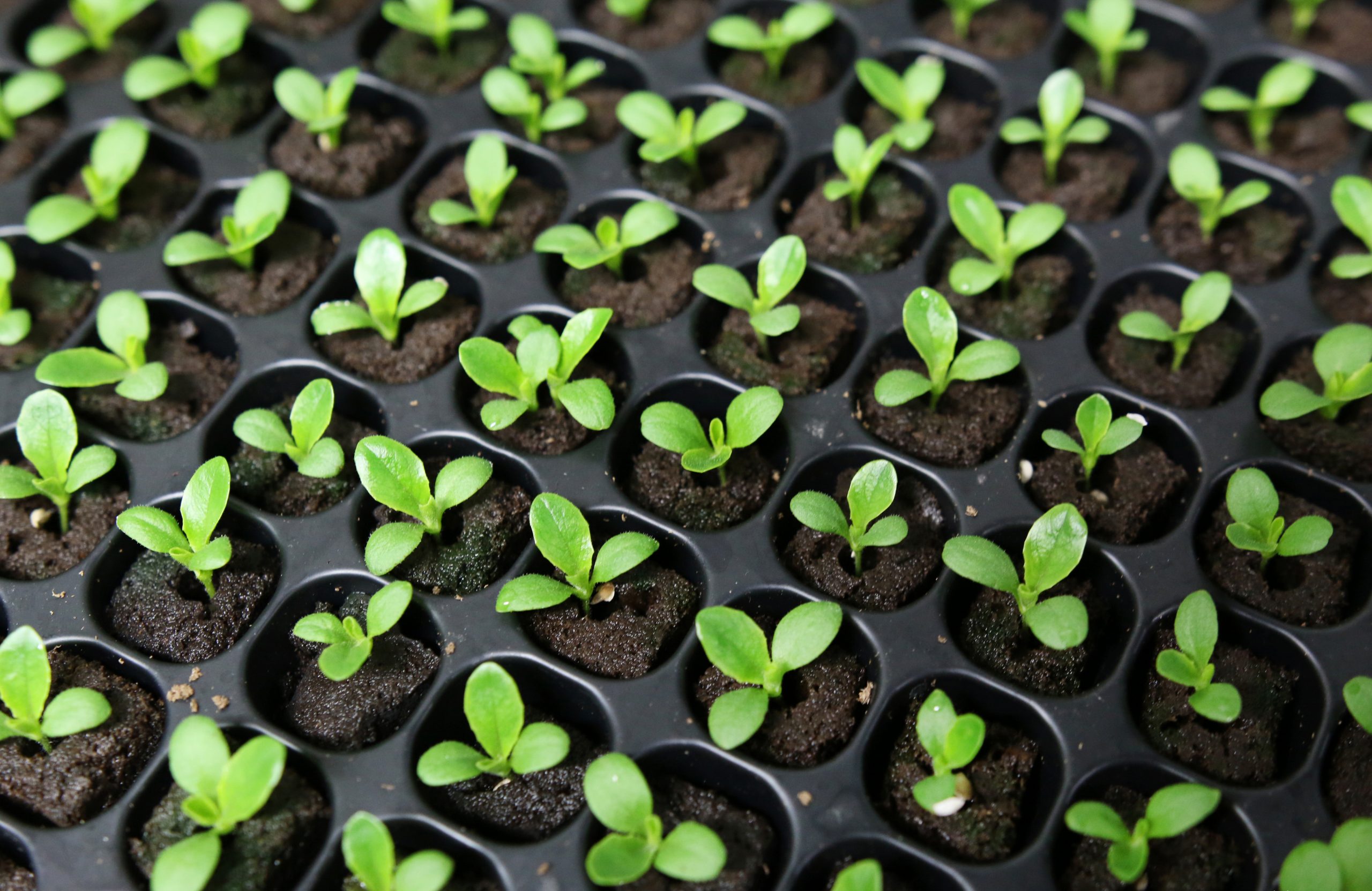
Population explosion, drastic climate change, and the commercialization of the farming sector leading to the wear and tear of soil, the future of the country’s agricultural scenario looms gloomily above us. This is not a mere hypothesis but an actual fact. The fifth report of US-based The Global Harvest Initiative predicts that by the year 2030, agricultural production will only meet 59 percent of India’s total demand. On the other hand, a NITI Aayog report suggests that the country’s water demand will be twice the supply implying severe water scarcity. Two problems that seem almost insurmountable.
“Buy Organic Products Online at best prices at http://www.getgreen.co.in “.
Do not worry, we have a solution! Exclaims 25-year-old Vihari Kanukollu from Hyderabad who has embarked on a mission to change the face of farming. His “farming fields”, however, will be in an urban set up.
With the help of ‘Hydroponic Farming’, a technique largely practiced in Europe and America, he hopes to reduce the burden on traditional farmers by helping urban dwellers grow their own food.

Breaking down the concept of hydroponic farming in simple terms, Vihari says that this technique uses 95 per cent less water and the food can be grown in any climate or location without soil.
It was during Vihari’s stint in the Finance sector in 2017, when he learnt about hydroponic or vertical farming. Talking to The Better India (TBI) about the trigger that set him on this path he says,
Though I was preparing for a career in finance, I was always concerned about social issues that impact the society at large. In 2017, I came across a report that underlined the increasing gap between demand and supply of food in India.
On researching further, the grim statistics and minimal steps taken to resolve issues startled him.
It was during the same time that he met Dr Sairam, a scientist and a family-friend, who was practicing farming in his own backyard. After conducting a series of successful experiments on hydroponic farming, the duo decided to launch their own company. Srinivas Chaganti, Vihari’s relative got on board to deal with the Internet of Things (IoT).
Read Also : This Farmer Won the Padmashri for His Zero Budget Natural Farming Model
Thus, was born UrbanKissan, a company aiming to integrate the concept of ‘In My Backyard’ in sustainable farming.

When asked if the hydroponic method of farming is a threat to traditional farming in any way, Vihari says, “No, in fact this type of farming is an add-on to the traditional method. This is for people who want to grow their own food. Our project aims to unburden the traditional farmers by making urban dwellers contribute to the process.”
How To Be An #UrbanKissan
‘I want to grow my own food but in a hassle-free manner? I cannot grow food because I lack expertise, time and space’
If you ever had these thoughts that deterred you from farming, worry not. With help and guidance from the UrbanKissan, you can now grow fresh produce including lettuces, herbs, greens and exotic vegetables round the year. These can be grown anywhere – from rooftops to balconies.
The company offers a range of options, from a model kit of 18 to 36 plants. The kit consists of seeds, coconut waste and a mix of nutrients.

Once you place an order according to your preference, the company will assist you in choosing the site and delivering logistics.The staff will come to your house and help you set up the farm.
After the farm is set up, all you need to do is take out a couple of minutes from your busy schedule every day to water the crops.
“The main role of soil is to provide rich-nutrients to the produce. We broke down these nutrients and prepared an ingredient with it. The seeds can be sown inside the coconut waste and water can be supplied from below. It requires less manual work and is a one-time investment,” says Vihari
This method allows you to harvest and consume the produce within the same day. This way you get the benefit of fresh produce that is not only nutritionally rich, but also available all year round at a consistent quality.
Among the services provided by the start-up, the feature of marketing customer’s produce is something that the company is leveraging on to encourage indoor farming.
The scalability of this project is from individual households to commercial spaces. If a customer is willing to produce enough to be able to sell in the market we provide our assistance, adds Vihari.
So far, the trio has been successful in setting up 8,000 plants across five states. “After I read articles about heavy metal contamination in green and leafy vegetable that causes cancer, I decided to grow food in my own balcony. UrbanKissan helped me set a kitchen-garden in my house and now I know what I eat is safe and fresh food,” says Lasya, an Urban Kissan in Bengaluru
An Effort To Reduce Food Wastage
As per a World Economic Forum report, India’s annual food requirement is 230 million tonnes and the agricultural output is 270 million tonnes, which means that close to 40 million tonnes of produce is wasted each year during production, processing, retailing and consumption.
From spoiling of food to retailers stocking extra, there are several reasons that are responsible for India’s food wastage problem. We have come up with a solution where the food is produced according to customer’s demand, says Vihari.
The trio is currently developing a vertical farm in the heart of the bustling city of Hyderabad.

The first commercial vertical plant being developed at Jubilee Hills Road No 36 has the capacity to produce 50,000 crops (10 tonnes of yield per month). The farm, spread over 2,000 sq feet, will yield vegetables equivalent to 70,000 sq ft in traditional farming, points out Vihari. In other words, almost an acre of produce is grown in the size of an apartment.
Explaining the concept of vertical farming in Hyderabad, Vihari says,
One can walk in and order growing vegetables and watch the entire process of harvesting.They can take back with them fresh produce that contains no pesticides or harmful chemicals.
Sharing the company’s future plans, the trio aims to make major cities that lack space like Mumbai sustainable. They plan to set up vertical farms in these cities and help bridge the demand and supply of food.

“We’re re-thinking what agriculture looks like in a world where water is scarce, people live in cities waking up to the dangers of pesticides. We want to ensure that everyone has access to safe food by building more farm next to where people live. With our produce we want to have a positive impact not only on our health, but the health of the world,” says the trio.
Want to know more and take a sustainable step? Get in touch with UrbanKissan: support@urbankisaan.com
(Edited by Saiqua Sultan)
Like this story? Or have something to share?
Write to us: contact@thebetterindia.com
Connect with us on Facebook and Twitter.

At 91, This Army Veteran Turned to Mushroom Farming. The Reason Will Move You!
He kickstarted the venture in September 2018, and after grappling with a few initial losses, is finally beginning to make profits.
He is 91-years-old but retired Honorary Army Captain Lekh Raj Sharma is driven by an unparalleled passion that many a youth may find difficult to replicate.
Every week, he travels four hours one way from Chandigarh to his native village of Nari in Himachal Pradesh’s Una district.
Why?
To spend three days a week overlooking mushroom cultivation in a large enclosed hall at Vikas Sadan.
As a band of women rushes through the chores of watering the fruit-bearing fungi, monitoring their growth and plucking, he assists them in packing the newly-reaped button mushrooms in 200 g packets.
You may read this and wonder why an elderly army veteran exerts himself to the labour of farming. Most people who knew him did.

In an exclusive interview with The Better India, Lekh Raj Sharma says, “It isn’t for profit. But to create a sustainable model that, in the long run, can give a dignified means of livelihood to these women.”
Who are these women? And how did this journey begin?
The Better India finds out.
Life in undivided India
He was born on 3 January 1928 in undivided India in the village of Nari in Una district of Himachal Pradesh. He then moved to Hafizabad (present-day Pakistan) after class five to continue school. A few years later, he returned to Una.
“Back in the day, finding employment was no easy task. So when I returned to my village, I began farming. It did help to make ends meet, but I wasn’t satisfied. And so, at 17, I decided to join the army. The second world war was nearing its end, and the army was recruiting youth. Everybody around me tried to dissuade me saying, ‘You are asking for a death wish.’”
He continues, “My response to that was that if a man is to die, he will die regardless of whether he is within the safe walls of his home or fighting a war at the border. And whoever has to live, will live regardless.”
Perhaps it is this approach and determination towards life that drove him to take up new challenges even as he makes a run for a century!
He moved on to serve in the education department of the army for 32 years. This also meant that he retired at a relatively young age of 49.
The pension came but his will to continue working pushed him to work in the administrative department of Chandigarh’s DAV College for another seven years.
“When I retired from there, I realised that I did not want to wait for life to pass me by without doing anything productive. So I channelised my time and energy to set up an NGO, Energy Environment Group, in my ancestral village. Over the years, we worked on issues related to hospital waste management and giving remote villages access to technology like water seal toilets, compost tanks, solar cookers, and biogas plants.”
As time passed, the projects became fewer. Once he turned 90, Sharma felt he couldn’t dedicate as much time and energy to keep the initiatives running.
But one thing he knew was that the shutting down of the NGO would mean no livelihood for his staff, especially the four women whose families depended on it.
Further discussions shed light on how they couldn’t leave the village and go to cities for employment. So, he had to find an avenue that would give them a sustained source of livelihood in the village.
“I decided to take up mushroom cultivation because I knew that it was a crop which could be grown and packaged within the home,” says Sharma.
He kickstarted the venture in September 2018, and after a few initial struggles, is finally beginning to make profits.
He began the cultivation in two lots by procuring 500 bags of ready-to-grow button mushrooms. The grow bags are watered, and the temperature within the room is regulated to ensure the growth. The team makes a special effort to ensure that the mushrooms are not chemically whitened for visual appeal, unlike much of the produce in the market.
After fruiting once in the kit, when regularly watered, these mushrooms grow in multiple flushes.
It takes anywhere between a few weeks to two months for button mushrooms to grow. Further, each of the bags gives nearly 1.5-2 kg button mushrooms, so 500 bags would produce about 1,000 kg or 1 tonne mushrooms.
The wedding season gets them a good business, where the average price that the 200 g packets fetch is between Rs 20-25. This number can even crash to Rs 14 during the off-season, but for the first time this season, Sharma is confident that he will not only break even but earn additional profits.
Speaking about the challenges, he says, “When I started, many people warned me. I knew there would be initial losses, but my mission was to create a replicable model that can help farmers get better incomes and crop prices, since many of them are pulling out of the fields due to losses.”
He adds how one of the major problems that producer-farmers face is the middlemen culture, where intermediaries buy their produce at lower rates and sell it to consumers at a much higher rate.
“This takes away a big chunk of their money. But now, it is time for farmers to reach the market and its consumers directly. This is my focus now, apart from moving to organic cultivation,” says Sharma.
You May Also Like: Working for 35 Years, Ex-Banker Grows Lush 2 Acre Forest in the Middle of Kochi!
He has inspired many villagers to set up a wider system, include other diverse crops and ensure a better price for their produce.

With the harvest season ending in April, his plans for the next season are set. Skipping summers since it would require additional infrastructure costs for air conditioners, he will attempt the challenge of growing mushrooms during the monsoon with the doubled target of 1,000 units of grow bags.
To make the initiative economically sustainable, he is also exploring avenues to collaborate with like-minded farmers for a farming cooperative.
Running into his 92nd year, he has no plans of hanging up his boots anytime soon. He quips, “If I sit at home and do nothing to impact someone else’s life, how will I reach 100?”
This passion towards social welfare runs through his sons Devinder Sharma and Sudhirendar Sharma as well. Devinder has been a well-known agriculture and food policy analyst for over two decades. For nearly ten years, he worked as an agriculture correspondent, traded his plush job to bring together farmer leaders, wrote columns, delivered lectures and voiced their grievances on bigger platforms. Sudhirendar is a water expert, who gave up his comfortable life to work for crucial environmental issues.
Initially, Sharma was a little sceptical about the difficult choices his sons made, but today, he could not be more proud.
Devinder shares, “My father is my inspiration. At an age when most people would chant prayers, he is working towards providing a better life to those who need it the most. He is approaching 92, but he won’t give up. When I ask him why, he says, ‘I am a soldier. A soldier cannot die in bed, he must go on.’”
It reminds Devinder of the Shakespearean quote that his father often recited to him as a child.
“Cowards die many times before their deaths, the valiant never taste of death but once.”
Devinder adds, “He is retired. He is getting his pension. He can live comfortably. But he doesn’t. That, to me, is empowering.”
As he signs off, he reminds us, “There are about 5,910 voters in Punjab and 5,916 in Haryana who have crossed the age of hundred. Did you know Haryana has over 89,000 senior citizens between 90-99? And yet, we never hear about them. My father is a voice for them. One that proves that you are never too old to spark a change.”
We couldn’t agree more.
If this story inspired you, get in touch with Lekh Raj Sharma through his son Devinder Sharma at hunger55@gmail.com.

Meghalaya Teacher Grows Unique Turmeric, Helps 900+ Farmers Triple Their Income!
Meet Trinity Saioo who started lakadong turmeric cultivation in 2003. Today one thousand acre of land spread across Meghalaya is producing the turmeric that yields profitable returns.
In the summer of 2003, when Trinity Saioo decided to support her family in producing the golden spice of India—turmeric, little did she know that one day it would change the fate of more than 900 farmers in Meghalaya.
A school teacher by profession, when Saioo started cultivating turmeric 16 years ago, she noticed that most of the cultivation in West Jaintia Hills district in Meghalaya is of lachein, one of the three varieties of turmeric. Having acquired knowledge from her ancestors on turmeric farming, it took her no time to realize that lachein is low on yield and the presumably cancer-fighting curcumin content.
On further research, she found out that lakadong, a variety that was produced in olden days is superior to lachein and has 7 per cent curcumin content which is 2 per cent higher than lachein.

Speaking to The Better India about how Lakadong is a more viable option, she says,
Farmers, especially women, were intrigued when my family started earning three times higher from lakadong farming. This curiosity made it easy for the Spices Board and me to impart them training. As days passed, the number of people cultivating turmeric increased.
As the word got around in nearby villages, Saioo got invitations from village heads to involve their farmers in the programme. Today, 900 farmers in Meghalaya are growing lakadong turmeric.

Talking about why the production of lakadong in Meghalaya declined over the years, the award-winning turmeric farmer from Mulieh village recalls, “20 years ago, most of the farmers turned to coal mining as it was more profitable, and gradually the production of turmeric declined.” In 2014, when the National Green Tribunal imposed a ban on coal mining, the farmers returned to farming. However, due to lack of expertise in lakadong cultivation, many farmers cultivated lachein. The low returns forced the farmers to a hand-to-mouth existence.”
Before starting her tryst with turmeric cultivation, Saioo got training at the Agriculture and Horticulture Department (AHD) of Meghalaya. She collaborated with the Spices Board to train the farmers from her village and help them avail the subsidy for seed tubers. An organic certificate is also given to the farmers that makes it easy for them to switch to the high yielding variety.
Overcoming Challenges

Entering a profession that is primarily male-dominated was never a problem for Saioo.
But pesticides was another matter altogether. Local insects would often destroy the cultivation, and she soon found an eco-friendly alternative to the chemical pesticides. Soon, cow-dung, cow urine and vermicompost became the preferred pesticides of the farmers. It not only helped in keeping the insects at bay but also improved the quality of crops due to their nutrient content.
Acquiring seeds was another hurdle that she had to overcome. Because the cost of lakadong seeds is higher than other varieties of turmeric, there were times when farmers were unable to afford them. After several days of trips to the state’s AHD, the officials agreed to finance the seeds partially. It was only in 2018 when the two departments agreed to provide the seeds for free.
Marketing the final product and receiving decent return is something that Saioo and her team are still working on.
With no government or private buyers, getting a fair price for turmeric in the market was difficult. On several occasions, the farmers were looted due to lack of knowledge on the product, says Saioo.
Saioo’s Golden Impact

For starters, she helped revive the Life Spice Federation of Self-Help Groups and hired women from 98 Self Help Groups (SHGs). With help from the Agriculture Department, Saioo opened a storeroom where women from SHGs started to package the product. Right from drying the produce, slicing turmeric to packaging them, Saioo was instrumental in generating employment opportunities for several women.
Under her leadership, the federation now exports lakadong Turmeric to southern States like Kerala, Karnataka and the other North Eastern States. The federation also sells directly to wholesale buyers and retailers through courier agencies when they receive orders for this prized spice.
“Saioo mobilised about 900 farmers to cultivate this lakadong variety in their respective villages. The Indian Council for Agriculture Research has also indicated the uniqueness of this ecological situation in [this area] which enables the lakadong variety to perform exceedingly well while yielding very high curcumin content as compared to other locations in the State. This unique natural advantage has given the farmers of this area a golden opportunity to produce one of the best turmeric spice in the State,” Canning S Shabong, Assistant Director of Agriculture (Info and IT), Directorate of Agriculture, Meghalaya tells TBI.
As per the latest statistics provided by Shabong, a total land holding of all the farmers cultivating lakadong turmeric is above 1,000 hectares. Each year, close to 30 tonnes of turmeric is sold in the market.
From purchasing lands, building houses, financing children’s education to securing their retirement, the turmeric revolution is playing a pivotal role in the lives of farmers in Meghalaya.
“I have Tuberculosis, and for years I wasn’t able to afford medicine. When I got to know about turmeric plantation, I joined the programme with the hope to earn more money. It is only because of Ms. Trinity’s help and guidance I can now plant turmeric and earn enough money to afford medicines. Like Ms. Trinity, I hope to start my cultivation,” says Rosa Dhar, a turmeric farmer from Mullieh village.
Saioo On Future Plans

“Banking on the uniqueness of lakadong turmeric, our mission is to improve the quality of crops and take advantage of the increasing opportunities in the spice sector in future. By 2023, we hope to produce 50,000 tonnes of turmeric and streamline our supply change by collaborating with government and private players across the country.”
While teaching is her profession that she worships, farming is and always will be Saioo’s, first love. Reiterating these words, she concludes the telephonic conversation with TBI and marches onto yet another turmeric cultivation training programme with the farmers.

Working for 35 Years, Ex-Banker Grows Lush 2 Acre Forest in the Middle of Kochi!
Located in the bustling metro city of Kochi, Alungal Farms is his labour of love and sweat. It boasts over 2000 varieties of rare medicinal plants, 400 varieties of fruits, different flowers, vegetables, herbs, and even spices—all of which thrive in wild harmony!
Approximately 650 years ago, when the inquisition of Goa by the Portuguese led to mass conversions, a huge group of people fled the state in rickety boats, hiding in gigantic cooking vessels. They settled in the coastal areas of Kerala.
AV Purushothama Kamath’s ancestors were among this group, and when he was a child, his mother would narrate stories about how the former Maharaja of Kochi welcomed their community.
In the late 19th century, his father purchased a resthouse from the king in Ernakulam and converted it into a family home—the same one that Kamath currently resides in.
Evidently, the 130-year-old home has a rich history attached to it. However, its ancient windows and intricate tiles are not what we wish to focus on.
The subject of this story is the two-acre man-made forest, which lies at the heart of this home.

Located in the bustling metro city of Kochi, Alungal Farms is Kamath’s labour of love and sweat. It boasts over 2000 varieties of rare medicinal plants, 400 varieties of fruits, different flowers, vegetables, herbs, and even spices—all of which thrive in wild harmony!
Despite being a stone’s throw away from a metro station and the Vyttila Mobility Hub, its canopy of lush greens is home to several migratory birds and butterflies.
And although the land sharks continue to throw bundles of money in the name of development for cents of his land, Kamath is unwilling to let commercialisation ruin the sanctity of this forest.
The Better India got in touch with him and his son Anand to know more about how this journey began.

Building his own forest
Kamath began his stint as a banker in the late 70s. His job involved frequent travel, and somewhere along the way, he started to collect rare medicinal plants during his trips.
In 1984, he quit his job due to his mother’s failing health and returned to his ancestral profession—farming.
He began with cultivating paddy and coconut in 20 cents (8,712 sq ft) of land. It was also around the same time that he actively started collecting endangered species of plants, mostly medicinal, and growing them.

In 1996, he gave up the use of chemicals and began the extensive forestation project.
The method was simple. The bigger plants that could create a canopy were planted close to the boundary walls, and when you moved inside towards the home, the smaller plants, vegetables, fruiting trees, shrubs, and medicinal plants were grown.
Today, the two-acre plot which is almost the size of football fields houses a wide range of medicinal and fruit plants, some of which are highly endangered.
Apart from 42 varieties of mangoes alone, the forest has rare varieties of jackfruit, strawberry, sapota, bananas, apples, blackberries, avocado, lime, starfruit, litchi, mulberry, orange, peach etc. It also has a temporary rain shelter where the family cultivates a range of vegetables and spices for daily consumption like cauliflower, cabbage, carrots, lemon, ginger, turmeric, chillies, coriander, mint, curry leaves etc.
The highlight of the farm though is the range of medicinal plants like aloe vera, ashvattha, ashoka, rudraksham, brahmi, devadaru, eucalyptus, and jatropha to name a few. There is also a nursery with 700 varieties of plants on sale!
Every tree on the farm has a board next to it, where its scientific and Malayalam name is clearly mentioned. This is immensely helpful for students of botany and Ayurveda who come for field visits.
The methods they follow

The farm is water-efficient as it uses drip irrigation. The water for the farm is sourced from a pond spread across six cents of land. The pond which doesn’t dry up even in summers also acts as a reservoir for other homes in the area.
Read Also : Air Purifying Plants – Natural Alternate to Expensive Air Purifiers
The farm has two desi Kasargod dwarf cows and poultry like hens, cockerels, quails etc. While the eggs from hens and quails are sold, the dung from the cows is used as manure.

Dry leaves, kitchen waste, cow dung, cow urine, curd, jaggery and National Centre of Organic Farming’s waste decomposer are used to make manure. The farm also has its own vermicompost unit.
Anand, Kamath’s youngest son, speaks highly of the waste decomposer. The solution sold in a bottle, which is a consortium of microorganisms, can decompose organic or bio-waste within 30-50 days.
The solution can be multiplied by adding the bottle which costs Rs 20 to a drum containing 200 litres of water and 2 kg of jaggery. All the farmer has to do is, turn the mixture after seven days, until the mixture becomes creamy.
This can be administered to the plants using drip irrigation.
Also Read: Mumbaikar Quits Singapore Job to Grow Soil-Less Food, Earns Rs 15 Lakh/Year Teaching Others
So, how do the Kamaths earn a living?
Apart from selling their organic produce from 84 coconut trees, the banana plantation, and assorted plants, they also gain some income from a property they have rented.
Anand, who also worked as a banker for close to 16 years, adds that he decided to quit his job three years ago to carry forward his father’s work. His wife, Shyama, a dentist, and two children continue to extend their full support.
The activities on the farm have strengthened the familial bonds even more over the years, says Anand to The Better India.

“My biggest inspiration to join my father was my nine-year-old son. He is my father’s first shishya. He is an absolute natural at farming. I would often look on in awe every time my father planted a new plant—he would ensure that if there were two seeds, he would plant one and my son would plant the other. From preparing manure mixing cow dung to naming the rare medicinal plants, his passion inspired me to carry my father’s legacy forward,” says Anand.
Awards and Recognition

Kamath’s 35 years of effort have reaped rich dividends, and he has won numerous including the Kerala Biodiversity Award 2013 and the Vanamitra Award by Kerala Forest Department.
The farm has also been chosen under the Central Government’s ATMA initiative, which makes it a model farm school for smaller farmers to get tips on the best techniques on cultivation and improving soil health.
Kamath vs land sharks
Real estate lobbyists and even telecom operators often line up to buy land from Kamath, but he refuses to give in.
“They begin with the pretence of wanting to know more about the plants and at the end of the tour, ask if we want to sell the land. A certain telecom operator sent one of its employees with the same technique and wanted three cents of our land. They made it sound like we were winning a lottery if we allowed them to set up a tower. I politely asked them to leave and never return. There is nothing that will make me give up my farm,” he says.

Does Kamath have a message for the youngsters?
“We are at an age where everything has become a monetary calculation. So I have a message to give using this math itself. Assume a human being needs three oxygen cylinders to live each day, and each cylinder costs Rs 800. You spend Rs 2400 a day, and almost 8,64,000 a year! However, trees give you oxygen for free. Yet, we do not think twice before we chop them to the ground. My only message for people is to grow trees and protect them. I am proud to have so many trees and rare species of plants. I think it is my way of being able to create nature for nature. It’s the least we can do.”
Kamath is a Vanamitra (friend of the forest) just like his award says, in the truest sense of the word. We cannot thank him enough for building a green lung for Kochi and hope his story continues to inspire more people to take a step towards a greener and sustainable life.
Want to know more about Alungal Farms? Contact AV Purushothamma at 0484-2346199, or +91 97450 07941 or visit their Facebook page here.
Like this story? Or have something to share?
Write to us: contact@thebetterindia.com
Connect with us on Facebook and Twitter

Rs 40 Lakh, 114 Looms & More: How 4 Designers Helped Kerala Weavers Post Floods
The four Friends of Chendamangalam didn’t stop at saving the stock and selling it; they decided to go further and get the looms back so that the weavers could start their work.
As one walks along the green roads, click and whoosh sounds grow louder. One can smell the yarn, the dye and the new cloth. Suddenly, the synagogue, the church, the temple and the mosque spread in a 10 sq km area appear happy.
Five months ago, our small town looked very different,” begins Sojan P A, secretary, Chendamangalam’s Kaithiri Neythu Vyavasaya Production cum sale Cooperative Society of Handloom Weavers.
Chendamangalam is a small town in Kerala’s Ernakulam district. It’s a weaver village located about 35 km from Kochi. For centuries, almost every person in the village has had a loom. They’ve all survived by weaving a beautiful, soft and highly absorbent cotton fabric that has a GI (Geographical Indication) tag today. The fabric is then used to manufacture their saris, dhotis, towels, shirts and trousers that sell like hot cakes during festivals in Kerala.
Sojan recalls the night the villagers had to run to save their lives. “We just picked up one or two things from our homes and tried to reach a higher plateau to escape the wrath of the water gushing in our village. At that time, we just couldn’t think of anything else,” he says in broken English interspersed with Malayalam.
It was unexpected. Kerala, a small state in South India, gets heavy rains annually. The abundance of rich biodiversity is due to plenty of rainfall and the reason for the common tagline for the state, ‘God’s Own Country’!
It’s known for its backwaters, canals, palm trees, mountain slopes filled with tea and spice plantations and bountiful wildlife. The Silent Valley National Park houses elephants, langurs, tigers and plenty of snakes and pythons.
So Keralites annually face heavy rains and floods, but the rains of August 2018 were different. At least 500 innocent people died, and the state incurred an overall loss of more than Rs 40,000 crore.

About 15 days after the rains subsided and the water receded, it seemed finally safe for people to return to their homes. The residents of Chendamangalam returned to a devastation they had never faced in their lives and didn’t know how to cope with.
The entire weaving community of Chendamagalam has five weaver’s clusters and about 600 looms. It was on the verge of being wiped out as the receding flood waters left behind wet clay in the looms. There was no way they could be salvaged.
The store and showroom of one such cluster which stored the community’s fabric were flooded, making the stock of Rs 70 lakh almost worthless. A similar scene was met by all other clusters.
“After reading about the calamity of weavers in Chendamangalam, I decided to visit the place and see if I could be of any help,” recalls Shalini James, Kochi-based designer of Mantra label.

Previously, Shalini had worked with the weaver’s cluster headed by Sojan and his group of 120 looms. He knew them and their work. Along with another designer friend, Sreejith Jeevan of Rouka label, they went to the town.
But they weren’t prepared for the sight.
“The stock was not only wet but also dripping with water, the bottom was covered in wet clay and it had already started turning black due to mildew. But at the top, the fabric was wet, and we realised that it could be saved,” recalls Sreejith.
Shalini immediately bought stock worth Rs eight lakh, but realised that the two of them were not enough to help these 120 weavers. They contacted others through social media.
Another Kochi-based designer, Indu Menon of Kara Weaves label, and the fashion retailer of The Wardrobe, Tracy Thomas, stepped in. Between the four of them, and their networks, they formed a group – The Friends of Chendamangalam.
Within a week, they sold goods worth Rs 40 lakh! This was a huge relief to the villagers!

Before selling the fabric, Tracy contacted a dry-cleaner who helped clean the fabric. “As the place was still very wet, we couldn’t dry the good fabric. If we had left it, then fungus would have set in, and the resultant black stains would have been almost impossible to remove. So we had to get the fabric dry-cleaned to be saleable,” says Tracy.
Indu Menon, along with daughter Chitra Gopalakrishnan of Kara Weaves, known for their table and bath linen, sarongs, among other products, bought some of the stock. Their value addition was including small embroidered motifs of the looms to tell the story of the flood and the survival of the weavers.
In fact, at the Kochi-Muziris Biennale, at the Gallery OED in Mattancherry, garments designed by Sreejith, Shalini and Indu are on display until the end of March.

Even at The Wardrobe, Tracy has a section where these garments and linens are displayed for customers. “They are intrigued by the story behind these clothes, the elegance of the design and the comfort of the fabrics,” shares Tracy.
The four didn’t stop at saving the stock and selling it; they decided to go further and get the looms back so that the weavers could start their work. That’s when they started their second step, ‘Looms to life’.
They had evaluated that only 40 looms needed minor repair. The remaining needed to be rebuilt, which would cost Rs 40,000-45,000, each.
“This is when we tapped into the CSR activities of corporates where 114 looms were funded. Even the Kerala Government is helping them immensely,” explains Sreejith.

With the looms repaired, weavers of Chendmangalam got back on their feet. The state government also gave them bulk orders of weaving school uniforms.
This was the time for the third step.
The four ‘Friends of Chendamanagalam’ decided that it was time for the weavers to incorporate new designs and processes of weaving. For decades, they hadn’t experimented or changed their approaches.
Shalini smiles, “Most of the weavers who are older than 50, don’t like the word ‘change’. We are trying to change their mindset. The sale through social media after the floods has now opened doors for them to build a global customer base. People outside Kerala and India have recognised the beauty of these fabrics and are willing to buy them. Now it’s the turn of the weavers to produce something which would help put the Chendamanagalm cotton fabric on a buyer’s must-have list.”
Sreejith agrees that change and international recognition will also enable the emigrating younger generation to return home. He adds, “We are trying to help them learn new designs, to add small embroidered motifs or a signature feature to their products.”

Perhaps the floods were a boon for the weavers. But as the ‘Friends of Chendamangalam’ say, “Every handloom weaver’s cluster in India needs help to survive and keep the tradition of handloom weaving alive. Unfortunately, this has almost vanished from other countries. If anyone needs help in emulating our project, we are willing to step in.

For 20 Years, These Kerala Teachers & Students Provided a Safe Home to Sea Turtles!
These samaritans have set a remarkable benchmark for conservationists, and their work has been silently contributing to a rise in the numbers of the severely endangered turtle.
In November 1999, a group of high school science teachers in Guruvayur, Kerala, decided to come together to raise awareness on environment conservation among students and more importantly, local communities.
Their need to do so, arose from the fact that the nearby beach of Chavakkad was the nesting home for Olive Ridley turtles, an endangered species.
Christened ‘Habitat,’ the group started with four teachers, a photographer and a student, who would go on walks along the beach to safeguard the eggs laid by the nesting turtles.
“At that point, we didn’t have much scientific knowledge about the Olive Ridley turtles, other than the fact that they came to this beach every November to nest. But we knew that they are an endangered species, and we had to do something to save their eggs—from the local fishermen and even foxes who would prey on them,” says James NJ, one of the founding members of the group.
He further mentions that while school books spoke about extinct species like the Dodo, there was no information about how one could conserve the ones that were alive, but on the verge of extinction. And they wanted to change this.

“We started holding classes at schools and colleges in the region as well as sessions at various Grama Sabhas. We had even reached out to the local media. Understanding the gravity of the situation, people, including the local fishing communities slowly started joining us in our walks,” James remembers.
The group changed its name to ‘Green Habitat’ in 2002 as an independent and non-profit organisation.
The members began working with local bodies, clubs and self-government institutions like the Mullassery Block Panchayat, Pavaratty Grama Panchayat, Chavakkad municipality, Seethi Sahib VHS School, Edakkazhiyur, and the Open Scout Group of Enammakal.
“We were not a registered group yet back then, but soon we began to receive support from different quarters. The Bengaluru-based Dakshin Foundation was of major help. It was only after receiving reading materials as well as training from the organisation, did we understand the level of involvement that was required to safeguard the hatching process. Also, erosive striations made by the waves were hindering the nesting process, because of which the turtles were laying their eggs unprotected and quite close to the sea. A hatchery was the need of the hour,” explains James.
Finally, in 2006, the group constructed a hatchery along the Chavakkad beach.

“We became more vigilant during our walks because the turtles would come ashore towards the night, and we did not want to step on their nests. Now, after collecting the eggs, we bring them to the hatchery for incubation. Once they hatch, we then take them back to the sea and release them,” adds James, proudly.
In the last two years, James mentions that the arrival of turtles has somewhat been delayed.
“In 2018, the turtles came ashore only in December. I assume it was because of (Cyclone) Ockhi. But this year, the delay was even more prolonged. The turtles landed on the shore only by January, owing to the floods. But there has been a steady increase in numbers. While last year, we came across 14 nests, this year it has risen to 16 nests,” he adds.
These samaritans have set a remarkable benchmark for conservationists, and their work has been silently contributing to a rise in the numbers of the severely endangered turtle.


Thanks to their efforts, a total of 140 hatchlings got to see the light of the day, and with that, made it to the sea this year!
While Green Habitat receives some financial support from the social forestry department, it often becomes hard for the organisation when it comes to funds to buy general apparatus or even infrastructure.
“For example, night vision binoculars would help us to locate the nests, while blankets will protect the fishermen, who join us in our walks, from the cold,” mentions James.
You may also like: Thanks to These Heroes, Mumbai Beach Welcomes Olive Ridley Turtles After 20 Years
The organisation is open to any form of support or contribution, preferably supplies like blankets or fencing. For more information, you can reach out to James at 828988098








Trackbacks/Pingbacks