

Contents
Introduction to gardening. 1
Step 1- Orientation of Garden- Planting site. 1
Step 2 – Start with right soil 2
Step 3 – Know your plant. 2
Step 3 – Planting strategy – Prepare soil bed. 2
Step 4 – Mulching. 3
Step 5 – Labeling. 3
Introduction to gardening

https://www.ft.com/content/2f2e4f82-ca88-4088-8eae-7a35d22ee2b0
Many of you people are enthusiastic about gardening but due to lack of knowledge about gardening or laziness or any other given reason, you tend to drop even the thought of gardening. Inaccessibility to the tools or laziness shouldn’t stop you from trying something this good. It is really satisfying and wonderful to witness the seeds develop at the same time and to finally increase with only a few weeks or months to grow, from a seed to a huge tree or plant that yields fruit. This is something that everyone should try because “you won’t know until you try”
_______________________________________________________________________
Read Also : 4 Amazing Small-Space Gardening Ideas For Every Plant Lover
________________________________________________________________________
Here’s a little gardening guide for people who want to start gardening but don’t know how to start or where to start or how to go about it. below is a list of points to consider before starting your gardening journey on your own because in gardening, the mistakes aren’t as simple as saying “oh! I made a mistake” and moving on, in gardening, the mistakes are “I made a mistake, I ruined a season.”
Step 1- Orientation of Garden- Planting site


https://friendsoftrees.org/news-resources/how-to-plant-a-tree/
Most perennial plants and annual plants grow well in the presence of good sunlight and hence it plays a very important role in its growth. Without any doubt You’d want to expose your garden to the sunlight hence Select a region in which at least 6 or more hours of sunshine are received. Herbs or more of vegetables are best used in full light and less vulnerable to illnesses and pests.
Note that for energy plants use sunshine therefore the more sunlight they get, the more productive they are. Part of the energy they acquire from the sun is also used to produce exudates similar to how we sweat. These exudates are therefore released from their roots and are placed in a rhizosphere between their roots and the soils and these exudates attract micro-organisms bacteria and fungus that feed these exudates and, in exchange, they feed the plant so that they become a symbiotic connection.
Bear in mind that you select a place where you see it every day so that you tend to it and work more in your garden.
Also remember that you select an area where you will see it every day so that you tend to it and work in your garden more inclined to do so.
Step 2 – Start with right soil
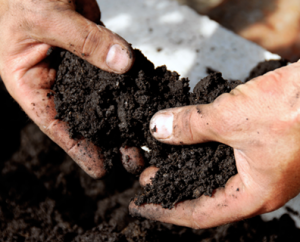
https://blog.davey.com/2019/05/how-to-make-good-garden-soil-a-step-by-step-guide/
If you really want to invest in your plant you should invest in your soil because we don’t directly feed our plant but through soil. We feed the soil and the life within it feeds the plant. Use soil that contains the ideal ratios of sand, silt, clay and organic matter if you wish to have the correct bloom. The fact that this quality is present in the soil will encourage good drainage, aeration (perlite, pumice) and porosity as well as water in nutrient maintenance and will help decompose soil matter, making nutrient accessible to plants, by remembering microbials such as fungi and bacteria and macro-organisms such as Earthworm brown beetles and other insects.
_______________________________________________________________________
Read Also : How the Explosive Interest in Organic Gardening Could Help Change the System
________________________________________________________________________
Step 3 – Know your plant
The climate has a major influence on the ripening of the plant. If you start gardening for the first time, you’d prefer to choose crops that can be grown in your climate. Grow plants that will be successful in your climate such as leafy greens like kale, lettuce, spinach or perennials, such like raspberries, strawberries or blueberries, or you may visit some local nurseries near you for the same purpose if you do not know what will be in your environment.
In order to flourish, certain plants require direct sunshine. For example,To produce the desired outcomes, Bougainvillaea, a sunstroke plant, must be planted in a direct sunlight patch. The correct quantity of sunshine is supplied to the plant.
Step 3 – Planting strategy – Prepare soil bed

https://thetinylife.com/how-to-prepare-soil-for-vegetable-gardens/
The beds of the garden must be prepared and the land soft, so that the roots may develop and feed the plant thoroughly. Unless the soil is thoroughly cultivated, the ground at the lower level will become rock resistant, and the roots of the plant will not enter the soil, leaving the plant broken.
You can grow plants in pots even when you don’t have a yard or garden. Make sure you choose a container that is large enough to sustain plant development and output. The container size may vary from plant to plant since the growth rate of each plant is different. Some may develop to large and dwarf plants.
Step 4 – Mulching
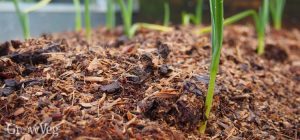
https://www.growveg.com/guides/the-pros-and-cons-of-mulching/
Mulch is basically an organic covering for the top of your soil that’s going to protect your soil, help keep it nice and moist. The soil life will be nice, protected from the sun’s harmful rays. Its going to keep water in the soil and overall it just manages the garden a lot better. You can almost think of it as a buffer layer to the top of your garden soil, that’s going to help protect and care for the plants within. So when you’re prepairing your bed, leave a couple inches dedicated for mulch. You can use shredded straws, or wood chips but be careful, uncommon posted unbroken down wood chips can actually steal nitrogen from the soil for a little bit until they break down. So if you’re gonna do that, it is highly recommended to not do that in vegetable or herb plant
________________________________________________________________________
________________________________________________________________________
Step 5 – Labeling
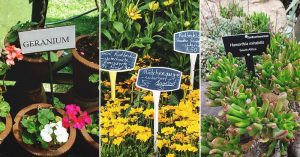
https://morningchores.com/plant-labels/
You should identify and track the plants unless you have a strong sense of mind to recall the seeds you grow, or an eidetic mind or memory. It is preferable to do it as it is normal for you to forget the variety or name, kind and many plants when you plant is more essential than what you plant since you are eager to know in the case of grass when it will be ready for the next stage or when you will begin to pull, pull, etc.
The way you do it is the way you do it, as long as YOU DO IT and you’re going to have much more success. Because if you’re tracking it, you’re aware about it, you’re aware about it which means that you care about it enough to care for it.
Submitted by Rashmi Ahlawat
Tags: #garden, #gardening, #getgreengetgrowing, #gngagritech, #greenstories, #labeling, #plant, #planting, #plantlife, #soil, #trees






Enjoyed reading through this, very good stuff, thanks.