“You never know the worth of water until the well runs dry”

It’s a well-known fact that water occupies around 3/4 of our planet’s surface, but yet only 2% of it is fresh water. The remaining is present in the ice form in the glaciers. Yes, polar ice makes up a bigger share of the available water. Approximately 86% of Asia’s fresh water is utilised in agriculture, 8% in industry, and 6% in residential usage. Agriculture accounts for 83 percent of India’s freshwater use. These stats are enough to make you believe you how important water is for our survival and growth. Everything depends on it. From smallest things to the biggest industries, cannot thrive without it.
Water is an important part of our life since it is a valuable natural resource. Water scarcity has increased in various regions of the world during the last several years. Water shortage is a serious issue for humanity. More and more water is required for residential, building, and industrial usage — and the rate of extraction considerably outpaces the rate of replenishment of our water tables.
_______________________________________________________________________
Read Also : Japanese Bird That Looks Like A Flying Cotton Flower
________________________________________________________________________
There is nothing sacred about the way we treat our vital water supplies. Overexploitation and pollution have reduced the availability of clean and drinking water to the point of oblivion.
Overexploitation of groundwater has been caused by urbanisation, which has resulted in a decrease in open soil surface and water penetration rate, as well as a deterioration in water quality.
To assist minimise the high rate of water loss, ideal measures must be put in place.
I can ramble for long enough about the problems of water shortage water contamination and the need to conserve it, but rambling won’t do any good, would it? No.
Then what can we do from our part? Little steps, to save water wherever possible, reuse it wherever we can like in toilets, and conserve the rainwater for future use.
Here are some easy steps that you can adopt or if you play close attention to, you’ll be able to save water. Its just the baby steps, but the thought matters. And as the say, Little drops of water, make the mighty ocean.
Rain Water Harvesting
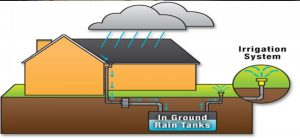
Rainwater harvesting (RWH) is the collecting and storage of rainwater rather than letting it flow off. Rainwater is gathered from a roof-like surface and guided to a tank, cistern, deep pit (well, shaft, or borehole), aquifer, or reservoir by percolation, where it seeps down and replenishes ground water.
________________________________________________________________________
Read Also : Meganeura : The largest insect ever existed was a giant dragonfly
Most of the time, the water is collected off rooftops and other hard surfaces. Rainwater harvesting is regarded as a highly dependable method of water conservation. This method has been performed since ancient times and has been around for a very long time. It is critical in lowering the usage of potable water and increasing reliance on rainfall. In layman’s terms, collecting rainwater is using every single drop to recharge groundwater by simply directing it to a well or beneath the earth.
Water the plant in morning

Water plants first thing in the morning. It’s colder in the mornings, so you’ll use less water. The less water evaporates, the lower the temperature. Water early in the morning or late at night to prevent water from evaporating in the heat of the day before reaching the roots. To preserve moisture in the soil, apply water-retaining crystals. Allow plants and shrubs to dry out until they show symptoms of wilting – watering too frequently can cause roots to become shallow and weaken plants.
Plant drought-tolerant lawns and plants
They have drought-resistant grasses as well as fake grasses, which are a wonderful alternative for lowering your electricity cost and water use. Succulents and native plants should be planted in your region. It’s also a good idea to put plants together based on their watering requirements to avoid overwatering.
In some places, Watering yards and gardens consumes 30-60% of residential drinking water, with substantial parts typically lost due to over-watering, evaporation, and misdirected sprinklers that wet sidewalks and roadways.
Switch to Low-flow showers
Shower head with a modest flow rate. Switching to a low-flow shower head can save you up to 15 gallons of water during a ten-minute shower. A low-flow shower head consumes roughly 12 gallons of water in an 8-minute shower.
Leftover ice to water plants
Place any leftover ice cubes or ice pieces on a plant that needs to be watered. This way the old water which is not fit for use for cooking and drinking purpose can be put to better use than simply wasting it.
_______________________________________________________________________
Read Also : List Of 50 Extinct Animals On Planet Earth
________________________________________________________________________
Defrost the food rather than washing under running water
Do not defrost frozen goods under running water! Defrost items in the refrigerator for both food safety and water conservation.
When washing fruits, veggies, or dishes, use a bowl in the sink. The waste water may then be used to hydrate your plants.
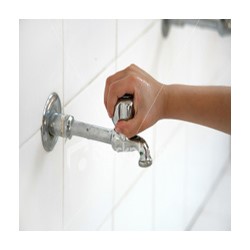
Turns of the taps when not using it
https://www.bellabathrooms.co.uk/blog/my-tap-wont-turn-on-or-off-how-to-fix-it/
Don’t allow your water usage get out of hand. Turning off the water while brushing your teeth saves 6 litres of water every minute. Fix leaking faucets, too, and you’ll save up to 60 litres of water each week.
Despite the fact that our need for fresh water sources is always rising due to population and industrial expansion, our supply remains stable. Even though water eventually returns to Earth via the water cycle, it is not necessarily returned in the same location, amount, or quality. We can better safeguard ourselves against future droughts by decreasing the quantity of water we consume.
Reduced water use decreases the energy necessary to process and distribute it to homes, companies, farms, and communities, which helps to minimise pollution and save fuel resources.
Water conservation takes planning and work, but every little bit helps. Don’t think that what you do is insignificant. We can all make lifestyle adjustments to minimise our water consumption. The challenge is to make water conservation a way of life, rather than something we think about every now and again.
Submitted by Rashmi Ahlawat
Tags: #aquifer, #getgreengetgrowing, #gngagritech, #greenstories, #growth, #harvesting, #rainwater, #rooftops, #soil, #tables, #water, #waterconservation, #watertables