The EU is weighing accelerating the development of manure-based fertilizers to limit reliance on Russian-made alternatives and the gas needed for domestic production.
________________________________________________________________________
Read Also: Will the Race for Electric Vehicles Endanger the Earth’s Most Sensitive Ecosystem?
________________________________________________________________________
The Spanish and Dutch governments are “opening a new focus” on treating manure and using it instead of traditional, gas-based products, Spanish Agriculture Minister Luis Planas said in an interview Monday. The pilot project has been discussed with the rest of the European Union’s agriculture ministers, whose reaction has been “positive.”
The war in Ukraine propelled wholesale fertilizer prices to multi-year highs earlier this year, despite the US exempting Russian sales from sanctions. Soaring prices for gas, the main input for nitrogen-rich ammonia fertilizer, have made it more expensive to produce supplies and forced manufacturers to halt some output.
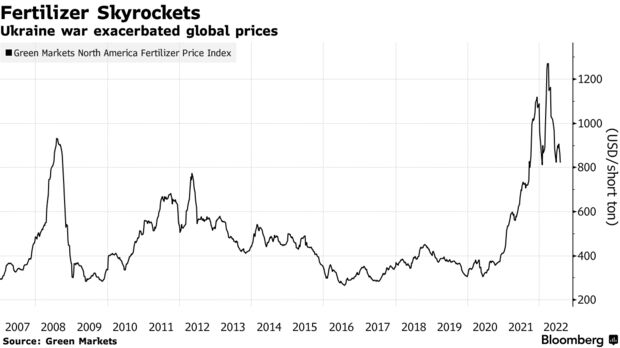
Disruption to the supply of fertilizer is already curbing crop yields in South America while soaring prices have had a particularly heavy impact on countries such as France, which imports about 70% of its needs, said Planas.
________________________________________________________________________
Read Also: Why we should regenerate and restore High Carbon Ecosystems!
________________________________________________________________________
“Developing biological alternatives to traditional fertilizers would drastically reduce gas consumption, giving Europe an element to foster its food self-sufficiency” he said. “In this regard, they represent our top priority.”
Global prices will likely remain high this year and next as the war in Ukraine stokes uncertainty about the supply of Russian fertilizer and increasing output can take as long as five years, according to the US Department of Agriculture.
Manure-based products would be “very important” for both Spain and the Netherlands, said Planas, adding that current advances in research and development would have to be followed by change in EU regulations. Still, building the mechanisms to treat different kinds of manures could take about five years, he said.
________________________________________________________________________
Read Also: ” Twitter storm: noise pollution creates havoc for birds, study shows”
________________________________________________________________________
While manure is a cheaper alternative to pricey synthetic fertilizers, it is less potent than traditional products. For example, the fertilizer diammonium phosphate has six times the nitrogen and 15 times the phosphate as manure on a per ton basis.
NOTE – This article was originally published in bloomberg and can be viewed here
Tags: #agriculture, #crop, #European, #farmer, #fertilizers, #food, #foster, #gas, #getgreengetgrowing, #gngagritech, #greenstories, #russian