
On September 16, 1987, the ‘Montreal Protocol on Substances that Deplete the Ozone Layer’ mapped out a multilateral environmental agreement to regulate the production and consumption of nearly 100 man-made chemicals referred to as ozone depleting substances (ODS). This year in August, over three decades after the landmark agreement, the world reached a major collective milestone. The American scientific and regulatory agency National Oceanic and Atmospheric Administration (NOAA), announced that the worrisome concentration of ODS in the atmosphere has reduced.
________________________________________________________________________
Read Also: From health to climate change: These 5 stories hold out hope for India
Bikrant Tiwary, the CEO of social organisation Grow-Trees.com explains the significance of this development, “The ozone layer found approximately 15 to 35 kilometers above the surface of our planet contains a rich concentration of Ozone molecules (O3) and is like a shield that absorbs a large part of the Sun’s ultraviolet radiation.This protective stratospheric ozone is formulated through a natural and extremely fascinating interaction between solar ultraviolet (UV) radiation and molecular oxygen (O2). It is reassuring that the stratospheric ozone layer is in recovery because without it all biological and marine systems on earth would perish.”
Tiwary emphasises the important role that the global community of stakeholders played in protecting the stratospheric ozone and says, “Montreal Protocol is the first treaty to achieve universal ratification by all countries in the world and its success has shown that unified intention and collective action can achieve what seemed impossible at one time. India too began complying to the Montreal Protocol from June 1992 onwards and has been working towards phasing out ODS related projects and activities.”
________________________________________________________________________
Read Also: Urban Missions are important components of our response to climate change: Hardeep Puri
________________________________________________________________________
Bikrant however issues a reminder that it took the world over 35 years to considerably repair the hole in the Ozone layer and adds, “But we cannot wait that long to collectively stall the ticking clock of climate change. Climate change is currently triggering extreme weather events all over the world and we need urgent solutions. The Kigali Amendment to the Montreal Protocol is a good step forward as it is a legally binding international agreement about rights and obligations to gradually reduce the consumption and production of greenhouse gases like hydrofluorocarbons (HFCs) which are contributing to climate change in a big way.”
India supports the Kigali Amendment and the citizenry too can do their bit by taking part in afforestation projects, says Bikrant and adds, “While it is important to invest in green technologies and phase out ODS, something as simple as planting more trees can easily reduce ground-level ozone pollution We need a global afforestation drive where citizens can take part in massive tree planting drives.”
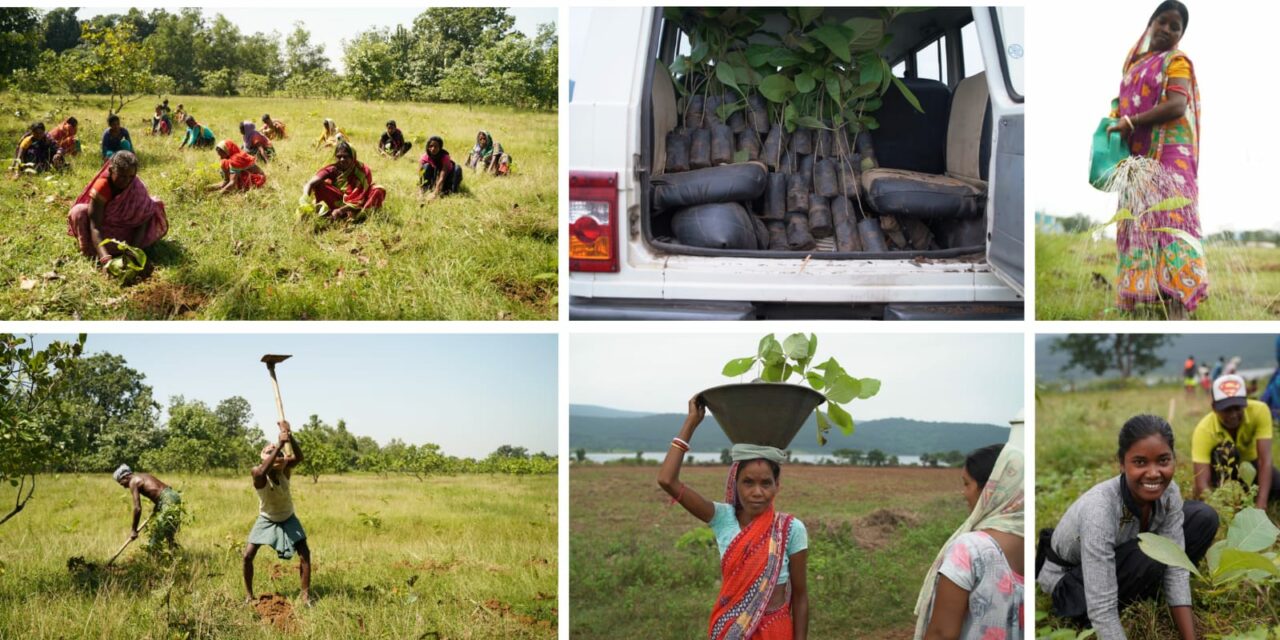
As an organisation, Grow-Trees.com’s mission has been to restore forest cover, change the narrative of helplessness around environmental issues and demonstrate that every earth citizen can do something for the planet. As Bikrant reminds, every tree that is planted absorbs toxic substances, filters the air, lowers ground-level ozone levels, provides life-giving oxygen, serves as a carbon sink and mitigates the greenhouse gas effect.
________________________________________________________________________
Read Also: The scientific method and climate change: How scientists know
________________________________________________________________________
He adds, “We want India to spearhead the movement to make the world healthier and greener. Every project we have undertaken since 2010 including in Tanzania where we planted over one million trees, has been dedicated to that vision.”
Grow-Trees.com so far has planted over 10 million trees across the 23 states of India. These trees will not just replenish vulnerable ecosystems but also absorb more than 182 million kgs of carbon every year upon maturity, and will help release oxygen into the atmosphere.
“In 2019, scientists estimated that a worldwide planting programme can potentially remove around one-third of all the emissions from human activities in the atmosphere. Every tree that is planted fights for us like a warrior. It is time we too fought to protect trees and planted them collectively and individually to heal the earth,” concludes Bikrant.
Tags: #carbon, #climate, #climatechange, #earth, #environment, #getgreengetgrowing, #gngagritech, #greenstories, #growtrees, #HFCs, #nature, #O2, #Pollution, #solar