Yes, you read the headline right. And by self-awareness, we don’t mean in an ‘oh no, artificial intelligence will kill us all!’ type of way; we mean if you stick a cute corset on a penguin, the adorable bird might just waddle over to a mirror to admire how handsome it looks.
________________________________________________________________________
Read Also: From Green Revolution to Millet Revolution
________________________________________________________________________
For long, we’ve looked at dogs, cats and other animals and lovingly wondered, ‘is there even a single thought running behind those eyes?’ And then they start snarling at their reflection, settling the debate for us.
Many of us might’ve already seen similarly hilarious reactions from animals when they are tested for self-awareness. If you remember viral videos of wild animals coming across large mirrors and scuttling away in terror — yep, that’s the one.
The ‘mirror test’ was developed by behavioural psychologist Gordon Gallup Jr. in 1970 during his work with chimpanzees. Since then, it has become a standard to test whether animals recognise themselves in the mirror, or if they merely think they’re meeting another of their kind — hence proving whether they possess a sense of self.
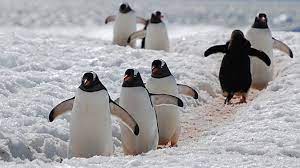
Recently, a trio of Indian researchers from IIT Bombay, the Indian government’s Ministry of Earth Sciences and the National Institute of Advanced Studies attempted a similar test with wild Adélie penguins in Antarctica.
________________________________________________________________________
Read Also: How Goats Are Preventing Wildfires in California
________________________________________________________________________
The experiment revealed that not only did the birds display behaviour consistent with recognising themselves, but they were also somewhat self-obsessed! Penguins taken from different waddles (groups) spent at least 11-16 minutes admiring every bit of their magnificently stubby figures in the mirror.
Interestingly, when the researchers covered part of the mirror with a green circle that obscured the penguin’s vision of their own faces, they even attempted to peck at it to remove it from the mirror. I mean, how else will they check if their beaks are powdered perfectly?
During this time, however, they did not display any aggressive tactile behaviour towards their reflections, meaning they weren’t too bothered by this new apparition in front of them. The penguins did make rapid head and flipper movements, but the way their gaze was stuck on their images made the scientists think that these were merely gestures. The uniqueness of their behaviour suggested that the individuals possibly did not consider the images to represent other conspecific individuals.
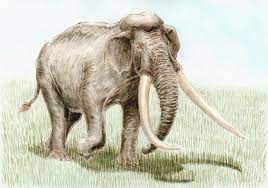
Even human babies take a while before they develop self-awareness, so, understandably, such a trait is particularly rare in the animal kingdom. And based on the experiment’s findings, penguins could now join the tiny list of self-aware beings that encompasses a few mammals such as chimpanzees and Asian elephants, birds such as pigeons and the Indian house crow — and most recently, a fish called the cleaner wrasse.
________________________________________________________________________
Read Also : What is Water Footprint Assessment?
________________________________________________________________________
But of course, the result of this experiment doesn’t conclusively prove that penguins fully recognise that it was themselves in the mirror’s reflection. However, the fact that these darling birds thrive in large mobile communities and still seem to recognise their pals means they do possess an advanced sense of identity.
NOTE – This article was originally published in weather and can be viewed here
Tags: #animals, #climate, #climatechange, #environment, #getgreengetgrowing, #gngagritech, #greenstories, #mirrors, #nature, #penguins, #self, #wildlife, #wildlifephotography