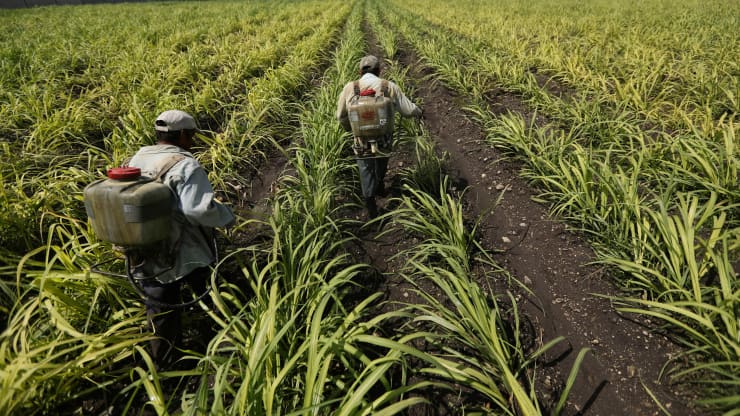
FOOD SYSTEMS FEEDING HUMANS ON THIS PLANET ARE DIVERSE. The vast majority of food is produced through agriculture, that is the production of plants and animals in a human-managed environment. I will only talk about plant production, noting that agricultural crops are a major source of animal feed. I will not discuss wild species harvested from non-agricultural landscapes, although in some food systems these species play an important role in nutritional security and in satisfying personal or cultural needs.
Agricultural biodiversity is difficult to define rigorously. This concept is usually referred to in the negative, as in the concerns often expressed about “the loss of agricultural biodiversity” in modern farming systems.
_______________________________________________________________________
Read Also : THE TRASH MOUNTAINS BEING TURNED INTO SUSTAINABLE FASHION IN RUSSIA
________________________________________________________________________
Only 3 crops contribute 60% of calories and proteins obtained by humans from plants.
Since 1900 about 75% of the genetic diversity of agricultural crops has been lost.
I propose that agricultural biodiversity be understood as the diversity of species used in food systems. We can expand the scope of the definition of agricultural biodiversity to also cover the diversity of crop varieties (lines, landraces) used by food systems for each species. Stretching the definition further, we could include the diversity of farming practices under which each species is grown but I will not discuss that point.
Food systems should aim to deliver food security, that is, according to FAO “when all people, at all times, have physical, social and economic access to sufficient, safe and nutritious food to meet their dietary needs and food preferences for an active and healthy life”.
What do we (humans) want from our food systems? Most people would agree that food systems should provide:
– Adequate amount of food, affordable and accessible to all;
– Adequate quality and quantity of macro and micronutrients, so that consumers have healthy diets;
– The food that people in their cultural diversity want to eat so that consumers have enjoyable, satisfying diets, fulfilling their cultural needs;
– Food produced using sustainable practices, that is not compromising the ability of future generations to continue producing food.
250K to 300K are known edible plant species. Only 150 to 200 are used by humans.
Whether food systems (as opposed to regulations, tax incentives, welfare transfers, payments for environmental services, etc.) should also be tasked with sustaining the existence of rural communities and farmers as landscape managers is a matter of debate. Agricultural biodiversity is a key element of satisfying the 4 requirements listed above.
This diversity has to be explored at very diverse scales, recognising the difference between staple food (providing a large part of the energy requirements) and fruits and vegetables, where biodiversity can be much larger and provide good returns to farmers.
________________________________________________________________________
Read Also : Afforestation can help to tackle climate change. Here’s how
________________________________________________________________________

FAO’s Definition of Agrobiodiversity
Agrobiodiversity is the result of the interaction between the environment, genetic resources and management systems and practices used by culturally diverse peoples, and therefore land and water resources are used for production in different ways. Thus, agrobiodiversity encompasses the variety and variability of animals, plants and micro-organisms that are necessary for sustaining key functions of the agro-ecosystem, including its structure and processes for, and in support of, food production and food security.
Read More
At the planet scale, diversity of species grown is essential. Underutilised staple food (eg. tef, buckwheat, amaranth, quinoa, millets) need research so that their production can be profitable for farmers and for sustainable use of the land. Because of climate change and the need to reduce agriculture carbon footprint, productive use of land is paramount: we have to avoid at all costs further land clearing. For the next 4 decades, until global population stabilises (in around 2060), the growing demand for food has to be met by growing more food from the same area. This will require intensive, highly productive systems. Agricultural biodiversity can contribute to the intensification: growing more species, more crops per year, two species together (intercropping, mixed cropping), novel rotations, etc. Agricultural biodiversity can also assist in transitioning diets to more pulses (eg. bambara, cowpea, fonio, beans), fruits and nuts as a way to reduce meat consumption as advocated by the EAT-Lancet report.
________________________________________________________________________
Read Also : How Helpful is Pranayama in Fighting COVID-19? Find out!
_______________________________________________________________________
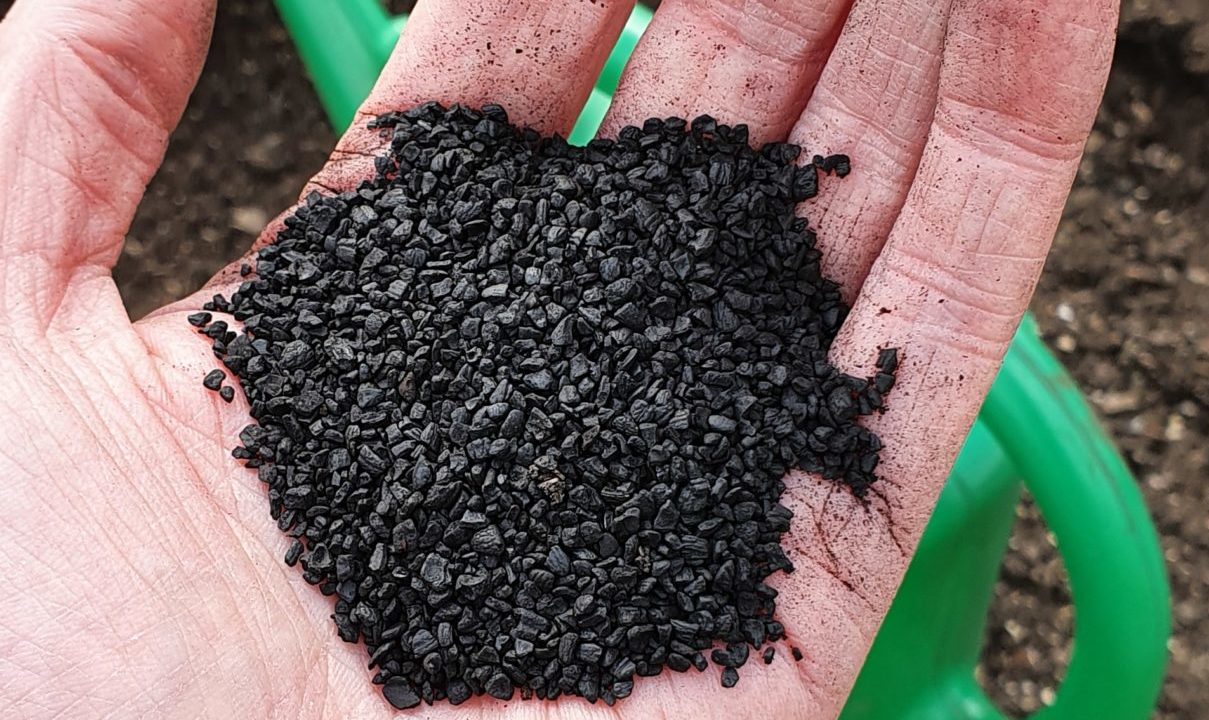
It takes about 500 years to form 25 mm of soil under agricultural conditions.
At the regional scale, growing a diversity of species facilitates diverse supplies to the regional markets. However there are cases where specialised intensive production in one area with transport of the produce to other areas is more sustainable use of the land and the resources (eg. Carbon emitted per kg of produce).
At the farm scale: agro-ecological parameters (latitude, temperature, day length, water precipitation or irrigation availability, land topography and soil types, etc.) and socio-economic parameters (population density, landholding size, land tenure arrangements, access to farm input, credit and insurance, access to markets, etc.) determine for a large part which crops can be grown in a particular place at a particular time. Once these key parameters are accounted for, market demand and policies (eg. government procurement subsidies) will influence farmers’ individual decisions of what they grow and how.
At the end of the day, farmers will grow what consumers will buy, provided the food system enables them to pay themselves adequately by doing so. While return on investment is a major driver of large scale commercial farming, return on labour is a key concern for smallholder farmers in the developing world.
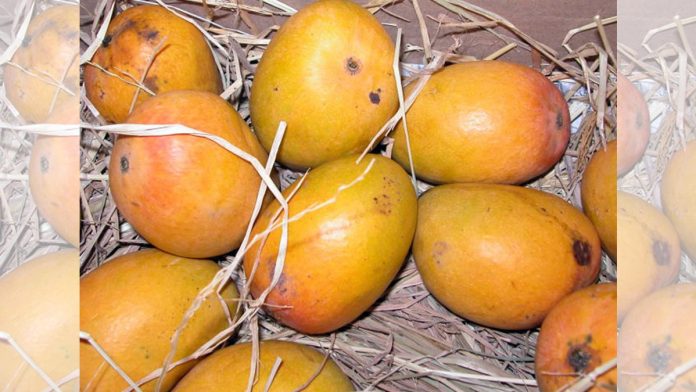
From a western consumer perspective, while there is a widespread belief that diversity of diets has decreased with modern agriculture, common sense and a regular visit to food markets and supermarkets in the western (rich) world show that consumers there have access to an increasing diversity of food. Just ask an 80-year old European consumer whether they had access to kiwifruit, bok choy, or quinoa in their childhood. Diets have changed with social and demographic changes and affluence, consumer preferences have changed and their demands have changed accordingly. Food systems have responded to these demands and would respond to changing demand in the future.
NOTE – This article was originally published in greenbrownblue and can be viewed here
Tags: #agriculture, #Agrobiodiversity, #animals, #environment, #farming, #food, #getgreengetgrowing, #gngagritech, #greenstories, #nature, #plants