

Carbon emissions trading and carbon credits both aim to reduce global carbon emissions. Although they are two separate terms, they are closely related. So we had to ask: What’s the difference between carbon emissions trading and carbon credits?
Carbon emissions trading is a form of carbon pricing that places a limit on pollution emissions. Carbon credits are tradable certificates or permits used in carbon emissions trading systems that set a maximum level of carbon emissions for industries, companies, or countries.
In the fight against climate change, how can we tell the difference between carbon emissions trading and carbon credits? Below we will define both terms, identify the key advantages and differences of each, explore how they operate and what impact they have on carbon emissions, and discuss why they are both important in the fight against climate change.
How Are Carbon Emissions Trading and Carbon Credits Defined
Carbon emissions trading (CET) systems and carbon credits are sustainability tools that can help individuals and organizations lower their carbon footprints. They are used in conjunction to limit the total amount of carbon emissions.
What Does the Dictionary Say About Carbon Emissions Trading and Carbon Credits
Carbon emissions trading (CET), also referred to as cap-and-trade, is a form of carbon pricing that places a limit on pollution emissions. CET systems became established after the Kyoto Protocol, an international treaty, set a maximum amount of greenhouse gas (GHG) emissions that could be released into the atmosphere, both globally and nationally.
“Carbon Trading: a system for controlling pollution. Companies and governments can buy or sell licenses to produce carbon dioxide”Cambridge Dictionary
The European Union emissions trading scheme was established in 2005, and it is the world’s first and largest CET system in operation. 11,000 installations and a few hundred aircraft operators in Europe are required to participate in the scheme.
_______________________________________________________________________
Read Also : Organic vs. Inorganic Fertilizer – A Comparison
________________________________________________________________________
The two main components of CET systems are the limit on pollution and the tradable allowances. Each entity operating under a CET system is issued a certain number of carbon credits each year. Carbon credits are tradable certificates or permits that give companies, industries, or countries the right to emit 1 tonne (1,000kg) of CO2 or the equivalent amount of a different greenhouse gas (GHG).
“Carbon Credit: a unit used in carbon trading that represents the right of a business, factory, etc. to release 1000 kilograms of carbon dioxide into the environment”Cambridge Dictionary
Carbon credits are a form of climate currency, meaning they are subject to supply and demand. As part of CET systems, entities can purchase more carbon credits if their emissions exceed what was issued, and they can sell any unused credits to other entities if their emissions are less than what was issued.
What Are the Differences Between and Advantages of Carbon Emissions Trading and Carbon Credits
The main difference between carbon emissions trading (CET) systems and carbon credits is that carbon credits are a component of CET, but CET includes more than just carbon credits.
There are 4 trading units in the CET market, all of which are equal to 1 tonne (1,000kg) of CO2.
- AAUs – Assigned amount units, also referred to as carbon credits. The total assigned amount of GHG that each entity is allowed to emit.
- RMU – Removal unit. Includes land use, land-use change, and forestry activities such as reforestation.
- ERU – Emission reduction unit. Generated by a joint implementation project.
- CER – Certified emission reduction. Generated from a clean development mechanism project activity.
The transfer and acquisition of these units is closely tracked and recorded via Kyoto Protocol system registries. And an international travel log monitors country-country transactions.
The following are key advantages of CET systems and carbon credits:
- Caps on carbon emissions can be set strictly
- Unused credits can be traded to other companies
- There is accountability for reducing, tracking, and reporting emissions
- Incentivizes companies to invest in greener technologies
How Do Carbon Emissions Trading and Carbon Credits Impact Your Carbon Footprint
Carbon credits are the tradable allowances used in carbon emissions trading (CET) systems, so they both have the same purpose, impact, benefits, and effectiveness.
| Carbon Emissions Trading and Carbon Credits | |
| How are carbon emissions reduced | Carbon credits cap how much CO2 can be emitted by an entity. This cap on emissions can be gradually reduced over time, leading to less and less overall emissions. |
| Impact on own carbon emissions | Carbon credits do not directly reduce your carbon footprint. |
| Impact on global carbon emissions | Carbon credits mitigate the problem, but they do not work at the core issue of reducing overall CO2 emissions. |
| Environmental benefits | Carbon credits facilitate the switch to greener energy sources and promote energy independence. |
| Overall effectiveness in reducing carbon emissions | Improper reporting and discrepancies in maximum GHG levels between countries limits carbon credit effectiveness on a global scale. |
How Do Carbon Emissions Trading and Carbon Credits Reduce Carbon Emissions
The goal of carbon emissions trading (CET) systems and carbon credits is to reduce carbon emissions to mitigate climate change.
- Carbon credits bought and sold as part of CET systems represent indirect emission reductions. Putting a cap on emissions and decreasing this cap over time reduces carbon emissions over time, preventing CO2 from entering the atmosphere.
_______________________________________________________________________
Read Also : WILL BIRDS GO EXTINCT? STUDY REVEALS THE IMPACT OF CLIMATE CHANGE
_______________________________________________________________________
When you hear the words “carbon credit”, think about the term “allowance”. Carbon credits represent the maximum amount of CO2 an entity is allowed to emit. This cap on CO2 emissions slowly decreases over time, forcing entities to emit less and less CO2 to stay within the boundaries of the cap. Companies with high levels of emissions can continue to operate, but only at an increased cost.
What Impact Do Carbon Emissions Trading and Carbon Credits Have on Your Own Carbon Emissions
One of the best ways we can aid in the fight against global climate change is to reduce our carbon footprint. And to do this we first have to reduce our carbon emissions.
- Carbon credits bought and sold as part of CET systems do not directly reduce your carbon footprint.
Carbon credits do not directly reduce your own carbon emissions. Setting a limit on allowable carbon emissions is an indirect method of emissions reduction because companies can continue to emit as long as they pay the price.
Coupled with direct measures of emission reductions, such as reducing individual energy usage and consumption, carbon credits can become more effective.
What Impact Do Carbon Emissions Trading and Carbon Credits Have on Global Carbon Emissions
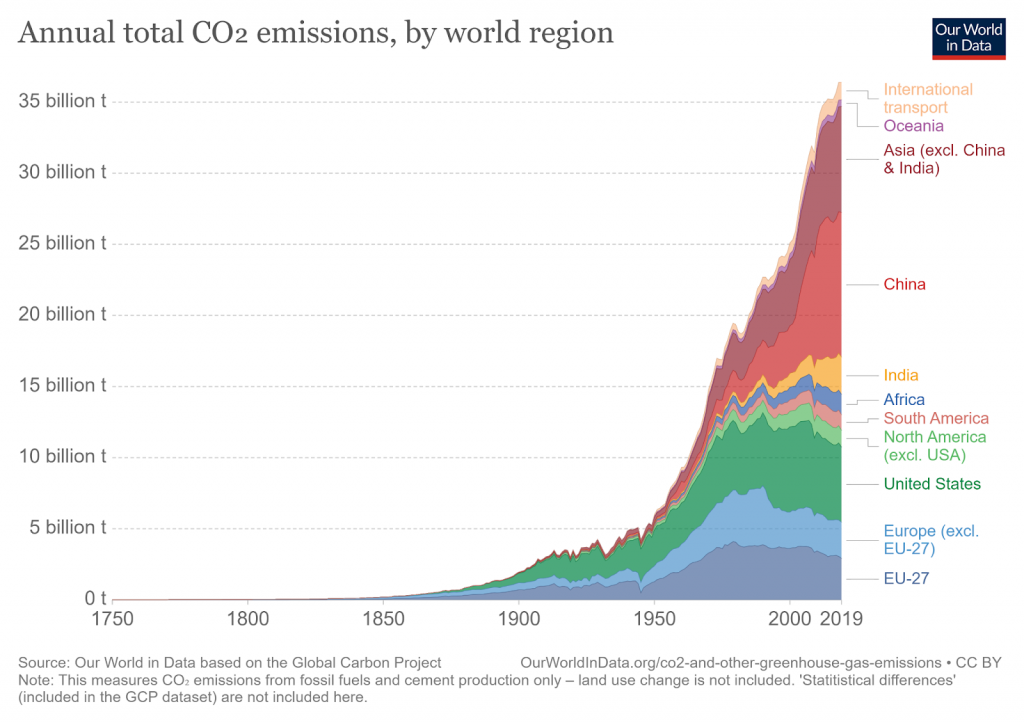
Every year we pump over 36 billion tons of CO2 into the atmosphere, fueling climate change. This causes temperature and sea-level rise, melting of sea ice, changing precipitation patterns, and ocean acidification. CET systems and carbon credits aim to reduce global emissions and mitigate these negative environmental effects.
- Carbon credits bought and sold as part of CET mitigate the problem, but they don’t work at the core issue of reducing overall CO2 emissions.
Carbon credits do not have a significant impact on global carbon emissions. Although they may incentivize companies to reduce their CO2 emissions, the immediate effect of reducing emissions under the cap-and-trade system is to benefit a company’s bottom line. The direct goal of carbon permits is not to reduce greenhouse emissions or support sustainable energy projects, but rather for companies to make money.
The COVID-19 pandemic triggered the largest decrease in energy-related carbon emissions since World War II, a decrease of 2 billion tons. However, emissions rebounded quickly at the end of 2020, with levels in December ending 60 million tons higher than those in December 2019. This indicates that the earth is still warming at an accelerated rate, and not enough is being done to implement clean energy practices.
What Are the Environmental Benefits of Carbon Emissions Trading and Carbon Credits
Carbon emissions trading (CET) systems and carbon credits can reduce our consumption of and reliance on fossil fuels (i.e., coal, oil, and natural gas) which can reduce the effects of global warming by limiting global GHGs. But it also comes with various environmental benefits.
- Carbon credits bought and sold as part of CET facilitate the switch to greener energy sources and promote energy independence.
Carbon credits incentivize companies to switch to greener energy sources including solar, wind, hydro, and geothermal energy. They do not emit CO2, nitrogen oxides, sulfur dioxides, or mercury into the atmosphere, soil, or water. And these pollutants are known to contribute to the thinning of the ozone layer, global sea-level rise, and the melting of our world’s glaciers.
Switching from fossil fuels to green energy also promotes energy independence. Being able to produce your electricity without the aid of foreign countries is an important step in becoming more self-sufficient.
How Effective Are Carbon Emissions Trading and Carbon Credits in Reducing Carbon Emissions
CET systems and carbon credits can be effective at reducing carbon emissions under certain conditions.
- Carbon credits bought and sold as part of CET face improper reporting and discrepancies in maximum GHG levels between countries which can limit effectiveness on a global scale.
Carbon credits have faced criticism because most industries lack the technology that monitors and determines their amount of CO2 emissions. This makes it easier for companies to cheat on their emissions reports and say they are emitting less than they actually are. Also, different countries have different standards and caps for CO2 emissions. If the cap is set too high, then companies are not incentivized to reduce emissions. But set the cap too low, and companies will be overly burdened to reduce emissions. And the extra cost will be passed down to consumers as a result.
_______________________________________________________________________
Read Also : Nitrogen management key for organic sweet corn
________________________________________________________________________
Why Are Both Carbon Emissions Trading and Carbon Credits Important to Fight Climate Change
Carbon credits bought and sold as part of CET systems are important to fight climate change because they are a way to reduce your carbon footprint. Reducing your carbon footprint is important because it mitigates the effects of climate change, which has a positive cascade effect on public health and plant and animal diversity. In addition, this boosts the global economy and leads to innovative, more environmentally-friendly solutions.
However, carbon emissions trading (CET) systems and carbon credits should not be used as a panacea for climate change. Relying on carbon credits solely is impractical because the immediate effect of reducing emissions under a CET system is to benefit a company’s bottom line.
In the long term, direct methods of carbon footprint reduction are much more effective. Reducing your household, travel, and lifestyle carbon footprint can go a long way in the fight against climate change!
What are Better Alternatives to Carbon Emissions Trading and Carbon Credits
If used correctly, CET systems and carbon credits can provide environmental, economic, and social benefits that go beyond reducing carbon emissions. Together, they have the potential to instigate meaningful environmental change and begin to reverse some of the effects of climate change.
However, we can’t let this method be a guilt-free way to reduce carbon emissions. CET systems and carbon credits must be used in conjunction with direct carbon reduction measures until the industry has time to invest, develop, and refine more sustainable innovations.
These reduction measures don’t have to involve drastic changes either. Actions that may seem small can have a big impact because those small changes add up! You can reduce your carbon footprint in three main areas of your life: household, travel, and lifestyle.
Reduce your household footprint:
- Wash with cold water: Washing clothes in cold water could reduce carbon emissions by up to 11 million tons. Approximately 90% of the energy is used to heat the water, so switching to cold saves also saves energy.
- Replace incandescent bulbs with fluorescent bulbs: Fluorescent bulbs use 75% less energy than incandescent ones, saving energy and thus reducing electricity demand and greenhouse gas emissions.
Reduce your travel footprint:
- Fly less: Aviation accounts for around 1.9% of global carbon emissions and 2.5% of CO2. Air crafts run on jet gasoline, which is converted to CO2 when burned.
- Walk or bike when possible: The most efficient ways of traveling are walking, bicycling, or taking the train. Using a bike instead of a car can reduce carbon emissions by 75%. These forms of transportation also provide lower levels of air pollution.
Reduce your lifestyle footprint:
- Switch to Renewable Energy Sources: The six most common types of renewable energy are solar, wind, hydro, tidal, geothermal, and biomass energy. They are a substitute for fossil fuels that can reduce the effects of global warming by limiting global carbon emissions and other pollutants.
- Recycle: Recycling uses less energy and deposits less waste in landfills. Less manufacturing and transportation energy costs means less carbon emissions generated. Less waste in landfills means less CH4 is generated.
- Switch from single-use to sustainable products: Reusing products avoids resource extraction, reduces energy use, reduces waste generation, and can prevent littering.
- Eat less meat and dairy: Meat and dairy account for 14.5% of global greenhouse gas emissions, with beef and lamb being the most carbon-intensive. Globally, we consume much more meat than is considered sustainable, and switching to a vegan or vegetarian diet could reduce emissions.
- Take shorter showers: Approximately 1.2 trillion gallons of water are used each year in the United States just for showering purposes, and showering takes up about 17% of residential water usage. The amount of water consumed and the energy cost of that consumption are directly related. The less water we use the less energy we use. And the less energy we use, the less of a negative impact we have on the environment.
Final Thoughts
In short, carbon credits are one of the tradable units of CET systems. These systems set a cap on the total amount of emissions allowed to enter our atmosphere. Carbon credits are tradable certificates or permits that give companies, industries, or countries the right to emit 1 tonne (1,000kg) of CO2.
Together they are tools in our sustainability toolbox that can be used to reduce carbon emissions and mitigate climate change. But we should not rely on them to be a cure-all for our environmental problems. Direct measures of carbon emission reduction are much more effective in reducing emissions both in the short term and in the long term.
NOTE – This article was originally published in impactful.ninja and can be viewed here
Tags: #carbon, #CarbonCredits, #climate, #climatechange, #CO2, #environment, #getgreengetgrowing, #gngagritech, #greenstories, #Pollution




