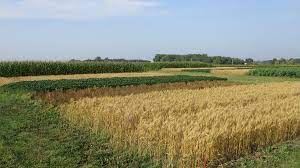
India depends on good monsoon for crops, as a major portion of its farming is still rain-fed. The reduction in rainfall due to El Niño can lead to crop failure, water scarcity, inflation in food prices, and lower yields, resulting in lower income for farmers, thus, affecting millions of people.
A unique weather pattern that has a significant impact on the agricultural sector in India, El Niño occurs due to the warming of the Pacific Ocean between South America and the Date Line, accompanied by high air surface pressure in the western Pacific. The phenomenon occurs when the Pacific Ocean trade winds die out, and the ocean temperatures become unusually high.
The World Meteorological Organization has predicted that there are chances of El Niño developing around 15 percent in April-June, gradually increasing to 35 percent in May-July, and rising around 55 percent during June-August, which can lead to severe pre- and post-monsoon phenomena.
________________________________________________________________________
Read Also: World’s first solar-powered carbon capture systems could help remove tonnes of CO₂
________________________________________________________________________
Being an agrarian economy, India depends on good monsoon for crops, as a major portion of its farming is still rain-fed. The reduction in rainfall due to El Niño can lead to crop failure, water scarcity, inflation in food prices, and lower yields, resulting in lower income for farmers, thus, affecting millions of people. India’s food security faces a significant challenge during the wheat harvest. While the rabi sowing was promising, if there is untimely rain before harvesting, as predicted by El Niño experts, it could lead to an increase in the cost of wheat. If there is another 20 percent reduction in production, it would lead to food inflation and malnutrition.
To tackle the challenges posed by El Nino, the Indian government has taken several initiatives to promote climate-resilient agriculture. One of the key strategies is to promote rainwater harvesting and groundwater recharge to ensure that farmers have access to water even during droughts. The government has launched several schemes such as the Pradhan Mantri Krishi Sinchai Yojana (PMKSY), Pradhan Mantri Gram Sinchai Yojana (PMGSY) and the National Groundwater Management Improvement Scheme (NGMIS) to support these initiatives.
Another effective way to beat the impact of El Nino is to promote the use of drought-tolerant crop varieties. The ICAR has developed several high-yielding and drought-tolerant varieties of crops such as rice, maize, and sorghum that can withstand the water stress caused by El Nino. These crops require less water and can thrive in low rainfall conditions, making them an ideal choice for farmers in drought-prone regions.
There is also active participation from state governments. For instance, the Punjab government has been organising training camps and making short videos to spread awareness among farmers to move to Direct Seeding of Rice (DSR) method in the Kharif sowing seasons. Maharashtra and Karnataka, which together have 27 percent of the area under sugarcane in India, have enforced rules making drip method of irrigation mandatory for the cultivation of sugarcane in the states.
________________________________________________________________________
Read Also: Agriculture needs a ‘natural’ boost
________________________________________________________________________
India has been functioning as a nucleus for social start-ups that have been developing and implementing innovations and new technologies in the Agriculture sector. Use of these technologies can help us alleviate the effect of ENSO. For instance, Cultyvate, an Agri-tech start-up, provides AI and IoT-based farm and crop-specific irrigation advisory and solutions to help farmers cultivate banana, grape, pomegranate, paddy and sugarcane crops, and save upto 50 percent water.
With India witnessing nearly 4.6-15.9 percent of fruits and vegetable wastage annually, innovative products such as the one developed by RAAV Techlabs, predict important parameters like sweetness, fat, proteins, acidity, moisture, time to ripeness, and total shelf life of fruits and vegetables through its proprietary algorithms. Furthermore, smart rainwater harvesting solutions such as Urdhvam’s ‘Borecharger’ harvests rainwater from shallow aquifers and stores it in deep confined aquifers.
This technique recharges aquifers and increases the rainwater recharge rate of a bore-well upto 20 times, improves the quantum upto 60-lakh litres, and enhances the longevity upto 6 months, along with better water quality. To top off these innovations, the government has also announced various measures to boost private investment in agriculture, such as setting up an ‘Agriculture Accelerator Fund’ to encourage agri-start-ups by young entrepreneurs in rural areas. The fund will aim to bring innovative and affordable solutions to the challenges faced by farmers. It will also bring in modern technologies to transform agricultural practices, increase productivity, and profitability.
Over and above these precautions, giving farmers a sense of security, and increasing their insurance coverage on crops, will be very helpful. The government’s Pradhan Mantri Fasal Bima Yojana (PMFBY) is already working in this direction and has introduced an “agri-insurance mobile app” to help farmers track the status of their insurance claims and receive real-time updates on crop prices, weather conditions, and other information related to agriculture.
In conclusion, India needs to take proactive steps to battle the impact of El Nino on the agriculture sector while reducing the negative impact of agriculture on climate. Despite of strong innovations in climate-smart technology, farmer adoption is still very low as there is little commercial incentive to be gained from saving water or reducing CO2 emissions.
________________________________________________________________________
Read Also: Climate Change Is a ‘Game Changer’ When It Comes to Heatwaves, Say Experts
________________________________________________________________________
Relevant stakeholders such as the agri-extension workers, grassroots organisations, the government, ag-techs and investors, need to work together and increase these incentives for farmers to motivate them in adoption of climate-smart technology. This shall further lead to implementing a comprehensive strategy where introducing climate-resilient crop varieties, increasing crop insurance coverage, and promoting sustainable agriculture can be embraced.
—The authors, Maithili Rege and Shinag Sharma, are agriculture experts with Villgro (formerly known as Rural Innovations Network), a social enterprise incubator. The views expressed are personal.
NOTE – This article was originally published in cnbctv18 and can be viewed here