Search for Lost Birds project is asking birdwatchers everywhere to help track down species sometimes not seen for centuries
Birdwatchers around the world are being called on to turn detective and help in a search for some of the rarest birds on Earth.
The global Search for Lost Birds, launched today, presents researchers, conservationists and the global birdwatching community with a Top 10 Most Wanted list of birds that have been lost to science, including the Siau scops owl, which was last seen in 1866.
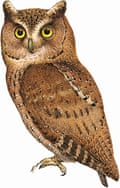
“The Siau scops owl is known from the small Indonesian island of Siau,” said Roger Safford, of BirdLife International. “A stuffed specimen was brought back to Europe in 1866, then nothing. Most of the forest on Siau has since been cut down.
“But there have been rumours of an owl on Siau. To find a species that hasn’t been seen for over 150 years … imagine that.”
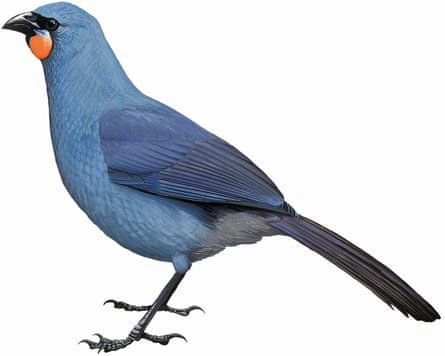
The Most Wanted list, a joint effort between Re:wild, American Bird Conservancy and BirdLife International, also includes the South Island kōkako in New Zealand, Peru’s Vilcabamba brush-finch and the Himalayan quail in northern India. The 10 birds are an extension of Re:wild’s Search for Lost Species programme, which was launched in 2017.
There has not been a documented sighting of any of the 10 birds in the wild for at least a decade. Reasons for their disappearance include climate change, habitat loss and logging, mining, hunting and invasive species. But none are classified as extinct on the IUCN red list of threatened species.
It is hoped the search could be a catalyst for greater conservation efforts. “Birds are declining globally, but some have seemingly vanished to science,” said Barney Long, at Re:wild. “If we know where these lost species are, we can put in conservation measures to conserve and recover them.”
Birdwatchers are being encouraged to register any sightings of the 10 species on the eBird platform of Cornell University’s Lab of Ornithology.
“These Top 10 lost birds are really just the most extreme examples of gaps in our collective knowledge about birds,” said John C Mittermeier, at American Bird Conservancy. “But there are many mysteries to solve and findings to contribute that are incredibly useful for science and conservation.
“Maybe there’s a local park where no one has recorded any recent bird sightings; a species that hasn’t been confirmed breeding in your local state or county; or a town where no one has done a Christmas bird count before. In some cases, all it takes to confirm the rediscovery of a lost species is a phone camera, as was the case with the black-browed babbler last year.”
________________________________________________________________________
Read Also: Feeding the Future: Artificial Photosynthesis Transforms CO2 Into Food
________________________________________________________________________
Two expeditions are planned next year to search for the Siau scops owl in Indonesia and dusky tetraka in Madagascar.
“The world’s birds are not in great shape,” said Safford. “There are around 11,000 species on the planet, and nearly half are declining. One in eight is threatened with extinction.”
The threats include agriculture, logging, hunting and trapping, invasive alien species, residential and commercial development, fire and the long-term threat of the climate crisis, he said.
“Birds don’t get the attention that large mammals, like lions, tigers, elephants and pandas attract,” added Safford. “But birds play a huge role in preserving ecosystems that humans and life on this planet are part of. Birds control pests, clean up waste and spread seeds. Around 5% of plants that humans use for food or medicine are pollinated by birds.”
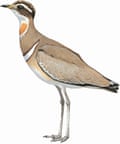
Searching for “lost” birds also offers potential knock-on effects for nature. “Of course it matters whether Siau scops owl or other lost birds, like the Negros fruit-dove, survive or not,” Safford said.
________________________________________________________________________
Read Also: TOP 10 LONGEST LIVING ANIMALS
________________________________________________________________________
“Every extinction matters. We should do all in our power to find them again. Assuming we succeed, we must then use what we learn to conserve them and also help the many other species that share the extraordinary places where they live.”
The Top 10 Most Wanted Lost Birds
- Dusky tetraka, last documented in 1999 in Madagascar
- South Island kōkako, last seen in 2007 in New Zealand
- Jerdon’s courser, last seen in 2009 in India
- Prigogine’s nightjar (also known as Itombwe nightjar), last seen in 1955 in the Democratic Republic of Congo
- Cuban kite, last seen in 2010 in Cuba
- Negros fruit-dove, last seen in 1953 in the Philippines
- Santa Marta sabrewing, last seen in 2010 in Colombia
- Vilcabamba brush-finch, last seen in 1968 in Peru
- Himalayan quail, last seen in 1877 in India
- Siau scops owl, last seen in 1866 in Indonesia
NOTE – This article was originally published in The Guardian and can be viewed here