The Union ministry of mines recently urged the ministry of environment, forest and climate change to do away with the requirement of forest clearance for exploration of mining activities
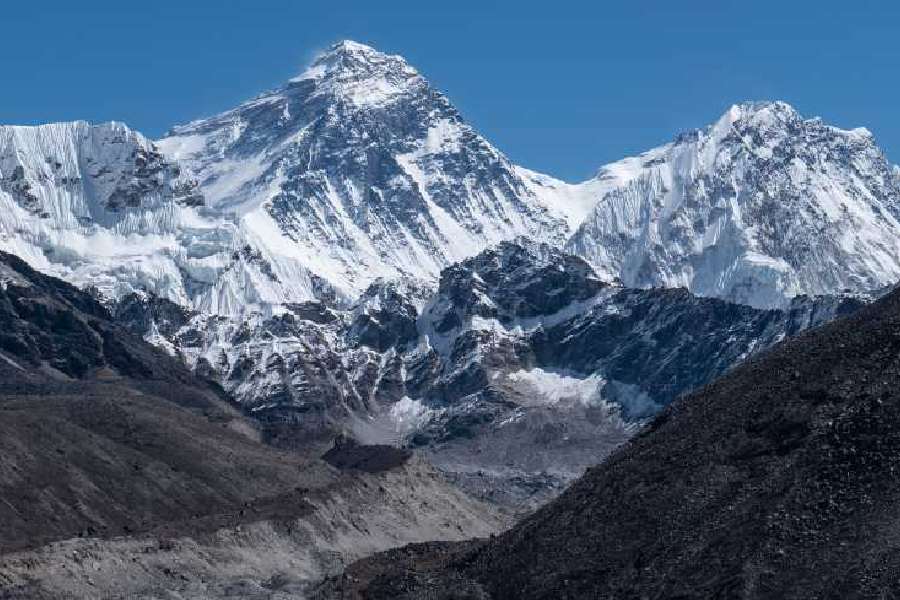
According to a report by the International Centre for Integrated Mountain Development, the Hindu Kush Himalayan region, which contains the largest volume of ice on earth outside the polar stretch, is undergoing “irreversible” changes triggered by climatic impacts and, consequently, can lose up to 80% of its glaciers by 2100 at current levels of global warming. This is alarming. These glaciers are the primary source of water for most north and east Indian rivers, not to mention the only source of water for regions like Ladakh. In the long run, this will aggravate droughts across the northern and eastern plains, which is where a majority of India’s food is grown. In the short term, it will cause floods, landslides, and glacial lake bursts like the one in Chamoli, Uttarakhand, that claimed over 200 lives.
_______________________________________________________________________
Read Also : A Soil-Science Revolution Upends Plans to Fight Climate Change
________________________________________________________________________
If mitigatory measures are not taken at the earliest, 13% of the world’s population in India, Bangladesh and Pakistan will be left without adequate food and water. A key step to alleviate the impacts of glacial melt is to restore forests and shrubs on mountain slopes. While this will not stop glaciers from melting immediately, over time, it can bring down surface temperatures and, in effect, the rate of melt. It can also reduce landslides and help replenish the underground water table. It is thus concerning that the State of Forest Report, 2021 shows that the Himalayan states lost 1,072 square kilometres of forest cover in two years.
_______________________________________________________________________
Read Also : Why climate change is still the greatest threat to human health
________________________________________________________________________
This World Environment Day, the prime minister, Narendra Modi, had assured that India is moving along a “very clear roadmap” to tackle climate change. The contours of that roadmap seem ominous in light of the fact that the Union ministry of mines recently urged the ministry of environment, forest and climate change to do away with the requirement of forest clearance for exploration of mining activities. India claims that it is leading the charge for developing nations demanding greater accountability from the developed world when it comes to fighting climate change. Yet the ground underneath its own feet is shaky. It is time to walk the talk. India’s global commitments to tackle climate change must be accompanied by a robust framework to protect its domestic ecologies.
NOTE – This article was originally published in telegraphindia and can be viewed here
Tags: #clearroadmap, #climate, #climatechange, #climatecrisis, #climaterisk, #forests, #getgreengetgrowing, #globalwarming, #gngagritech, #greenstories, #ice, #nvironment, #water