
Management of ecosystems formed by retreating glaciers could boost biogeochemical processes, aiding in climate change mitigation, says the study published in the science journal Nature
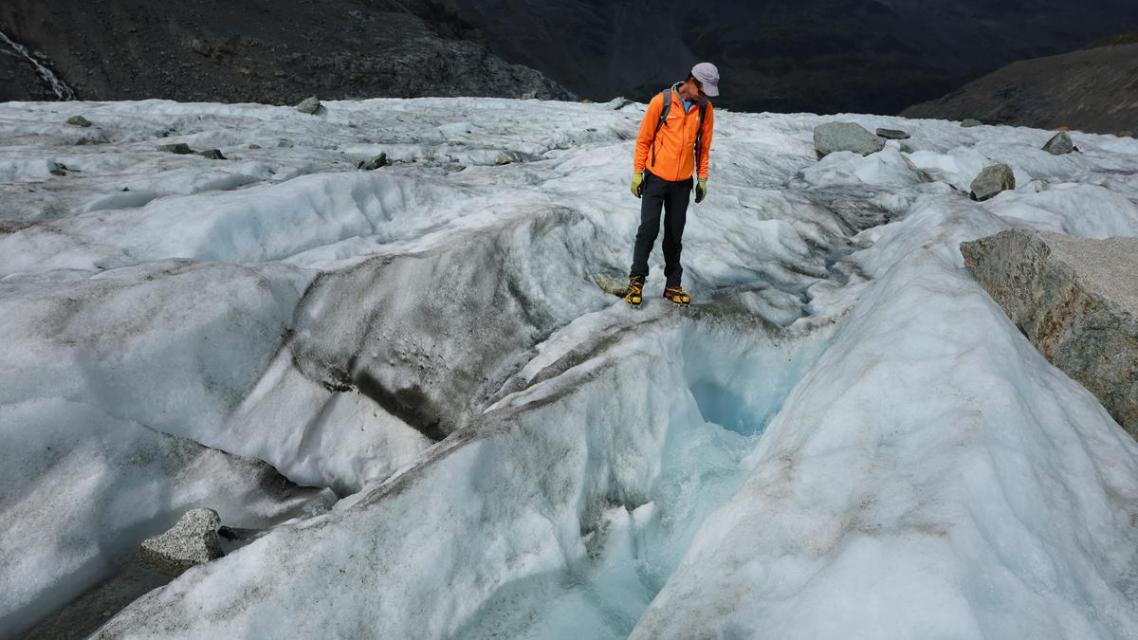
The retreat of glaciers may be one of the most evident signs of climate change, but it will leave behind new ecosystems that could help mitigate climate change, says a global study titled ‘The Development of Terrestrial Ecosystems Emerging After Glacier Retreat’.
________________________________________________________________________
Read Also : INDIA’S OPEN ECOSYSTEMS FACE AN UNUSUAL THREAT: TREES
________________________________________________________________________
The study, published in multidisciplinary science journal Nature, suggests that deglaciation may accelerate climate change by reducing surface reflectivity and releasing stored carbon, but the post-glacial ecosystems could help slow it down. The study, led by professor Gentile Francesco Ficetola from the University of Milan and Silvio Marta from Italy’s Institute of Geosciences and Earth Resources, is the result of a decade-long investigation into how ecosystems develop in glacial retreat areas. Their findings show how ecosystems develop in these areas and suggest that proper management could boost biogeochemical processes, aiding in climate change mitigation.
The study involved collecting more than 1,200 soil samples from nearly fifty glaciers worldwide, spanning diverse climates from tropical to subpolar regions. Dr. Pritam Chand of Central University, Punjab, along with professor Milap Chand Sharma of Jawaharlal Nehru University, Delhi, contributed to this study by analysing samples from the Gangotri and Bara Shigri glaciers in the Indian Himalayas. These samples were analysed to understand soil evolution, biodiversity, species arrival sequence and ecosystem development.
Pointing out that immediately after glacier retreat, microorganisms such as bacteria, protists and algae are the first to colonise the barren landscape, making minerals available for other species, Mr. Pritam Chand said that within a decade, hardy plants like lichens, mosses and grass begin to establish, enriching the soil and paving the way for more complex plant life and larger animals.
“This research is both scientifically significant and societally relevant, as it underscores the importance of these emerging ecosystems in mitigating climate change. Post-glacial ecosystems could help slow down climate change through carbon capture and storage through growing biogeochemical processes and biomass,” Mr. Pritam Chand told The Hindu.
He said as more areas become deglaciated, especially in the Himalayas and sub-polar regions, managing these new ecosystems will be vital. “With proper management, these areas can develop rapidly, providing temporary habitats for species threatened by climate change. Though recently exposed, deglaciated terrains are crucial for biodiversity and could serve as refuges for cold-adapted species. Promoting wild herbivores could further enhance life in these regions and help mitigate climate change impacts,” he said.
________________________________________________________________________
Read Also : ‘EXTINCT’ TREES FOUND IN TANZANIA SPARKS HOPE FOR ECOSYSTEM RECOVERY
________________________________________________________________________
Mr. Pritam Chand said that in India, studying the development of terrestrial ecosystems after glacier retreat is crucial, particularly in the Himalayas. He said these ecosystems regulate water availability, impacting rivers that support millions of people with drinking water, agriculture and hydropower. “Additionally, the biodiversity in these areas offers potential for medicinal and agricultural discoveries, while promoting eco-tourism to boost local economies. Protecting and studying these ecosystems can lead to valuable ecological benefits, including the discovery of new plants with potential for medicine and farming,” he said.
NOTE – This article was originally published in The Hindu and can be viewed here