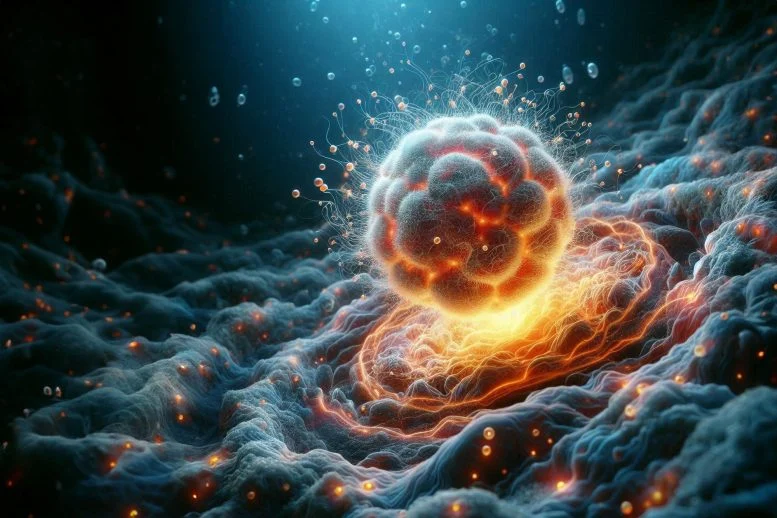
 Scientists have identified a microbe with an unusual energy metabolism, shedding light on early life processes and opening doors to new bioengineering innovations. The microbe’s ability to transform CO2 into chemicals through a unique pathway holds promise for biofuel and manufacturing efficiency. Credit: SciTechDaily.com
An unusual mode of energy metabolism discovered in a newly identified microbe provides fresh insights into primitive life processes and offers promising biotechnological applications.
Unearthed in the deep springs of northern California, this organism converts carbon dioxide into energy-rich chemicals using a previously unknown metabolic pathway, potentially mimicking early life mechanisms and paving the way for advancements in microbial manufacturing and biofuel production.
_______________________________________________________________________
Read Also : Worst mass extinction event in Earth’s history was caused by global warming analogous to...
________________________________________________________________________
Discovery of Unique Microbe
RIKEN scientists have discovered a new microbe that could provide key insights into the origins of life on Earth, the search for extraterrestrial life, and advancements in microbial-based manufacturing.
Their research, conducted in the rugged, deep-water-fed springs of northern California, uncovered a microorganism that converts carbon dioxide into other chemicals. This process not only generates energy, but employs a previously unknown metabolic pathway, suggesting novel methods of carbon fixation that may mimic the earliest forms of energy metabolism on our planet.
“It’s really unusual,” says Shino Suzuki, the study’s lead author and a microbiologist who heads the Geobiology and Astrobiology Laboratory at the RIKEN Cluster for Pioneering Research in Wako, Japan.
The unusual conditions in which the microorganisms live could be a candidate for the sort of environment in which life on Earth originated, so this new kind of carbon fixation “could represent one of the earliest energy conversion processes of primitive life,” says Suzuki. It turns out, it might also be able to be harnessed to boost the microbial manufacturing of chemicals and biofuels.

Uncharted Microbial Worlds
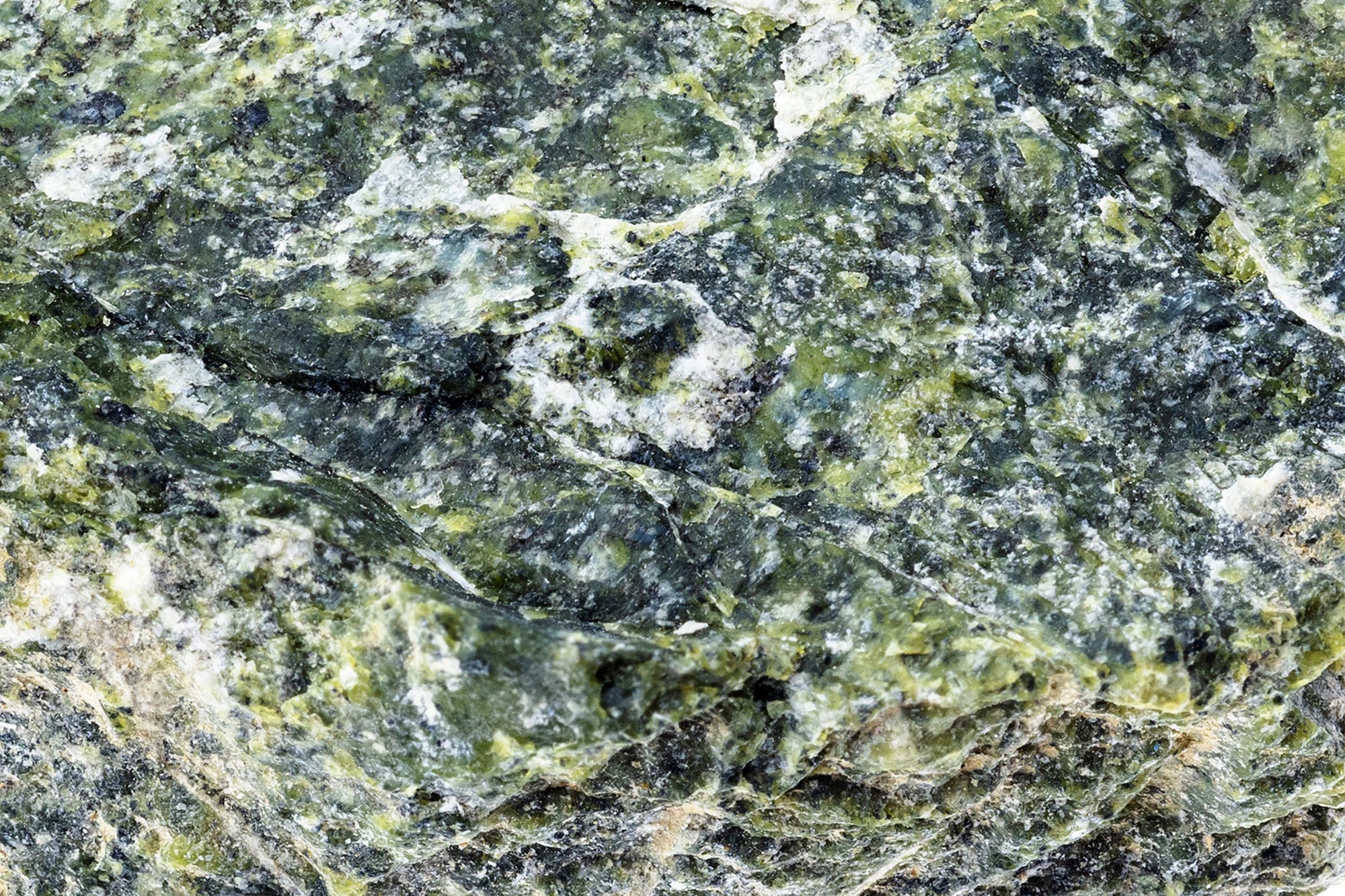
The microbe, a type of single-celled life form known as an archaeon, comes from an otherworldly ecosystem called The Cedars. Situated about 150 kilometers north of San Francisco’s iconic Golden Gate Bridge, this geological treasure is characterized by bizarre mineral formations caused by certain underground rocks reacting with water. This process creates waters that are rich in calcium, hydrogen and methane gas, but lacking in other ingredients typically necessary for life. Life thrives there nonetheless.
________________________________________________________________________
Read Also : ‘Great concern’ as study finds microplastics in human placentas
________________________________________________________________________
About 15 years ago, Suzuki and her collaborators started characterizing microbes in this hostile environment, using advanced genetic sequencing techniques to identify bacteria and archaea within these uncharted realms. They encountered a variety of exotic microbes, each with distinct genomic features and metabolic functions.
Some fed on hydrogen, while others consumed dissolved minerals in the alkaline waters. Yet perhaps none was more bizarre—and fascinating—than Met12.
Genetic Insights and Microbial Adaptation
Met12 is an abundant archaeon that lives in the deep groundwaters of The Cedars. Genetic analyses revealed that it is closely related to a group of anaerobic microbes known for their ability to produce methane as a byproduct of their metabolism. And yet, Met12 lacks the genes needed to make methane.
Instead, the microbe relies on an alternative metabolic pathway in which carbon dioxide is converted to an organic molecule called acetate, without any methane released in the process. Notably, it is assisted in this operation through a unique gene called MmcX.
This gene, as Suzuki and her team showed, helps boost the electron-importing capacity of Met12, enabling more robust energy metabolism. This adaptation is critical for the microbe to flourish in terrain such as The Cedars that, at first glance, would appear to be utterly inhospitable to such life.
According to Suzuki, the discovery showcases a form of life adapting to extreme environments in unexpected ways, a finding that could reflect how primitive or even extraterrestrial life arose under the kinds of harsh conditions thought to exist on early Earth or other planets. “This could give some insights into the origin of life,” Suzuki says.
New Frontiers in Microbial Engineering
When Suzuki, along with collaborators from the United States, Denmark and elsewhere in Japan, first discovered Met12, they didn’t believe their own findings. “I doubted myself,” Suzuki says. “I thought I had made a mistake.”
With only gene sequences available, they had to use a method process to reconstruct the circularized genome of the microbe. Culturing Met12 in the laboratory proved challenging, so they couldn’t verify its existence through traditional microbiological methods. Turning to synthetic biology, the researchers had to use creative verification methods to convince themselves that the organism was real.
They inserted the MmcX gene into a rod-shaped bacterium, genetically engineered not to feature electron transfer activity. This tweak helped to rescue the microbe’s electron-uptake abilities, even to the point that it surpassed normal levels. With further experimentation, the researchers inferred how Met12 is capable of exploiting these electrons to facilitate energy metabolism, with carbon dioxide as the primary fuel source.
_______________________________________________________________________
Read Also : Things You Can Do to Reduce Global Warming
________________________________________________________________________
Potential Applications and Future Research
The discovery has practical implications. The bacterium in which they enhanced metabolic activity and versatility is commonly used to make biofuels. Using MmcX, Suzuki hopes to improve the efficiency of genetically engineered microbes that rely on electron transfer to help manufacture chemicals and biofuels. Their innovation has led to the filing of a patent for this molecular technology.
The characterization of this archaeon could also aid in carbon sequestration, which is a priority for mitigating emissions to slow the pace of climate change.
The possibilities for innovation don’t end with MmcX. Suzuki anticipates further exceptional discoveries will follow from additional exploration of The Cedars and investigation of other unique environments with untapped reservoirs of genetic diversity.
Her team is now searching for extremophile organisms in places such as the Hakuba Happo hot springs in the Japanese Alps, a high-alkaline hot spring hosting similar conditions to The Cedars, and the underwater volcanoes of the world’s deepest marine trench, the Mariana Trench, located in the western Pacific Ocean.
“There are a lot more interesting genes that have not yet been uncovered,” she says.
NOTE – This article was originally published in scitechdaily and can be viewed here
Tags: #carbon, #carbondioxide, #climate, #climatechange, #climatecrisis, #climaterisk, #environment, #getgreengetgrowing, #globalwarming, #gngagritech, #greenstories, #lightoflife, #nature