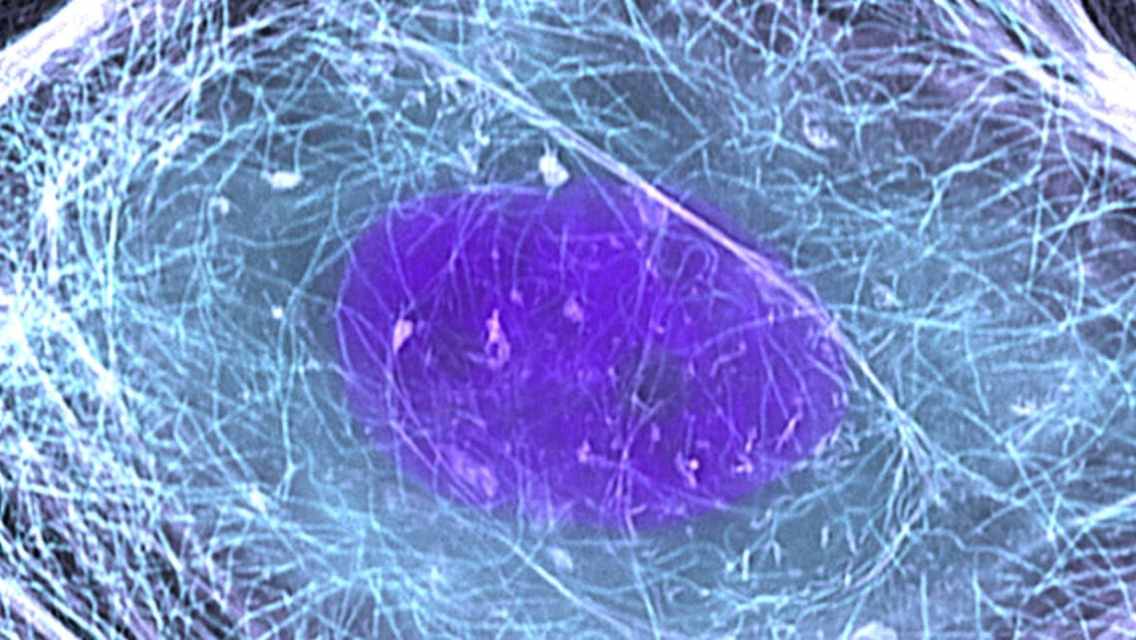
Scientists and researchers have found something related to human beings’ ageing and mortality. They call it a “countdown to death” inside human cells, and it is small in size. This discovery or revelation lies in the nucleolus, a compact structure found inside a cell’s nucleus. It operates as a tool that dictates and is an indicator of cellular health and longevity.
The results were clarified in yeast, a model organism that is well-known for producing bread and beer but also shares a surprising number of molecular similarities with humans. The study, which was published in Nature Ageing on November 25, 2024, may result in novel longevity therapies that increase people’s lifespans. Additionally, it creates a mortality timer that indicates how long a cell has left to live.
_______________________________________________________________________
Read Also : No Time, Space to Farm At Home? Hyderabad Hydroponics Firm Has a Doorstep Solution!
________________________________________________________________________
A microscopic timer inside our cells: The nucleolus
The nucleolus is often sidelined or overlooked in cellular and other scientific studies, which is quite concerning because it relates to human life and plays a significant role in regulating cell life as well. The production of ribosomes, which are necessary for protein synthesis, is the most well-known function of this small structure.
New research, however, reveals another intriguing function: the nucleolus might serve as a “mortality timer” that affects how long individual cells last. According to a study that was published in Science, cellular ageing is directly correlated with the nucleolus’ size and activity. Cells that are stressed or reaching the end of their life cycle are frequently linked to larger and more active nucleoli.
This finding implies that the nucleolus has an active role in controlling how and when cells age rather than only being a passive structure. In addition to the nucleolus, which contains the ribosomal DNA (rDNA), the nucleus contains the cell’s chromosomes. The protein-making machinery, the ribosomes, encode RNA segments that are isolated by the nucleolus.
________________________________________________________________________
Read Also :These 5 Start-Ups Are Revolutionizing The Concept Of Urban Farming In India
________________________________________________________________________
Could the secret to reversing ageing be found in an understanding of the nucleolus?
The secret to reversing ageing might and might not be found in this discovery of the nucleolus. First of all, let us talk about what happens when one is ageing. Health issues like cancer, heart disease, and neurological disorders, just to name a few, are more likely to strike people as they age. There are many factors surrounding this, and it can also include a lack of a healthy diet and exercise.
According to Dr. Jessica Tyler, a pathology and laboratory medicine professor at Weill Cornell Medicine, the greatest risk factor for these illnesses is ageing. A better strategy would be to create a medication or supplement that will postpone the onset of illnesses by preventing the underlying molecular flaws that cause them, as opposed to treating each one separately. The key might be in the nucleolus.
Additionally, the discovery of the nucleolus is beyond biology and science. By studying the nucleolus, scientists could discover many other ways to reduce ageing that could even be more effective than the nucleolus. According to experimental methods, ageing cells may be rejuvenated by altering the nucleolus’ size or activity, which would delay cell death and restore functionality.
_______________________________________________________________________
________________________________________________________________________
The practical health and ethical difficulties of extending human life
There are challenges associated with this idea and concept of anti-ageing. We will talk about the ethical challenges soon, but the health challenges are not to be ignored. Ageing is a natural way of happening in a person’s body; therefore, trying to alter certain human cells can decrease the lifespan or cause the illnesses and diseases that were mentioned earlier.
Although there is hope for advancements, the concept of prolonging human life presents difficult moral and practical issues. What effects may a major extension of life have on the world’s population, distribution of resources, and standard of living? The dangers of altering such a basic component of cellular biology must also be considered by scientists; could unforeseen consequences result in the emergence of new health emergencies?
The scientists then intend to investigate the impact of nucleolar factors on ageing in human stem cells. Because they can potentially replace other cell types when they die, stem cells are unique. However, the stem cells eventually cease proliferating, so the researchers want to extend their lifespan using the knowledge they’ve gathered from this effort.
NOTE – This article was originally published in eldiario24 and can be viewed here
Tags: #countdown, #discover, #fitness, #getgreengetgrowing, #gngagritech, #greenstories, #healthemergencies, #heath, #humans, #lifespans, #microscopic, #proteinsynthesis