The loss of genetic variation means species may be less resilient to climate change and other stressors
Variety is more than just the spice of life. Genetic variation is what allows a species to adapt as climate changes, new diseases arise, and novel predators come on the scene. A slightly different genetic makeup can ensure at least some individuals will still do OK in times of crisis. But just as the number of species is declining worldwide, so, too, is the genetic diversity within many species, an international team reports today in Nature.
________________________________________________________________________
Read Also : Global Warming Kills 14 Per Cent Of World’s Corals In A Decade: Survey
________________________________________________________________________
“This paper is a big leap forward in helping us understand the extent of genetic diversity loss,” says Chris Funk, a conservation geneticist at Colorado State University who was not involved with the work.
Conservationists were already worried about declines in the genetic diversity of threatened species, which tend to have populations that are small and isolated. But the new study indicates some animals and plants whose populations seem healthy are also losing genetic diversity as their numbers or ranges shrink because of pressures such as development or climate change.
Deborah Leigh, a conservation geneticist at Goethe University Frankfurt and the Senckenberg Research Institute and Natural History Museum who was also not involved with the study, calls this diversity loss “the silent extinction” because the change is not obvious. She notes that when many people think of biodiversity, they picture the rich flora and fauna of a tropical jungle or the colorful inhabitants of a coral reef. “But biodiversity also includes all the differences within each species in that jungle or that coral reef,” Leigh explains.
Until 2022, governments interested in protecting the environment were concerned mostly with keeping species from disappearing. That year, however, when updating the United Nations’s Convention on Biological Diversity treaty, participating countries agreed to start to look at genetic diversity as well. “For the first time, countries agreed to protect diversity in wild species,” says David Bravo Nogues, a biogeographer at the University of Copenhagen.
________________________________________________________________________
Read Also : ‘Code red’: UN report sounds alarm over irreversible climate impact, warns global warming threshold…
________________________________________________________________________
The first step toward slowing the trend is understanding it. Conservation biologist Catherine Grueber from the University of Sydney and scores of colleagues assembled 882 papers written between 1985 and 2019 that traced diversity changes within individual species by analyzing their DNA at at least two time points. Of the 628 species discussed, 70 were birds, 134 were mammals, 131 were bony fish, and 72 were flowering plants. The team used sophisticated statistical analyses to make the data comparable, enabling them to identify trends and correlate loss of genetic diversity with floods, habitat destruction, or other disturbances. They also tracked what happened in the face of various conservation measures, such as legally protecting a species or setting aside and protecting habitats.
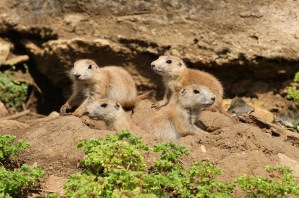
E7BF52 A family of young Black-Tailed Prairie Dogs outside their den
Some conservation efforts, such as ecological restoration or reducing pests, didn’t help much, the analysis found. “This failure is not surprising,” Nogues says. “Many conservation tools were not fine-tuned for [protecting] genetic diversity.” But certain actions did seem to help, such as efforts to expand and protect habitat, introduce new individuals to dwindling populations, or connect two isolated populations. For example, in Western Australia, conservationists have been able to stabilize the genetic diversity of golden bandicoots by transferring some individuals from an island with a large population onto two other islands.
_______________________________________________________________________
Read Also :How Maryland’s Preference for Burning Trash Galvanized Environmental Activists in Baltimore
________________________________________________________________________
“It was pretty impressive they were able to track what human disturbance and conservation actions had done,” says Moisés Expósito Alonso, an evolutionary geneticist at the University of California, Berkeley who authored a preprint last year indicating that protecting existing habitat won’t be enough to prevent genetic diversity losses for many species. “We needed something like this,” he says of the Nature study.
Conservation scientists emphasize the importance of continuing to monitor populations. But DNA methods aren’t always practical, some note. “It is relatively hard and expensive to measure genetic diversity directly,” Mastretta-Yanes says.
To get around that, Mastretta-Yanes and others published a paper in Ecology Letters last year that used proxy measures, such as population size, instead of DNA to evaluate genetic diversity in 919 species. The method, which only required about 3 hours of work per species, indicated that 58% of the species have populations that are too small to maintain their genetic diversity. The fact that these different approaches found declining diversity “makes both results more robust,” Mastretta-Yanes says. “Finally, genetic diversity is getting the attention it deserves.”
NOTE – This article was originally published in science and can be viewed here