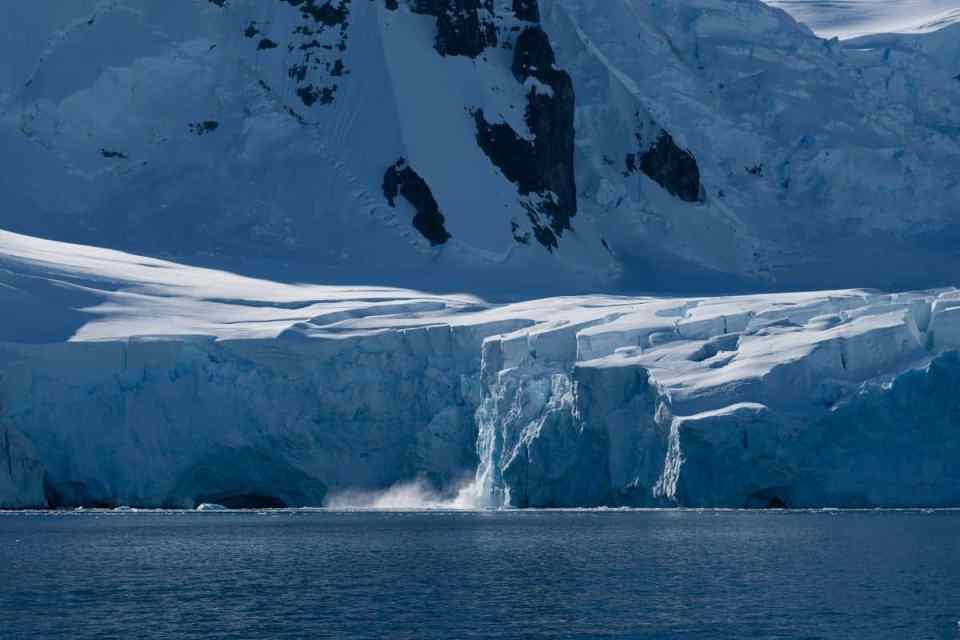
Antarctica’s glaciers are disappearing, but the real danger isn’t what you think. It’s not just warming air melting the ice from above—it’s something much more powerful lurking beneath the surface. Scientists have finally uncovered the hidden culprit, and what they found could spell trouble for the entire planet.
Antarctica, the coldest and most remote continent on Earth, is changing faster than we can fully understand. Scientists have long known that the Antarctic ice sheet—a massive layer of frozen water that holds enough ice to raise global sea levels by 58 meters—was melting. But what they didn’t fully grasp until recently was how the ocean itself is the primary force behind this transformation.
_______________________________________________________________________
Read Also : Acid Rain: Causes, Effects, Solution | Everything You Need to Know
________________________________________________________________________
New research is shedding light on the processes at play beneath the ice, revealing a world of hidden currents, extreme conditions, and an ever-evolving landscape shaped by melting. And what they’re finding is both fascinating and alarming.
The Ocean’s Secret Attack on Antarctica
For years, satellite images have shown that Antarctica’s glaciers and ice shelves—floating extensions of the continent’s massive ice sheet—are retreating. But measuring the precise mechanics of ice loss has been a challenge.
The main culprit? Basal melting, a process in which the ocean erodes the ice from below. Warmer, saltier water seeps beneath the ice shelves, eating away at them like an invisible hand carving out ice caves beneath the surface. As these ice shelves thin, they lose their ability to hold back the glaciers behind them, allowing more ice to flow into the ocean and accelerate sea level rise.
While scientists had long suspected this was happening, the exact mechanisms driving this melt were poorly understood—until now.
The Battle of the Boundary Layer
The ice-ocean boundary layer—a thin, turbulent region where the frozen world of Antarctica meets the shifting seas—is the heart of this mystery. This region, just a few millimeters to centimeters thick, controls how heat moves from the ocean to the ice.
Recent advances in computer simulations and underwater robotics have finally allowed researchers to study this elusive zone in unprecedented detail. What they’ve discovered is that the way the ice melts depends on ocean currents, temperature, salinity, and the shape of the ice itself.
________________________________________________________________________
Read Also : BLACK RICE: HOW IT CHANGED THE LIVES OF FARMERS IN ASSAM,
________________________________________________________________________
In some cases, melting ice creates an insulating layer of freshwater, which slows further melting. In other scenarios, steeper ice surfaces or fast-moving currents mix the meltwater with warmer ocean water, intensifying the melting process. This means that different parts of Antarctica are melting at different rates, driven by local ocean conditions.
A Landscape Shaped By Melting
Underneath the Antarctic ice shelves, the melting process has sculpted bizarre formations—some as small as dimples, others as large as city blocks. Sonar-equipped underwater robots have revealed strange features like:
- Scallops—dimpled depressions formed by uneven melting
- Terraces—step-like formations where layers of ice have melted at different rates
- Mussel-shaped scoops—hollows created by the chaotic movement of melting freshwater
These features not only provide clues about how the ice is melting, but they also influence future melting by shaping how water flows beneath the ice shelves.
For example, in West Antarctica’s Dotson Ice Shelf, researchers found that in the warm, calm eastern section, smooth terraces formed. But in the colder, faster-flowing western side, more chaotic, scoop-like structures emerged. The shape of the ice shelf is directly linked to how quickly it disappears.
Why This Matters for the World?
The fate of Antarctica’s ice is not just a regional issue—it’s a global one. Ice loss from Antarctica is expected to be the leading driver of sea level rise by 2100, with projections ranging from a 44 cm increase to a surprising 22 cm decrease, depending on future climate conditions.
The uncertainty comes from the complexity of ocean-ice interactions. If we fail to properly incorporate these new insights into climate models, we risk underestimating—or overestimating—future sea level rise, leaving coastal cities unprepared for the future.
Moreover, the melting ice is affecting more than just sea levels. As ice shelves collapse, they are disrupting the global ocean circulation system, slowing down the deep currents that regulate climate patterns across the planet. These changes could have unpredictable consequences for weather, marine life, and even carbon storage in the deep ocean.
_______________________________________________________________________
Read Also : Climate Change Performance Index 2021: India slips down by one position to 10th rank,…
_______________________________________________________________________
The Race To Understand Antarctica’s Future
Despite these breakthroughs, there’s still much to learn. Scientists are now working to create more advanced computer models that capture the full complexity of how ice and ocean interact.
The next step? Deploying even more underwater robots to explore deeper, harsher environments beneath the ice shelves. The goal is to reduce uncertainty in predictions of future sea level rise and better prepare humanity for what’s coming.
One thing is clear: Antarctica is melting, and the ocean is the driving force behind it. The question is no longer whether it will happen—but how fast, and how much it will change our world.
NOTE – This article was originally published in dailygalaxy and can be viewed here