
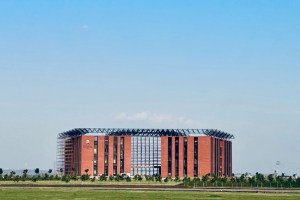
Oliver Russell, Deputy Head at Shrewsbury International School India explains why campuses are increasingly striving to be eco-sensitive
On World Environment Day, 5th June 2025, the work being done by Nature Positive Universities is inspiring students and educators around the world. Founded by UNEP and the University of Oxford, in partnership with the UN Decade on Ecosystem Restoration, Nature Positive Universities is a network of people from over 500 global institutions. Their shared goal is to work towards promoting nature on campuses and in cities. The network believes that educational institutions can use their influence to create a transformative momentum, counter the climate crisis and build resilient ecosystems. Currently, over 450 students from 40 countries join monthly workshops and implement positive actions on their campuses.
________________________________________________________________________
Read Also : Soil carbon is a valuable resource, but all soil carbon is not created equal
________________________________________________________________________
Oliver Russell, Deputy Head at Shrewsbury International School India, believes the rising emphasis on nature-integrated campuses is not only a hopeful sign for the planet but also vital for nurturing the whole child. Eco-consciousness was a founding principle behind establishing Shrewsbury International School India in the clean, green environs of Bhopal, Madhya Pradesh. The campus is powered by solar energy and enriched by over 50,000 fruit-bearing and flowering trees, creating a vibrant and sustainable learning environment.

The school, says Mr. Russell, exemplifies the global focus on sustainability, and a strong connection to the natural world. He also offers a few reasons why campuses are striving to be nature-positive in India as well as in other countries.
• Nature fosters holistic development
Modern institutions may increasingly turn to smart classrooms and digital innovation, but there is a growing realisation that no screen can substitute for the grounding power of the natural world. Parents today actively seek schools that offer their children green campuses and expansive outdoor spaces. They understand that nature doesn’t merely soothe—it strengthens. It reduces stress, nurtures emotional stability, and fosters a calm, clear state of mind vital for learning and growth.
– Natural light positively impacts learning
Daylight is not just a design feature – it is a learning catalyst. Studies have shown that students in well-lit classrooms perform significantly better, with improvements of up to 20% in mathematics and 26% in reading, as found in the landmark Heschong Mahone Group study. Natural light improves mood, focus, and cognitive function.
_______________________________________________________________________
Read Also : Waste management a grave problem in Dharamsala
________________________________________________________________________
At Shrewsbury School India’s campus in Bhopal, classrooms and common areas receive ample natural light and open into the outdoor spaces, providing a sense of serenity that is both stimulating and restorative.
• Exploration of open spaces sparks creativity
Open, uncluttered spaces aren’t merely aesthetic – they are pedagogical. When children are given the freedom to move, explore, and engage with their surroundings, creativity flourishes. Gardens, courtyards, shaded walkways, and even moments of solitude become powerful learning tools. These experiences build independence and spark joy. They also help reduce screen addiction by introducing children to fulfilling alternatives – gardening, nature trails, and unstructured play that ignites the imagination.
• Early green advocacy prepares mindful citizens
True education is not confined to academics – it must foster environmental and social responsibility. The next generation must be equipped not only with knowledge, but with conscience. At Shrewsbury India, students engage deeply with sustainable practices – from composting and gardening to water conservation and plastic reduction. These habits don’t just prepare children for exams; they prepare them to be custodians of the Earth.
________________________________________________________________________
Read Also : How Climate Change Is Fueling Extreme Weather
________________________________________________________________________
• Sustainability is a foundation
The schools of the future will not be concrete jungles—they will be living ecosystems. Green campuses today boast improved air quality, biodiversity, low carbon footprints, energy efficiency, and advanced water conservation technologies. At Shrewsbury India, we see sustainability not as an addition, but as our foundation. Our entire campus is designed to support environmental stewardship alongside academic excellence.
Tags: #earth, #environment, #getgreengetgrowing, #globalinstitutions, #gngagritech, #greenstories, #InternationalSchool, #Mr. Russell, #nature, #sustainability, #worldenvironmentday