Swiss scientists have developed a photosynthetic living material that uses cyanobacteria to absorb and store CO2.
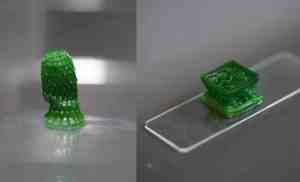
In a groundbreaking study published in Nature Communications (April 2023), researchers from the Swiss Federal Institute of Technology (ETH Zurich) unveiled an innovative photosynthetic living material capable of not only capturing carbon dioxide (CO2) but also transforming it into stable carbon forms. This technology could potentially revolutionize the way we address climate change by turning buildings into carbon-sucking structures. The development holds significant promise for large-scale CO2 sequestration, offering a sustainable, low-energy solution to mitigate the planet’s carbon footprint.
________________________________________________________________________
Also read : Microplastics in farm soils: A growing concern
________________________________________________________________________
A Living Material with Photosynthetic Bacteria
At the heart of this innovation is the use of cyanobacteria, the oldest known life form, embedded in a 3D-printed hydrogel. These bacteria have been harnessed for their natural ability to perform photosynthesis, a process that converts CO2, sunlight, and water into oxygen and sugars. This material, described as “living” because it incorporates active, growing organisms, can grow and strengthen over time. When provided with certain nutrients, such as calcium and magnesium, the cyanobacteria not only produce biomass but also convert CO2 into carbonate minerals, such as limestone. This mineralization process gradually increases the material’s structural rigidity, making it a viable candidate for future use in construction.
“The material can store carbon not only in biomass, but also in the form of minerals — a special property of these cyanobacteria,” explained Mark Tibbitt, a study co-author and associate professor at ETH Zurich. The creation of a robust mineral skeleton within the material provides both carbon sequestration and enhanced mechanical strength, making it suitable for real-world applications like building facades that actively absorb CO2.

_______________________________________________________________________
Read Also :10 Wild Animals and Amazing Fauna of Europe
_______________________________________________________________________
Turning Buildings Into Carbon Sinks
The material’s potential as a building material is particularly exciting. Researchers suggest that it could one day be used as a coating for building exteriors, allowing structures to suck CO2 directly from the atmosphere. This would not only reduce the environmental impact of buildings but also contribute to larger-scale carbon capture efforts. The researchers conducted tests over a period of 400 days, demonstrating that the material could continually sequester CO2, storing an impressive 26 milligrams of CO2 per gram. This rate of absorption is significantly higher than other forms of biological CO2 sequestration.
The material’s increasing green color over time is indicative of its growing biomass, showing how cyanobacteria efficiently absorb CO2 from the air. However, the researchers note that while photosynthesis can continue for months, the rate of carbon storage in biomass levels off after 30 days. This highlights the need for additional strategies to enhance the long-term sequestration of CO2, such as incorporating mineralization to stabilize the stored carbon.
Sustainable and Environmentally Friendly Carbon Sequestration
The core appeal of this material lies in its environmental friendliness. Unlike traditional carbon sequestration methods, which often involve energy-intensive chemical processes, this living material provides a low-energy, sustainable alternative. It works by leveraging the natural abilities of cyanobacteria to absorb CO2, producing valuable biomass while also mineralizing a portion of the carbon into solid, stable forms. This method could complement existing chemical sequestration technologies and provide a scalable solution to global carbon emissions.
“We see our living material as a low-energy and environmentally friendly approach that can bind CO2 from the atmosphere and complement existing chemical processes for carbon sequestration,” said Tibbitt. By embedding cyanobacteria within a hydrogel matrix, the material not only absorbs carbon but also provides a self-repairing mechanism, allowing the material to continue functioning over extended periods without the need for external energy input.
NOTE – This article was originally published in indiandefencereview and can be viewed here