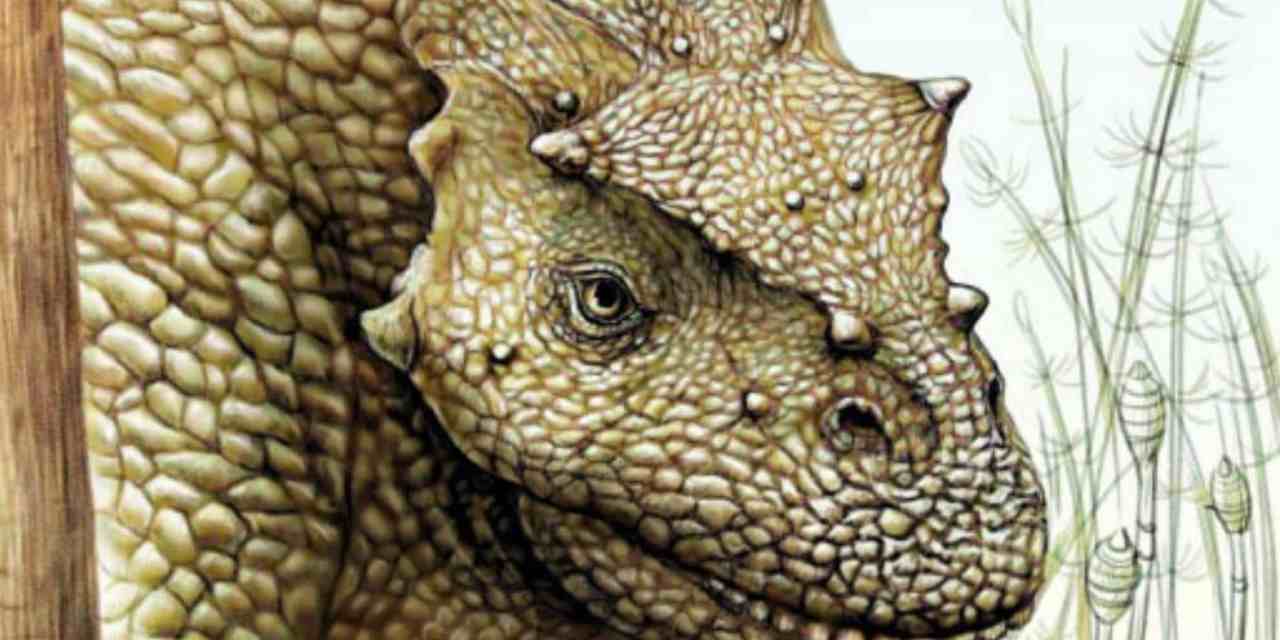
New Permian species, Yinshanosaurus angustus, found in China.
In a groundbreaking paleontological discovery, scientists have unveiled a new genus and species of mid-sized pareiasaur, Yinshanosaurus angustus. The species, found in 2018 from two fossilized specimens discovered in China, has revealed an entirely new facet of the Permian period’s herbivorous tetrapods. This discovery, published in the journal Papers in Palaeontology, offers key insights into the evolution of the diverse and once widespread group of creatures known as the Pareiasauria.
_______________________________________________________________________
Read Also : Sustainable Fashion, Revamp Your Wardrobe With Some Conscious Choices
_______________________________________________________________________
The late Permian period, a time fraught with dramatic environmental shifts and mass extinctions, has long been a focus of scientific research. Yinshanosaurus angustus lived during the final stages of this era, between 259 and 254 million years ago, and belonged to the Pareiasauria group—a strange yet crucial link in the chain of terrestrial herbivores. This discovery is pivotal not only because it sheds light on the characteristics of an ancient species but also because it contributes to understanding the overall evolutionary trajectory of pareiasaurs, especially in the context of the global extinction events that affected life during the Permian-Triassic boundary.
The Evolutionary Significance of Pareiasauria
The clade Pareiasauria represents one of the most fascinating groups of herbivorous tetrapods of the Permian period. Dr. Jian Yi and Jun Liu, leading paleontologists from the Institute of Vertebrate Paleontology and Paleoanthropology, have described pareiasaurs as a “bizarre herbivorous clade of tetrapods” that dominated ecosystems across the supercontinent Pangea during the Guadalupian and Lopingian epochs. As primary consumers, they played a crucial role in the terrestrial food webs. These creatures, which ranged from small to large, had highly specialized forms that set them apart from other contemporaneous herbivores.
“Pareiasauria are a bizarre herbivorous clade of tetrapods that existed in the Guadalupian and Lopingian and were victims of both the Late Capitanian and the end-Permian mass extinction events,” explained Dr. Jian Yi. This highlights the complexity of their evolutionary journey, which was dramatically interrupted by mass extinction events. The Late Capitanian extinction, which occurred about 260 million years ago, and the catastrophic end-Permian event, which wiped out 90% of all life on Earth, severely impacted the populations of these creatures, reducing their numbers dramatically. Despite this, some species of pareiasaurs managed to survive, adapting to the changing environments of the Late Permian.
________________________________________________________________________
Read Also : 12 Worst Foods to Avoid With Diabetes To Prevent High Blood Sugar and Weight Gain,
________________________________________________________________________
Pareiasaurs were far from confined to a specific region. The fossil distribution of this clade spans continents, showcasing the widespread nature of these creatures during the Permian period. “Pareiasauria has a worldwide distribution, with fossils discovered in Africa, Europe, Asia and South America,” the researchers noted. This global reach underscores the importance of pareiasaurs as a keystone group in ancient ecosystems, capable of thriving across diverse terrestrial habitats, from arid deserts to lush plains.
The Discovery of Yinshanosaurus Angustus
The specimens of Yinshanosaurus angustus were discovered in 2018 during excavations in northern China. One of the key specimens, a nearly complete skull, was found in the Sunjiagou Formation, a dark purple siltstone deposit located in Shanxi Province. This formation has yielded other important paleontological finds, and the discovery of Yinshanosaurus angustus further solidifies its importance as a hotspot for Permian fossils. The second specimen, an articulated partial postcranial skeleton along with a nearly complete skull, was excavated from the Naobaogou Formation, near Baotou City in Inner Mongolia.
“The first specimen was excavated from the dark purple siltstone in the lower part of the Sunjiagou Formation, near Zhangjiagetuo village, Baode county, Xinzhou city, Shanxi,” said the researchers. These locations are known for their rich paleontological significance, providing new opportunities to explore the diversity of ancient life forms that existed during the Permian period.
This discovery marks the first time that a complete cranial and articulated postcranial skeleton of a Chinese pareiasaur has been documented. The uniqueness of Yinshanosaurus angustus lies not only in its anatomical features but also in its specialized skull shape. “Yinshanosaurus angustus had the narrowest skull of all pareiasaurs, with skull length more than twice the skull width at the lateral edges of the cheeks,” the researchers emphasized. This unique cranial feature sets Yinshanosaurus angustus apart from its relatives, providing a fascinating glimpse into the diverse evolutionary strategies employed by different pareiasaur species.
_______________________________________________________________________
Read Also : THE TRASH MOUNTAINS BEING TURNED INTO SUSTAINABLE FASHION IN RUSSIA
_______________________________________________________________________
The Role of Pareiasaurs in Late Permian Ecosystems
Yinshanosaurus angustus adds to our understanding of the Late Permian ecosystems in northern China. During this period, the region was home to a diverse range of tetrapods, many of which were herbivorous. “Pareiasaurs were common primary consumers in several terrestrial tetrapod faunas, including the Late Permian fauna of northern China,” the study revealed. These herbivores were vital in maintaining ecological balance by consuming large quantities of plant matter, which, in turn, supported the higher trophic levels in the food chain.
The presence of Yinshanosaurus angustus and other pareiasaurs during this era reflects a world that was teeming with life, even in the face of impending environmental catastrophes. However, as the Permian period drew to a close, these ecosystems would face unprecedented challenges due to the mass extinction events that reshaped the course of life on Earth. The extinction of pareiasaurs, along with many other species, marked the end of an era and the beginning of a new age dominated by different groups of animals.
NOTE – This article was originally published in indiandefencereview and can be viewed here