When did humans and dogs first become companions? This question has puzzled scientists for years. Now, new research gives a clearer answer.
Dogs were already living with humans more than 14,000 years ago. This discovery changes what we know about one of the oldest friendships on Earth.
Friendship dating back to the Ice Age
The bond between humans and dogs began during the last Ice Age.
Recent research shows that dogs likely split from wolves more than 15,000 years ago. Earlier studies struggled to prove this clearly. Bones of early dogs looked almost the same as those of wolves. This made identification difficult.
“We have long believed dogs evolved from grey wolves during the last Ice Age, but physical evidence of their association with humans has been difficult to confirm,” said Professor Oliver Craig from the University of York.
“During the earliest stages of domestication, dogs and wolves looked almost identical, and behavioural differences do not show up in the archaeological record.”
Discovering the earliest dogs
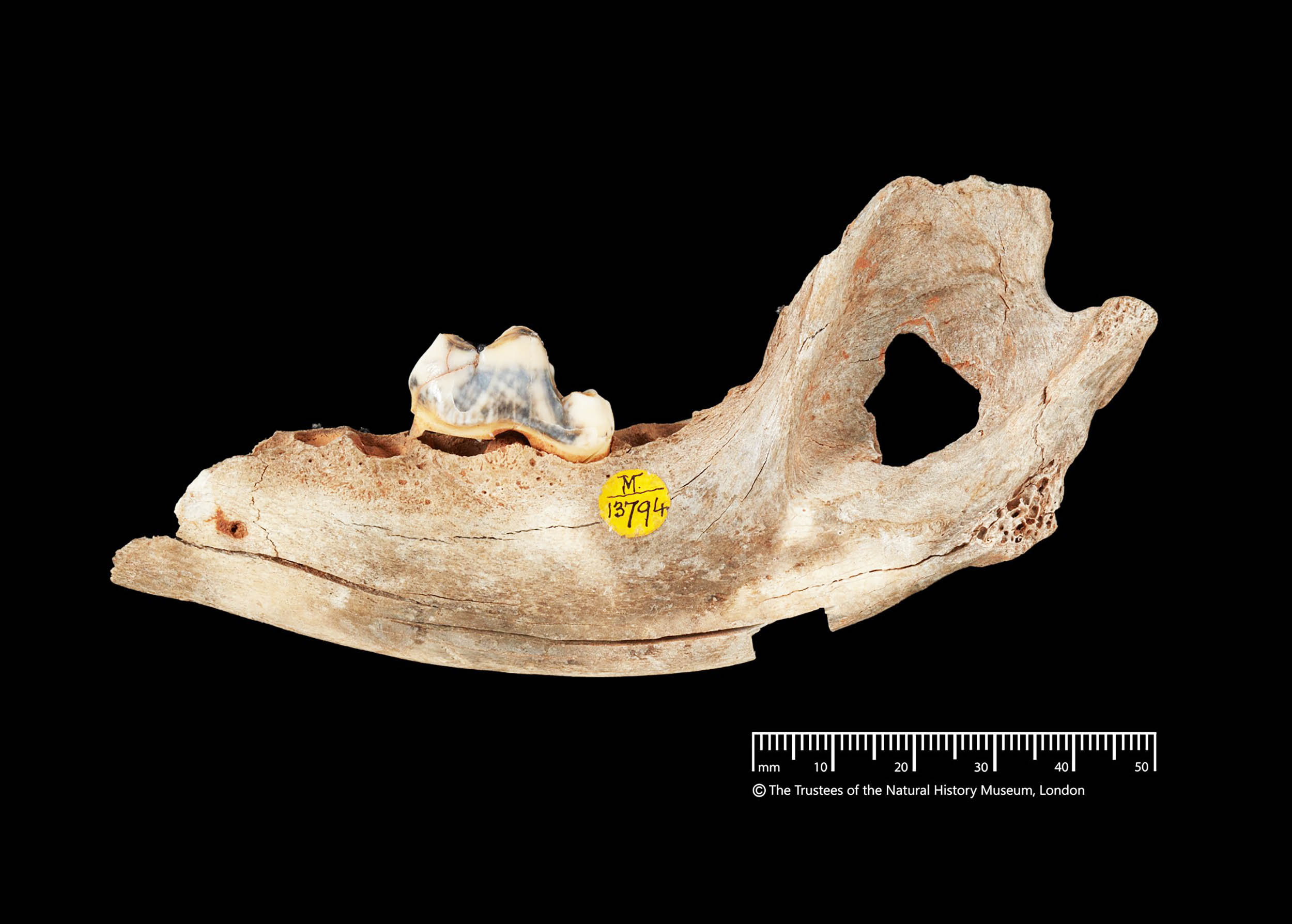
Scientists studied ancient remains from places like Gough’s Cave in the U.K. and Pınarbaşı in Türkiye. These remains are more than 14,000 years old. Genetic analysis confirmed that these animals were dogs, not wolves.
The study also found an even older dog from Türkiye, dated about 15,800 years ago. This makes it one of the earliest known dogs ever identified.
Dr. William Marsh from the Natural History Museum said these discoveries show that dogs were already living across large regions. Early dogs have been found in Germany, Italy, Switzerland, and other parts of Europe.
Science solved the mystery
Older studies relied on bone shapes, but this method often caused confusion. In this new research, scientists used advanced DNA techniques. They studied full genomes instead of small fragments.
This helped them to separate dogs from wolves. For example, one animal from Belgium that was once thought to be a dog, turned out to be a wolf after genetic testing.
Tools changed history
“Without using these advanced genetic tools, we wouldn’t be able to confidently distinguish dogs from wolves based on skeletal evidence alone,” said Anders Bergström from the University of East Anglia.
This shows how important modern DNA methods are in solving old scientific mysteries.
“We also wouldn’t have been able to put together such a comprehensive view of their evolution. As the Kesslerloch dog, at 14,200 years old, was already more similar to later dogs in Europe than those in Asia, dogs must have been domesticated well before this point, giving time for these genetic differences to emerge,” explained Bergström.
“Yet, many questions remain: we’re still researching where and how dogs spread across Europe after likely domestication somewhere in Asia. Each piece of evidence is a step forward in this journey.”
Dogs spread with humans
The study shows that dogs were not limited to one place. A single dog population spread across Europe and parts of Asia between about 18,500 and 14,000 years ago.
Interestingly, these dogs lived with different human groups. These included Magdalenian and Epigravettian hunter-gatherers. Even though these human groups were different, they shared similar dogs.
This suggests that people may have exchanged dogs with each other. Dogs moved between groups even when humans did not mix much.
Dogs lived closely with humans
Dogs were not just nearby animals. Evidence shows that humans and dogs lived closely together. Scientists studied their diets using chemical markers in bones.
At sites like Gough’s Cave, dogs and humans ate similar food. This suggests humans shared their meals with the domesticated dogs.
“A key finding came from Pınarbaşı, where the data showed that domestic dogs consumed a diet rich in fish, closely matching that of local humans,” added Lizzie Hodgson from the University of York.
“It is unlikely dogs were catching significant amounts of fish themselves, suggesting they were being actively fed by people.”
This shows that humans cared for dogs even in very early times.
More than just survival partners
The relationship between humans and dogs may have gone beyond survival. At some sites, dog remains were treated in similar ways to human remains.
For example, at Gough’s Cave, both human and dog bones showed similar treatment after death. At Pınarbaşı, young dogs were buried near human burials.
This suggests that dogs had emotional or cultural importance even thousands of years ago.
Humans domesticated dogs first
Dogs were likely the first animal humans domesticated. This happened long before farming began. This makes dogs unique among all domestic animals.
“Dogs were the only domesticated animal to predate farming, so their evolution can help us understand how a big shift in lifestyle shaped our own history,” said Pontus Skoglund from the Francis Crick Institute.
“It’s fascinating that dogs living before the era of agriculture contributed substantially to the genetics of farming and present-day European dogs. Dogs were clearly important to our ancestors, as the first farmers seem to have adopted previous hunter-gatherer dogs into their groups as they moved into Europe,” Skoglund added.
A legacy that still lives today
The study also shows that early dogs shaped modern dog breeds. Many modern European dogs still carry genes from these ancient dogs.
Dr. Lachie Scarsbrook from LMU Munich explained that different dog lineages already existed long ago. “Dogs with very different ancestries already existed across Eurasia, from Somerset to Siberia,” he noted.
“This study reveals the beginnings of a human-canine bond that continues to this day. It’s a narrative that began towards the end of the Ice Age but was foundational to many of the modern breeds we see today,” added Dr. Sophy Charlton from the University of York.
This research tells a powerful story. Humans and dogs built a strong connection thousands of years ago. That bond has lasted through time and still shapes our lives today.
Scientists from the University of York, the Natural History Museum, the Francis Crick Institute, and the Max Planck Institute for Evolutionary Anthropology worked together to study this history.
The study is published in the journal Nature.
NOTE – This article was originally published in Earth and can be viewed here