
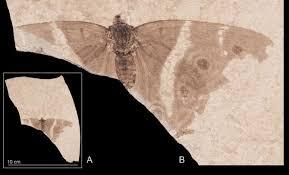
A rare butterfly fossil with exceptional detail offers the first clear evidence of an ancient emperor butterfly lineage and reshapes evolutionary timelines.

A remarkably preserved butterfly fossil dating back roughly 34 to 28 million years is reshaping what scientists know about insect evolution, offering the first definitive fossil evidence of an emperor butterfly lineage. The discovery, detailed in Acta Palaeontologica Polonica, introduces a new species, Apaturoides monikae, and provides a rare, high-resolution window into a period of evolutionary history that has long remained elusive.
A Fossil So Detailed It Changes The Rules
The fossil, unearthed from the early Oligocene deposits of Céreste in southern France, stands out not just for its age but for its extraordinary state of preservation. Butterfly fossils are notoriously scarce due to their fragile bodies, and even fewer retain the intricate features needed for scientific classification. This specimen breaks that pattern entirely. Large portions of both wings are intact, along with visible venation patterns and even eye spots, features that are almost never preserved in fossilized insects of this kind. The head, thorax, and much of the abdomen are also clearly discernible, offering a nearly complete anatomical snapshot.
“In the fossil of Apaturoides monikae from Céreste, most of the right wing and large parts of the left wing are preserved with complete wing venation and clearly recognizable wing patterns, including eye spots. The head and thorax are visible from both sides, and a large part of the abdomen has also been preserved. These exceptional features allow for precise classification in the butterfly family tree,” explains Hossein Rajaei, lead author of the study.
Such preservation allows researchers to move beyond guesswork and place the fossil confidently within the Apaturinae subfamily, making it the first fossil ever definitively assigned to this group. This level of clarity transforms the specimen into a benchmark for future evolutionary studies, offering a rare calibration point grounded in physical evidence rather than inference.

Bridging The Gap Between Fossils And DNA
Modern evolutionary biology often relies on molecular clocks, genetic analyses that estimate when species diverged. Yet these models depend heavily on fossil evidence to anchor their timelines. The discovery of Apaturoides monikae provides exactly that: a reliable, datable reference point that aligns with, and challenges, existing genetic predictions.
Researchers have long suspected that the main lineages of emperor butterflies emerged around the same period as this fossil. Now, with concrete evidence in hand, scientists can refine those models and address discrepancies between fossil data and molecular estimates. The implications extend beyond butterflies, influencing how evolutionary timelines are constructed across multiple species groups.
“This fossil find suggests that the Apatura lineage is either older than molecular analyses suggest, or that today’s Apatura species have preserved characteristics of their ancestors over long periods of time. In any case, the find provides an important empirical basis for better understanding when and how the most important butterfly groups evolved and diversified,” said Rajaei.
The study, published in Acta Palaeontologica Polonica, underscores how a single, well-preserved specimen can recalibrate entire branches of the evolutionary tree. It highlights the ongoing tension, and synergy, between genetic modeling and paleontological evidence.

A New Genus Emerges From An Old Discovery
Although the fossil was originally recovered in 1979 by Herbert Lutz, its full scientific importance only became clear decades later. Advances in imaging, comparative morphology, and phylogenetic analysis allowed researchers to recognize that the specimen did not belong to any known genus. Instead, it represents an extinct lineage closely related to modern Apatura butterflies, which are still found across the Palearctic region.
The newly established genus name, Apaturoides, reflects this evolutionary relationship while marking its distinct identity. The species name monikae honors Monika Lutz-Scholz, linking the discovery to its human history as well as its scientific significance. This dual narrative, of past life and modern rediscovery, adds depth to the find, showing how museum collections can hold untapped scientific value for decades.
The fossil originates from the Campagne-Calavon Formation, a site known for its finely layered freshwater limestones that preserve delicate organisms in exceptional detail. Today, the area is protected, ensuring that similar discoveries can continue to emerge under careful scientific stewardship.




