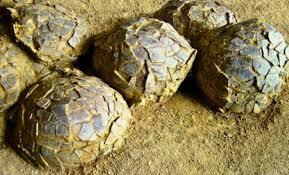
Scientists opened an ancient fossil bed and found a scene frozen in time, with hundreds of dinosaur eggs hinting at a hidden world before extinction.

A muddy trench in southern France, repeatedly stalled by winter rain and slick clay, has yielded a fossil bed so dense with ancient eggs that paleontologists believe they have only begun to uncover its full extent. The excavation at Mèze, near the Thau Lagoon in the Hérault department, has already exposed more than 100 intact dinosaur eggs, and the fossil-rich layer extends well beyond the current dig zone.
The team from the Musée-Parc des Dinosaures expects the total count to climb into the hundreds, possibly thousands, as work continues. The site, dated to roughly 70 million years ago in the late Cretaceous Period, captures a nesting ground used by multiple dinosaur species just before the mass extinction that closed the era.
The discovery was made public in late March 2026. Alain Cabot, director-conservator of the museum and the geologist who first identified the site in 1996, described the concentration of eggs as remarkable. “We knew the site was rich, but exposing so many eggs from multiple species in a single layer exceeds anything we had documented before,” Cabot told GEO.
Three Distinct Egg Types Suggest Shared Nesting Ground
Researchers have sorted at least three dinosaur species by eggshell structure, size, and shape, using a classification framework the museum team has refined across three decades. The most common eggs are perfectly spherical and measure up to 20 centimeters across. The museum links these to titanosaurs, the long-necked herbivorous sauropods that roamed Late Cretaceous landscapes in southern Europe.
________________________________________________________________________
Beside the large spherical eggs, the fossil layer holds smaller, oval eggs tied to Rhabdodon priscus, a two-legged herbivore that lived in the same coastal environment. A third egg type, identified as Prismatoolithus caboti, belongs to a small carnivorous dinosaur. Its shells show a distinctive prismatic microstructure that sets them apart from the titanosaur and rhabdodon eggs.

The presence of three separate species in a single geological horizon points toward a communal nesting ground. Different dinosaur groups apparently returned to the same favorable terrain season after season, rather than spreading out across the landscape. According to GEO magazine, some of the fossilized eggs remain entirely intact, a condition that raises the possibility that embryonic remains could be preserved inside the shells.
Rapid Flood Burial Locked the Eggs in Fine Clay
The eggs survived because of a fast burial event. Cabot explained to GEO that the dinosaurs likely laid their eggs much like modern turtles or crocodiles do: digging a hole, depositing several eggs, then covering them with vegetation, sand, or mud to form an incubation mound.
The region then had a subtropical to tropical climate. Decaying plant material would have generated heat for incubation. After that, according to the researchers, successive floods buried the nests under clay marl.

The rapid sediment cover shielded the delicate calcium carbonate shells from scavengers, weather, and physical breakage, creating the conditions that allow fossilization. Without that ancient deluge, the eggs would have crumbled long before any paleontologist could reach them.
The Site First Drew Attention Three Decades Ago
The Mèze fossil beds entered the scientific record in 1996, when Cabot, then an amateur, noticed dinosaur eggshell fragments while walking the area’s exposed clay slopes. Personal curiosity grew into a formal excavation program, as detailed on the museum’s official excavations page. In 1998, Cabot recovered what was then the smallest dinosaur egg on record, a find that led to the identification of Prismatoolithus caboti as a new oospecies.
The site has yielded more than eggs. In 1999, the same Late Cretaceous layers produced bones from Struthiosaurus, a small armored dinosaur previously unknown from this part of France. Finding eggs close to skeletal material is rare among global nesting sites. Most localities contain eggs alone, which forces researchers to guess which species laid them. At Mèze, the egg types can be matched to specific dinosaur groups with greater confidence.

The museum’s classification system draws on shell microstructure, pore patterns, and surface ornamentation, methods the team has detailed in paleontology journals over 30 years. The framework lets researchers identify egg types even when embryos or associated bones are missing. Cabot stressed the scientific value of eggshells. “Thanks to their shape and microstructure, we can distinguish several types of eggs and follow the evolution of dinosaur diversity just before the extinction,” he said.
________________________________________________________________________
Excavation Continues as the Fossil Layer Runs Underground
The current campaign began in October 2025 and pushed through winter weather despite repeated disruptions from rain and thick mud. The team has documented egg clusters arranged in loose arcs, a pattern that matches known titanosaur nesting layouts at other European sites.
Further analysis will examine whether the eggs were buried for incubation or left exposed, a question linked to understanding dinosaur body temperature regulation and parental behavior. Researchers also plan to measure shell thickness and pore density and to test for any preserved organic traces that could reveal details of the incubation environment.
The exposed section represents only a fraction of the fossil layer. The strata run laterally into untouched ground, and Cabot told La Gazette de Montpellier that the excavation is likely to last several more years. For now, the eggs remain in place under protective cover as the team stabilizes the fragile fossils.
The Musée-Parc des Dinosaures runs the site as both a research station and a public attraction. Summer visitors can watch technicians scrape away clay millimeter by millimeter to free the eggs. Cabot stressed the importance of keeping the finds local. “What we find at Mèze must stay at Mèze,” he said. “I want visitors to see the excavations, understand the scientific work, and have access to the discoveries.”
NOTE – This article was originally published in Indian Defence Review and can be viewed here