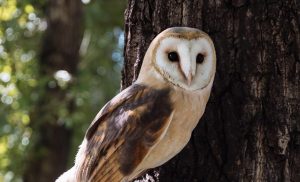
Researchers tracking owls in a dry corner of northern Chile have found that a changing climate is steadily altering which prey the birds hunt.
Over 24 years, drier spells pushed the region’s owl species toward different prey, while warming gradually widened the mix of animals turning up in their diets.
The work offers a rare long-term look at how a warming, drying climate reshapes an entire predator-prey network, not just a single species.
The findings suggest these food webs can quietly drift away from their old patterns, changing how ecologists judge whether an ecosystem will hold together as conditions change.
________________________________________________________________________
Where climate drives the food web
Bosque Fray Jorge National Park sits on the coast of north-central Chile, where cold ocean fog feeds a patch of forest ringed by semi-arid scrub.
Rain arrives in pulses tied to El Niño, the Pacific climate pattern that brings periodic downpours. When it does, rodent populations boom.
Two nighttime hunters dominate the local food web: the barn owl and the larger great horned owl.
Both rely heavily on rodents, especially the leaf-eared mouse, a native species that surges in number after wet years.
That boom-and-bust rhythm has made the site one of the world’s longest-running natural experiments in dryland ecology.
Decades of owl diets
Angéline Bertin, a biologist and professor at the University of La Serena (ULS) in Chile, and her colleagues drew on a diet record spanning 1990 to 2015 to see how the owls at the top of this ecosystem responded.
Owls swallow small prey whole and later cough up the parts they cannot digest as compact pellets of bone and fur. Those bones survive intact.
By sorting the skulls and jawbones inside, researchers reconstructed what the birds ate year after year, turning the owls into a running record of the prey moving through the ecosystem.
________________________________________________________________________
Dry years change everything
The clearest pattern emerged in the dry years. When rain failed and prey grew scarce, the two owl species stopped competing for the same animals and split the shrinking menu between them.
In this system, resource availability mostly means rodents.
The same long-term project counts small mammals on the ground, so the team could compare how many were available with what the owls actually took.
Ecologists measure that division as dietary overlap – how much two predators’ menus resemble each other.
Competing owls switch up their prey
In the driest stretches, the owls’ overlap fell, meaning each bird leaned on prey the other mostly left alone.
That is the opposite of the simple assumption that scarcity should pack predators onto whatever prey is left.
One interpretation is that competition sharpens as prey becomes scarce, so each owl works a slightly different corner of the community, easing the overlap and allowing both to persist.
An earlier study at the same site showed how El Niño rains ripple up from booming rodents to the owls that eat them.
The new analysis adds a twist: lean years can also pull competing predators onto different prey.
New prey joined the menu
A second, slower change unfolded beneath the year-to-year swings.
Starting around 2003, the owls began taking prey that had rarely or never appeared in their diets before, and the total variety of animals moving through the food web climbed.
The additions built up gradually rather than all at once, steadily layering new prey types into the owls’ diets. Across the years, the count of distinct animals the birds drew on rose.
Of all the conditions the team weighed, temperature was the strongest driver of that rising prey variety, stronger than rainfall.
________________________________________________________________________
Read Also: What is a water footprint?
________________________________________________________________________
Why warmth broadens the menu is not fully settled, though warmer years may allow new small animals to persist or move within reach of a hunting owl.
Predators in a changing climate
Owl diets are known to track climate change in broad strokes. A large paper spanning many regions found that barn owls carry more varied prey in some climates than others.
What the Chilean record adds is the movement itself: a single community caught in the act of changing over decades rather than being compared across places.
The pattern fits a growing concern in ecology that a warming climate can quietly rearrange the feeding links holding a community together.
“Our findings suggest that changing environmental conditions are reshaping predator–prey interactions,” said Bertin.
Changing how ecosystems respond
Before this record, researchers had mostly pieced together the response of an entire predator-prey network to decades of climate swings from shorter snapshots. This one runs long.
The Chilean data show the reordering directly. Predator overlap shrank during drought, while the food web’s prey list grew as temperatures rose.
That has practical implications for anyone trying to forecast how ecosystems will weather a hotter, more erratic climate.
Drought and warming pulled this predator community’s diet in opposite directions, narrowing overlap while widening dietary variety.
As a result, models that treat a food web as fixed may misjudge how it responds to environmental stress.
Hidden changes beneath the surface
The findings also give conservation planners a reason to watch diet, not just headcounts.
A predator community can look stable in its numbers while the web of who eats whom quietly reorganizes underneath. That hidden shift may provide an earlier warning that an ecosystem is changing.
Whether these rewired networks remain resilient is the open question the study leaves behind.
“As climate change intensifies, the fragility of these ecological networks may become more pronounced,” said Bertin.
Long-term owl records like this one give researchers a rare baseline for spotting how climate change begins to fray food webs.