
getty
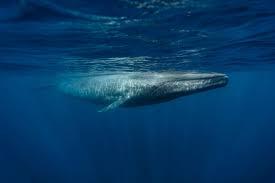
Fossil records make one evolutionary pattern especially clear: most mammals today are significantly smaller than their Ice Age ancestors were. However, blue whales (Balaenoptera musculus) seem to be one big and strange exception to this pattern. That is, they aren’t just big, but they’re continuing to get even bigger.
A 2012 study published in PNAS helps explain why. In one of the most detailed analysis of mammalian body size evolution, the researchers found that whales seem to increase in size faster than any other group of mammals on the planet. In fact, their evolutionary “speed limit” is almost twice as fast as that of what we can see in land mammals.
The study reconstructs body size across 70 million years of evolution by means of:
- Fossil examinations from 28 different mammal orders
- Mass estimations based on the size of teeth, skulls and limb bones
The findings tell a story that spans millions of generations. More importantly, it also gives us a clear answer to a question that has puzzled biologists for decades: How, exactly, has evolution built something as enormous as a blue whale?
________________________________________________________________________
It Is Physically Easier For Whales To Become Gigantic In The Ocean
Organisms’ bodies are limited by one thing above all else: gravity. This means that large land mammals need major structural modifications in order to support their mass. For instance, if elephants were any heavier than they typically grow to right now, their leg bones would have to evolve to widen disproportionately just to prevent the animal from collapsing.
As Evans’ analysis shows, land mammals have increased in size at about half the rate as that of marine mammals. This is because, for land mammals, evolving a one thousand fold increase in size takes about five million generations. However, for whales, that same magnitude of change can be reached in only about three million generations.
The study’s results suggest that it’s likely that this difference most likely comes down to mammals’ environment — more specifically, the ocean. Water supports weight, which means that bodies that evolve in it don’t need the same mechanical reinforcements as those on land. Buoyancy makes increasing size far easier, which means that growing bigger doesn’t demand a complete redesign of the skeleton. Instead, it simply requires gradual growth across generations.
This reduced mechanical constraint is the main reason whales have the highest long term evolutionary rates of body size found in any mammal group.
Whales Have Strong Evolutionary Pressures Pushing Them To Be Larger
It’s important to note that whales’ size isn’t simply due to the fact that it’s “easier” to get big in the ocean. As the lead author of the PNAS study explained in an interview with ABC Science, for whales, it’s actually more efficient to be big; there are powerful advantages to being enormous in marine environments.
For one, large size makes thermoregulation much more efficient. Warm-blooded creatures lose heat more slowly when they have a large volume relative to their surface area. And in cold waters, this becomes a major survival advantage.
A massive body also makes long-distance travel significantly easier. Moreover, it allows whales to survive off of abundant yet low-energy foods, like krill. The bigger the animal, the lower their metabolic rate per gram of tissue; in turn, feeding becomes more efficient.
Under these conditions, natural selection actually seems to favor a bigger body size. So long as food is available in the required large amounts, bigger whales survive better and reproduce more successfully.
________________________________________________________________________
The Numbers Behind Whale Gigantism
Instead of relying on chronological years, the researchers calculated evolutionary rates using a generational timescale. The power of this approach lies in its ability to correct for the fact that bigger animals have longer generation times. Using it, they uncovered several fascinating statistics:
- Whales increased from roughly 25 kilograms to 190 tonnes in about five million generations (30 million years)
- Marine mammals manage to increase their size twice as fast as land mammals
- Whales reached a five thousand fold increase in mass faster than any other mammal group in the dataset
- Large decreases in size (such as island dwarfism) occur more than ten times faster than increases.
However, perhaps one of the most unexpected findings is that the maximum size of aquatic mammals shows a near constant rate of increase over long stretches of evolutionary time. This means that, from their origins to the present day, cetaceans — dolphins, porpoises and whales — show one of the clearest examples of steady macroevolutionary change.
Why Blue Whales Are Still Getting Bigger Today
Most mammals stopped increasing in size after the last major Ice Ages. In fact, many of them are actually even smaller today than they were a million years ago. This is partly because humans hunted the biggest species to extinction, and partly because the warmer climates we have today also make it far less beneficial to be big.
However, blue whales seem to have broken this rule entirely; they are still growing toward the upper limits of what is biologically possible. As explained to ABC Science in the abovementioned interview, “Their maximum size may be peaking during our lifetime.”
This is most likely because the ocean currents around Antarctica have increased the available supply of krill, which has created an unusually rich food source that can sustain extreme size. However, the researchers also warn that this trend may not continue forever. Overfishing and climate driven shifts in krill populations could limit whale growth.
The blue whale is not just the largest animal to ever live. It represents the fastest and most dramatic increase in body mass evolution documented in mammals. The ocean made it mechanically possible. Food availability and thermoregulation made it biologically advantageous. And as long as there is enough krill, evolution will continue to push the species toward the upper limits of what an animal can be.
If the idea of a whale lurking in the deep makes your skin crawl, you’re not alone. Take the science-backed Thalassophobia Test to see how you score.
Curious what your inner creature is — whether it’s a whale, wolf or something entirely unexpected? Take this quick quiz for an instant answer: Guardian Animal Test
NOTE – This article was originally published in Forbes and can be viewed here