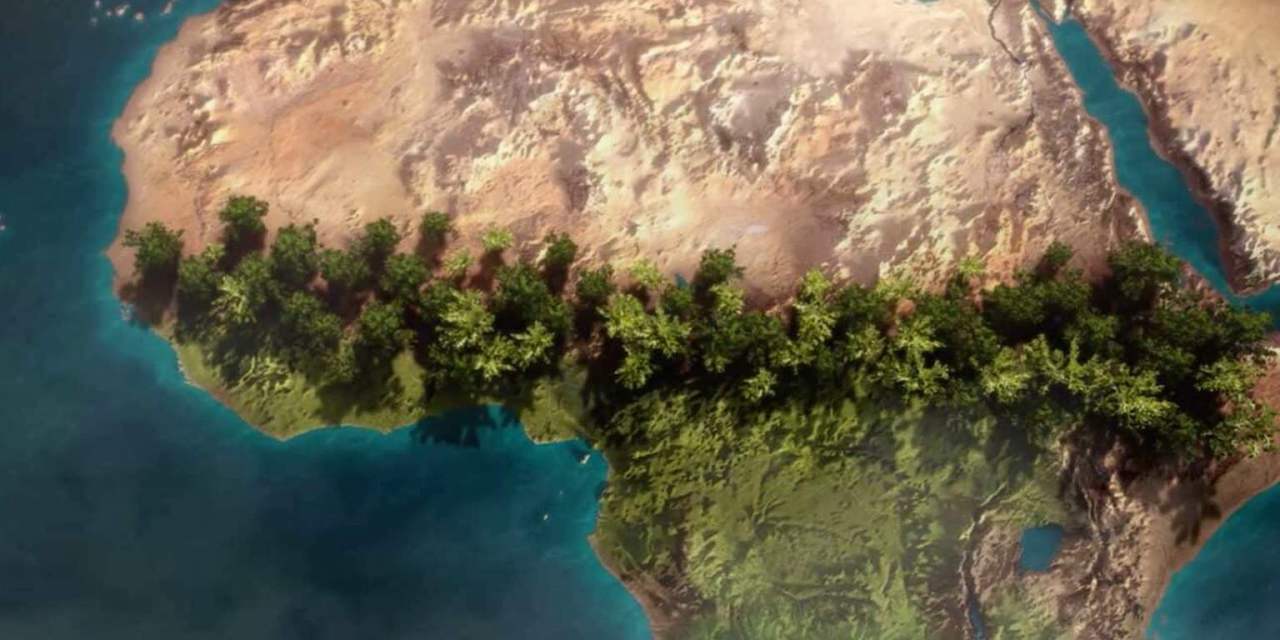

A wave of hope and regeneration is sweeping across Africa, reshaping the continent and offering a powerful example for the world. Imagine a green barrier stretching 5,000 miles from Senegal in the west to Djibouti in the east, spanning 11 countries and filled with billions of trees—all working together to stop desertification and bring life back to lost lands. This is the Great Green Wall, one of the largest environmental restoration projects ever undertaken, and its mission is nothing short of transformative.
________________________________________________________________________
What is the great green wall and why it matters
The Great Green Wall is an ambitious plan to restore the semi-arid Sahel region at the edges of the Sahara Desert. This 8,000-kilometer long initiative isn’t just about planting trees—it’s about combating climate change, saving fertile land, securing food sources, and empowering millions of people who call this fragile ecosystem home. By 2030, it aims to plant 100 billion trees and restore 100 million hectares (about 247 million acres) of degraded land.
The United Nations Convention to Combat Desertification has praised the initiative for its “heroic vision” and recognized it as a “dynamo of an African-led process.” This massive effort represents a beacon of hope, showing how a continental-scale plan can tackle some of the world’s toughest environmental challenges.
How innovation and collaboration are driving progress
What makes the Great Green Wall truly remarkable is the scale of cooperation behind it. Governments from 11 countries—Senegal, Mauritania, Mali, Burkina Faso, Niger, Nigeria, Chad, Sudan, Eritrea, Ethiopia, and Djibouti—are working alongside NGOs, international organizations, and local communities to bring this vision to life.
Current technology plays a critical role in monitoring and managing progress. Tools like satellite imagery and data collection help track the health of planted forests and ensure resources are directed where they’re needed most. According to reports, data-driven approaches and collaboration between diverse stakeholders are pushing the project forward faster and more effectively than ever before.
The scale is jaw-dropping. Imagine a barrier stretching from New York City down to Buenos Aires, covering enough space to lock away 250 million tons of carbon dioxide—an invaluable contribution to fighting global warming. The project’s impact is already visible: millions of acres have been restored, and thousands of young women have gained employment, contributing to both environmental health and economic stability.
The human stories behind the green wall
Beyond the numbers and technology, the Great Green Wall is a story of human resilience and ingenuity. It’s a reminder of how traditional knowledge, combined with cutting-edge science, can spark profound change. For many communities, the project is restoring access to water, improving soil fertility, and enhancing food security.
One of the most inspiring aspects is how the wall is creating peace and cooperation in regions once marked by conflict and poverty. The project brings people together, fostering harmony where the struggle over scarce natural resources once ruled daily life.
I remember visiting a small village where the wall had been planted. The transformation was tangible—once-barren land now blooms with native trees and crops. Local farmers spoke proudly about how the trees have helped retain water and reduced the impact of droughts. Their hope for a brighter future felt contagious, and it reminded me how environmental work is deeply intertwined with human stories and livelihoods.
________________________________________________________________________
Challenges ahead and the race to 2030
Despite the clear progress, challenges remain. Political instability in some of the involved countries and gaps in funding continue to pose threats to the project’s momentum. The sheer size of the effort means consistent coordination and commitment are crucial.
Still, African nations and global partners remain determined. Recent improvements in data sharing, funding alignment, and joint vision have breathed new energy into the initiative. Experts agree the next five years will be critical to reaching the Great Green Wall’s ambitious goals.
If the project succeeds, it will become a global model for how mass environmental restoration can work. It proves that by combining innovation, unity, and determination, we can heal vast landscapes and create sustainable futures—not just for Africa, but for the entire planet.
The Great Green Wall isn’t just a line of trees—it’s a living symbol of hope, resilience, and the power of collective action. It shows what’s possible when thousands of miles and millions of people join forces for a shared mission.
What do you think about this incredible effort? Have you seen or heard about similar projects making a difference where you live? Share your thoughts and let’s celebrate the bold actions that can change our world.
NOTE – This article was originally published in Leravi and can be viewed here