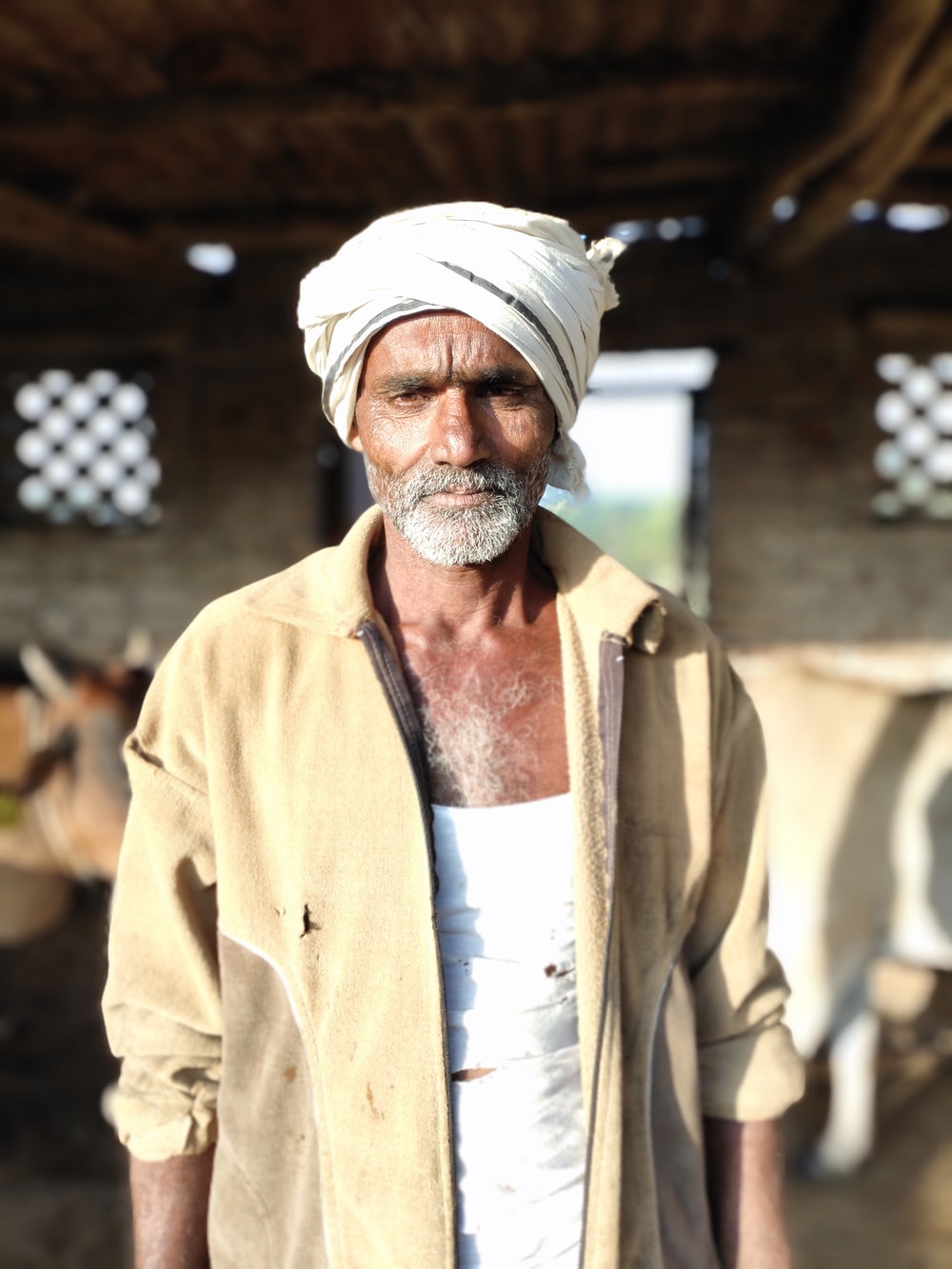

Farmer’s agitation in India is giving sleepless nights to the government for the last more than a month. Although everybody is aware of the difficulties associated with the agricultural sector, nobody had ever anticipated this kind of movement by the farmers. Lakhs of farmers are passing their nights under an open sky in the peak of winters.(Annadata)
How far their demands are genuine, and how far the government action is correct, is a matter of discussion, but one thing is very clear, that agriculture is the toughest profession, which ironically adopted by the majority of the population of India.
“Buy Organic Products Online at best prices at http://www.getgreen.co.in “
Rural India or the real India lives in villages, where a majority of the population is dependent only on agriculture. We have seen a superlative being used by media for this segment of the society as ANNDATA. It dignifies their profession but not their lives. Let’s try to understand agriculture in this article.
The history of agriculture records the domestication of plants and animals and the development and dissemination of techniques for raising them productively. Agriculture can be defined as the cultivation and exploitation of animals, plants, and other forms of organic life for human use including food, fiber, medicines, fuel, and other miscellaneous things. It is believed that humans first domesticated crops and later livestock.
Agriculture is and has been the largest employer of the people since the time we know in history. Even as the technology changes, agriculture adapts and could never become obsolete. Today, a lot of emphasis is being given to research for improvements in quantity and quality in this sector.
Read Also : Uncultivated food: food that money can’t buy,
When we look into history, in primitive times, humans were “HUNTER GATHERERS”. Humans lived a nomadic lifestyle, moving with the seasons to follow the food supply. As the glaciers retreated, and plant life growth areas changed, humans developed their dependence on farming.
The history of agriculture began thousands of years ago. Wild grains were collected and eaten from at least 105000 years ago. Nascent farmers began to plant them around 12000 years ago. Livestock like pigs, sheep, and other cattle was domesticated over 10000 years ago. Jajube was domesticated in the Indian subcontinent by 9000 B.C. Barley and wheat cultivation along with the domestication of cattle, primarily sheep and goats followed in Mehrgarh culture by 8000 to 6000 B.C.
The civilization of ancient Egypt was indebted to the Nile River because of its seasonal flooding. The rivers fertile soil allowed the Egyptians to practice agriculture on large scale between around 9000 to 4000 B.C. Sumerians farmers grew cereals, barley, and wheat and started living in the villages from about 8000 B.C. Asian rice was domesticated from 8200 to 11500 years ago by the Chinese in the Pearl River Valley Region.
Modern farming began around the 18th century in what’s generally referred to as “The British Agriculture Revolution”. The middle east continued to see much innovation in the agricultural industries, something that historians refer to as “The Arab Agriculture Revolution”. In a short period, several changes were made, which helped a massive increase in the yield.
The next change happened during the World War when the military powers developed farming. The development of nitrates and other chemical-based fertilizers along with mechanization allowed even greater yields, which is now in place for almost a century. Everybody knows, how the environment has paid a heavy price for this development in agriculture.
Agriculture in India contributes only 18% of GDP, but support, six hundred million people, approximately less than half of the population of India. Nearly 64% or 833 million Indians fall in the category of poor, who lives in rural areas. About 70% of rural households depend, primarily on agriculture and nearly 86% of farmers are categorized as small or marginal ( meaning they own less than two hectares) farmers.
Nearly 70% of India’s 90 million agricultural households spend more than, what they earn on average each month. A 2018 study by the NABRD showed that 52.5% of all the agricultural households were indebted with an average debt of 1,10,000 Rs. The average monthly surplus available to a rural Indian household, whether a farmer or non-farmer household was 1413 Rs. reported on September 24, 2018.
There are too many farmers on too little land. Over 45 years, up to 2015-16, the number of farms in India got more than doubled from 71 million in 1970-71 to 145 million in 2015-16. The average farm size got more than halved from 2.28 hectares to 1.08 hectares, according to a survey done by the government.
Read Also : From Green Revolution to Millet Revolution
According to World Bank reports, in 2017, 18% of Chinese were employed in agriculture as compared to 43% of Indians. Despite the high levels of production, agricultural yield in India is lower than in many other countries. Despite India being the second-largest producer of paddy in the world after China, its yield (3,8 tons per hectare) was almost 18% lower than China in 2017.
Brazil with 6.2 Tons per hectare and the US with 8.4 tons per hectare had much higher yields. Between 2014 to 2016, gross farm revenues reduced by almost 6%, despite subsidies for fertilizer, power, and irrigation. India’s spending on agriculture research is 0.3%, whereas china spends more than double the amount, the US four times, Brazil six times, and South Africa ten times than that of India. Based on GDP back series data, the average annual growth rate in agriculture and allied activities from 2009-10 to 2012-13 was around 3.9%, while from 2014 to 2018, it was 2.52%.
Agriculture research in India is grossly neglected. It must be prioritized in the budget. The gap between the actual potential and the real yield is so large that we need to sincerely work on it. While reducing input cost is one way of increasing income, the other way would be to work on the enhancement of qualitative and quantitative yield. Now, we in India have started discussing and arguing on global standards in the agriculture sector.
We have also initiated redefining the parameters of what is agriculturally and ecologically, crucially sustainable and also help in catering to our crop needs, while not damaging it for future generations. Agricultural technology may be on the edge of another revolution as biotechnology moves to the forefront of agricultural science
Tags: #agriculture, #agro, #farm, #farmer, #farmers, #farming, #farmlife, #fendt, #getgreengetgrowing, #gngagritech, #gogreen, #greenstories, #india, #johndeere, #landwirtschaft, #nature, #newholland, #Tractor, #tractors