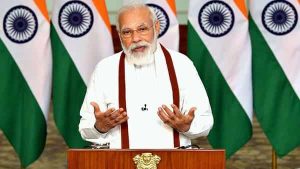
Prime Minister Narendra Modi addressed the Nation on the 13th of May 2020, more than one and a half months since he called for the nationwide lockdown to counter the spread of coronavirus. During which he introduced the COVID-19 recovery package labeled as the “Atmanirbhar Bharat” Stimulus package.
In his speech, the Prime Minister spoke at length about the importance of developing Atmanirbharta (Self Reliance) with its roots in our country’s villages and spread upwards to the country as a whole. Along with it, he also sang the praises of ancient Indian Civilizations that worshiped our planet as mother earth and valued nature.
But as we dig deeper into the technicalities of this stimulus package, we soon realize that the reality is quite different. This stimulus package does not only lack economic safeguards & reforms, but it is ecologically regressive as well.
For a country that has over 400 million people directly or indirectly depending on nature, the economic reforms under the Atmanirbhar Bharat package are shockingly regressive. This package facilitates clearance to massive projects even in ecologically sensitive areas justified under the enhancement of self-reliance along with a draft Environmental Impact Assessment (EIA) notification that will make environmental governance ineffectual, and several other destructive steps. Interestingly, all this has happened during the COVID-19 lockdown when people cannot effectively mobilize to protest against them.
Ignoring the Wake-Up Call:
Recent studies have shown that as humans continue to diminish biodiversity, more and more plant and animal species are going extinct. But at the same time, some species like the rats and bats have managed to thrive. As a result, they tend to host potentially dangerous pathogens that can make the jump to humans. After realizing the link between environmental degradation and pandemics, several International bodies have now urged their member nations to work towards more pro-environmental policy formation.
But in contrast to the need of the hour to save our environment, the government of India has decided to open up the coal mining sector of our country for major privatization and commercialization boost. As a result, it has opened up 41 coal blocks for auctioning of mining blocks. Some of these are ecologically and culturally sensitive parts of India and were previously declared as no-go zones by the UPA Government.
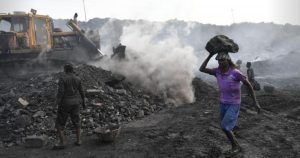
The opening up of these coal blocks for auctions by the government has led to a widespread protest by different communities as they are taking place without any public consultation. It also violates the rights enshrined under the Forest Rights Act to the communities residing there.
The irony is that to promote self-reliance, the government has undermined the communities living in these areas, most of whom have been living a relatively self-reliant lifestyle so far.
This decision by the Indian Govt. to boost coal production by opening mining blocks for auctions without appropriate environmental safeguards has the UN worried. UN Secretary-General, António Guterres expressing great concern, urged India to emphasis on clean and renewable sources of energy instead.
Beyond Coal Mining Auctions
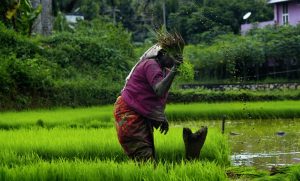
But the regressive approach of Atmanirbhar Bharat towards our ecology in the name of Economic Development and self-reliance is not just limited to the coal mining sector.
Apart from the privatization of coal mining in our country, the stimulus package also talks about amplifying the national demand with no mention of environmental safeguards putting the already vulnerable ecological balance of our country at a higher risk.
Such a desperate attempt to augment production puts the existing ecological balance in jeopardy. For instance, when India introduced the Green Revolution back in the 1950s to ensure food security in our country it led to widespread contamination of soil due to excessive usage of High Yield crops, fertilizers, and pesticides, etc.
According to a report published way back in 2008 by the Confederation of Indian Industries and the Ecological Footprint Network, our country now demands the biocapacity of two Indias to provide for its consumptions and absorbs its wastes.
Missed Opportunity
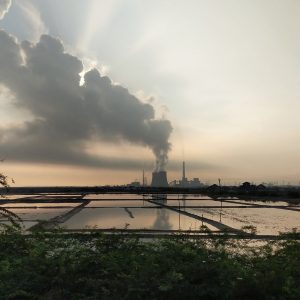
The current pandemic provided an opportunity for our country to reconsider our current economic policies and work towards a more sustainable and eco-friendlier path of development. But sadly, there have been no mentions of any environmental reforms whatsoever in the Atmannirbhar Bharat Plan.
The only measure taken towards safeguarding the environment is the promotion of coal gasification and liquefaction, and mechanized transfer of coal. But its impact is insignificant when compared to the large-scale expansion of mining activities throughout the country as well as the exploitation of natural resources to enhance production
Read Also : Diabetes Management: How To Make Kala Chana Soup For Diabetes Diet,https://greenstories.co.in/diabetes-management/ Putting land to use
In Conclusion
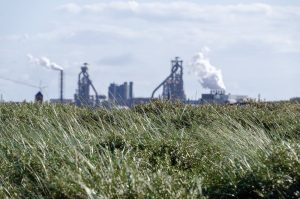
For a government that is known to proclaim its environmental achievements around the globe, we expected to see a more environment centric approach to push the country towards progress after the setback caused by the current pandemic.
We understand that augmenting the demand in an economy is a crucial aspect of economic reform, but we also need to ask ourselves at what cost are we achieving it.
But on the contrary, it seems like a rather ruthless and desperate attempt for revival without caring enough for the ecological balance and environmental wellbeing of the country.
As discussed above, the rapid damage caused to the environment in the name of progress has not only led to high pollution levels making it difficult to survive, but it is also facilitating the development of deadly pathogens with the potential of endangering the entire human race. So, it is crucial to push for more pro-environment policies.
Tags: #agricultura, #agro, #agronomia, #campo, #country, #countryside, #farm, #fazenda, #getgreengetgrowing, #gngagritech, #greenstories, #landscape, #love, #nature, #o, #photography, #rural, #rurallife