Nature can surprise you in countless ways, shape, or form. Be it in vast diversity of geology, climate, organism, or the intricate system of balance it has developed between everything to keep this huge world up & running.
_______________________________________________________________________
Read Also: Food Insecurity – To be Addressed Collectively!!
________________________________________________________________________
In regards to this, one group or organism is said to be the lifeline of this natural machinery, bugs. Not just any bugs but pollinators, which consist majorly of Birds, bats, flies, wasps, moths, beetles, butterflies small mammals, and most importantly, bees.
Yes, bees. These tiny bugs which exist in numbers beyond counting are considered to be the lifeline of nature & in their absence, the world will barely cease to exist. Humanity, along with all the intricate balance of nature which ensures the survival of all life on earth, will end with the extinction of bees. As is proven in multiple studies.
Bees & global ecosystem
As stated, bees play one the most important part of the global natural ecosystem. They are the pollinators of nature. In technical terms, it refers to their job of helping in plant reproduction by aiding in the movement of pollens. & since all of nature depends upon trees & plants, in simple terms, bees keep nature alive.

Bees help in pollination which further affect the lives of billions of organism which depend upon plant for their survival. How bees help nature, other organisms, as well as humans, are:
- It forms the food source for all the plant-based life forms.
- Plants like nuts, berries. Fruits & flowers depend extensively upon bees for their reproduction & pollination.
- The plant-based life form seek shelter in trees & plants which ensures their survival
- More plants simply mean rich biodiversity, good climate & adequate ecological situations.
- An adequate ecosystem will finally help humans to develop & nurture the concept of civilization.
- Apart from all this, bees also provide food in form of honey which is consumed by many other animals, extensively by humans of course.
These points here ensure the continuation of worlds as it moves forward.
_______________________________________________________________________
Read Also : Nutritionist-backed tips on how to limit unhealthy snacking
________________________________________________________________________
Bees & economy
Unsurprisingly, humans, apart from their survival are also dependent upon bees for essential other commodities such as honey, sugar, wax, etc. This need gradually pushed open the doors for an entire sector of the economy, one dependent upon bees.

China acts as the largest producer in the global honey market followed by Turkey, Argentina & the USA. India weighs in as the 7th largest producer of honey and uses it majorly in the pharmaceutical sector apart from the food industry. Only the honey industry constituted 4.74 billion in the US economy. The rest economy that is nurtured by bees for example crops like almonds, apples, cotton, blueberries also contributes directly or indirectly to its economy. In total pollinators provide the US economy with 24 billion dollars out of which bees account for more than 15 billion dollars.
Many domestic, as well as imported crops, depend upon pollination. Some of the major crops which depend upon pollination are avocados, soybeans, apple, broccoli, celery, asparagus, and squash. All in all, nearly 80% of our crops are dependent upon bees.
Why this crisis & how to solve it?
The ecosystem is driven upon the availability of food & all life forms are dependent upon trees & plants for their survival. As the population increases, the rapid reproduction of plants to meet the current need is required and this is where pollinators like bees step in.
Without bees, nearly 70% of the world’s agricultural habitat apart from wild flora & fauna will become extinct due unavailability of plants & humankind will follow that trend sooner than later. Bees are responsible for: pollination, wildlife habitat, wild plant growth, food source, & biodiversity along with countless other things & their declining population puts all this balance at risk.
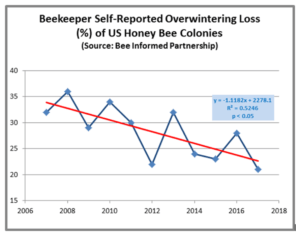
The honey bee colony loss rates are climbing as high as 30 to 40% that affects their global population. This will haunt the global ecosystem in the coming time if nothing is done to counter this decline.
________________________________________________________________________
Read Also : Build a Bee Hotel to Help Homeless Wild Bees
________________________________________________________________________
The major reasons for the decline of population are:
- Habitat loss
- Use of pesticides & insecticides
- Environmental pollution
- Rapid urbanization
- Climate change
- Parasites & disease
- Invasive species
To counter this decline, here are some major steps humans can take:
- Making your household bee-friendly to counter rapid loss of their habitat
- Make multiple bee shelter
- Restricting use of pesticides especially in flower cultivation & household gardens
- Control invasive species population
- Adopt bee shelter & raise awareness for this particular matter.
The basics steps to recognize and counter the current decline are numerous & the time limit upon them is excruciating but it is the price that humankind will have to pay for its uncontrolled development practices & if the current call for preservation is declined, humankind can easily bid farewell to the future of its continuous existence.
Reference links:
- https://ucanr.edu/blogs/blogcore/postdetail.cfm?postnum=29513#:~:text=%22In%20addition%20to%20its%20direct,demand%20across%20the%20food%20industry.%22&text=The%20honey%20industry%20contributed%20approximately,product%20(GDP)%20in%202017
- https://beespotter.org/topics/economics/#:~:text=It%20is%20estimated%20that%20in,or%20nuts%20without%20these%20pollinators
- https://smeventure.com/honey-production-india-current-growth-economy-challenges/#:~:text=According%20to%20the%20National%20Bee,honey%20production%20in%202005%2D06.&text=As%20per%20the%20International%20demand,honey%20in%20India%20was%2050%25
- https://www.earthday.org/wp-content/uploads/species/bees.pdf
- https://www.nrcs.usda.gov/wps/portal/nrcs/detail/national/plantsanimals/pollinate/?cid=stelprdb1263263#:~:text=Honey%20bees%20provide%20a%20tremendous,water%2C%20soil%20and%20wildlife%20habitat
- http://www.pthomeandgarden.com/5-ways-bees-are-important-to-the-environment/
- https://www.onegreenplanet.org/environment/why-bees-matter-so-much-to-humans/
- https://www.woodlandtrust.org.uk/blog/2018/07/why-are-bees-important-and-how-you-can-help-them/
- https://en.wikipedia.org/wiki/Pollinator_decline
Image links:
- https://www.newscientist.com/term/bees/
- https://www.madeinnature.com/blogs/snack-life/save-the-honey-bees-9-ways-large-and-small-you-can-help
- https://beespotter.org/topics/economics/#:~:text=It%20is%20estimated%20that%20in,or%20nuts%20without%20these%20pollinators
- https://geneticliteracyproject.org/2020/03/20/no-we-arent-losing-all-of-our-honeybees-and-neonic-seed-coatings-arent-driving-their-health-problems-heres-why/
Tags: #bee, #beehive, #beekeeper, #beekeeping, #bees, #beesofinstagram, #flowers, #getgreengetgrowing, #gngagritech, #greenstories, #honey, #honeybee, #honeybees, #macro, #nature, #savethebees