Biomedical Waste
From the end of 2019, the present generation around the whole world experiences the biggest setback of their lives up till now in the form of COVID 19. Scientists warned us of a looming pandemic which became a reality in 2020 & is still raging globally. COVID 19 has proven to be extremely fatal for those with pre-existing conditions as well as for the general public as well & humanity is still fighting hard against the virus on every front.
________________________________________________________________________
“Buy Organic Products Online at best prices at http://www.getgreen.co.in “.
________________________________________________________________________
A good & dependable healthcare system is the biggest requirement for humanity’s crusade against the virus & some unorthodox & necessary measures have been taken to prevent the overflowing of hospitals so that the present healthcare system does not collapse under the pressure. The biomedical waste (BMW) generated through this system also complements the present problem as it can potentially turn into a super spreader network if not taken into consideration.
Biomedical waste, stats & figures
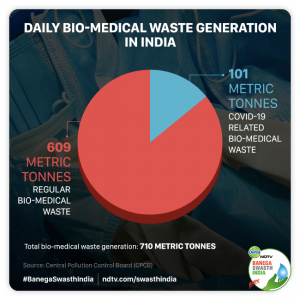
In normal times i.e. before the virus became a global pandemic, the healthcare system produced a total of 530 TPD (ton per day) as of 2018 which was treated & disposed of every day, the projected increase in biomedical waste is supposed to be 775.5 TPD by 2022 complimenting which is the increase in lethality & quantity of waste due to the pandemic.
On the ground, the Indian BMW management system came under enormous pressure due to a sudden virus outbreak. In a parliamentary report presented by the Government OF India in 2019, there were 200 common bio-medical waste treatment facilities (CBWTF) for 750 districts, out of which 154 were distributed over 17 states & UT’s.
Five states & UT’s reported no CBWTF’s to counter the influx in BMW. Therefore it can be derived that India’s bio-medical waste management system was inadequate for any national emergency let alone a global pandemic but due to the sheer resilience of front-line workers & due to better coordination between facilities of various states, the waste management system held on instead of being overwhelmed. The current situation however brought forward more pressing issues that India should counter on an early priority.
________________________________________________________________________
India’s response to an increase in BMW due to COVID 19
On the implementation of a national health emergency, India’s graphs were promising in the initial months that is from March to April. The situation, however, deteriorated & in September India touched its maximum no. of recorded cases in a day close to 1 lakh. Two reports suggested that there was a 300% increase in BMW during April that went on being 800% of 8 times more in September.
In the last four months alone, a total of 18,006 tons of COVID-related waste was produced through 1919 hospitals & various other healthcare institutions. With 101 TPD till July. Maharashtra is the most affected state & hence constitutes the majority of COVID-related waste that is 3587 tons in the past four months followed by Gujrat & Tamil Nadu.
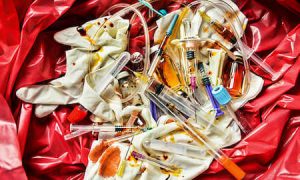
The major constituents of this waste are, PPE kits, masks, gloves, shoe cover, human tissue, use & throw instruments contaminated via blood & body fluids, dressings, cotton beddings & sheets contaminated via blood & other fluids.
As stated, India’s response to this arising pile of waste was via CBWTF’s, which in reality were already inadequate in number but somehow they managed to divide & take care of the incoming waste, treating it mainly via incineration.
According to data presented by the central pollution control board (CPCB), the given data i.e. 18,006 tons of waste was disposed of, the ground reality, however, differs from that on paper. Kilos of untreated BMW allegedly related to COVID 19 also go unnoticed & sometimes are found in the open which can constitute in increasing the cases.
Setbacks & further challenges via case study
With this big challenge of successfully managing the highly contagious waste, we also encountered some major setbacks in the way. The presented data of18, 006 tons of waste disposed is the one that is recorded but the authorities. There is still some waste which goes out of the system & is disposed of alongside normal waste.
This issue should be taken very seriously as it is not your everyday medical waste, the waste was in contact with a highly contagious virus & has the potential to explode in certain areas such as slums & overly populated colonies.
Odd professionals like rag pickers also come into contact with the discarded waste every day & most of them live in similar congested areas, thus this type of mismanagement of COVID 19 waste can prove to be lethal for many people
Some case of the same mismanagement caught the attention of media like-
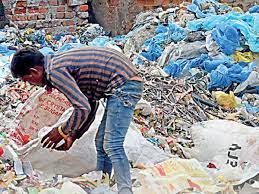
- Waste discarded openly in Delhi: tension aroused near Nangloi railway station Delhi, where BM waste was found discarded openly in cardboard boxes mixed with everyday waste. Along with that used masks, gloves & face shield was found discarded openly which increased the risk factor for sanitation workers.
- Scattered waste in Meerut: during the initial days of lockdown when fear was at its height, the news of scattered BMW upon the roads of Meerut managed to catch everyone’s eyes. The hospital responsible then ordered the probe but it showed that irresponsible behavior can aid in a pandemic.
________________________________________________________________________
Read Also : ALOE E-CELL, THE FUTURE OF GREEN ENERGY,
________________________________________________________________________
Complementing to this mismanagement, India spent just 4 percent of its budget on healthcare while going into the pandemic which was the fourth-lowest in the world, therefore it can be deduced that the Indian public healthcare system did not have adequate resources for battling any health emergency.
Healthcare remains one of the most left out sector that finds itself useless in any situation due to the unavailability of funds & resources. Although India managed to hold the virus at bay via strict lockdown measures, it can be said that an adequate & properly maintained healthcare system would have proven to be a game-changer in India’s fight against the virus.
Future challenges & need
From the facts stated above, India needs to reform & refine its strategy concerning public health care because if any situation like this arises again, India will have to face far worse odds if the situation is not taken into account.
A gradual increase in healthcare & education budget is needed to battle any upcoming challenges that time will throw at India or the world. Along with this, massive awareness programs are required in Indian masses to improve their personal & public hygiene which proves to be consequential in case of fighting a disease.
Therefore, by taking some active measures in the present, we can stay one step ahead of any looming disaster in the future.
Tags: #betterbusiness, #biomedicalwaste, #chemicalwaste, #covid, #environment, #getgreengetgrowing, #gngagritech, #gogreen, #greencompany, #greenstories, #hazardous, #hazardouswaste, #laboratory, #planet, #planetearth, #recycle, #upcycle, #waste