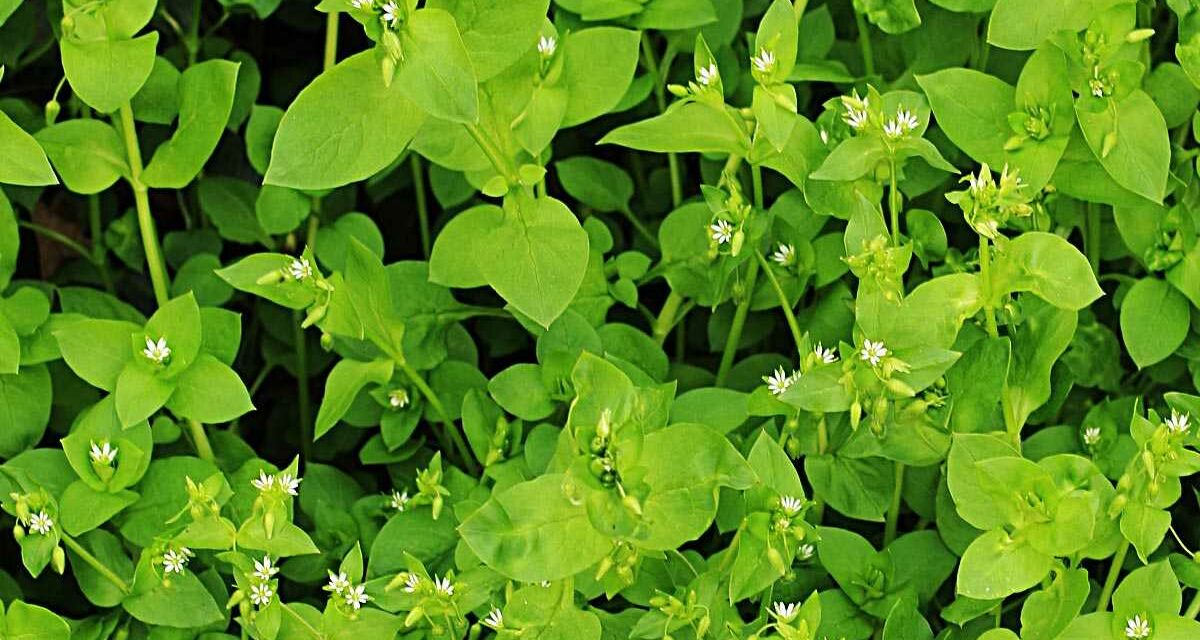
The name “chickweed” most notably describes Common Chickweed (Stellaria media), although there are several other chickweeds, all in the genus Stellaria.
Common Chickweed is a cool weather plant native to Europe that has widely naturalized in the United States and throughout the world.
It’s often found in lawns and other areas of sun to partial shade in moist soil.
In a temperate climate like our southern Appalachians, chickweed normally appears during the cooler temperatures of fall and dies back in the late spring or early summer heat, but it’s typically considered an early spring plant.
________________________________________________________________________
Read Also : Siberian Wildfires Swell Amid Historic Heatwave
________________________________________________________________________
It thrives between 53° and 68°F.
The stringy but succulent stems of chickweed can grow up to a foot and a half or so and produce tiny white Appalachiansthroughout the growing season.
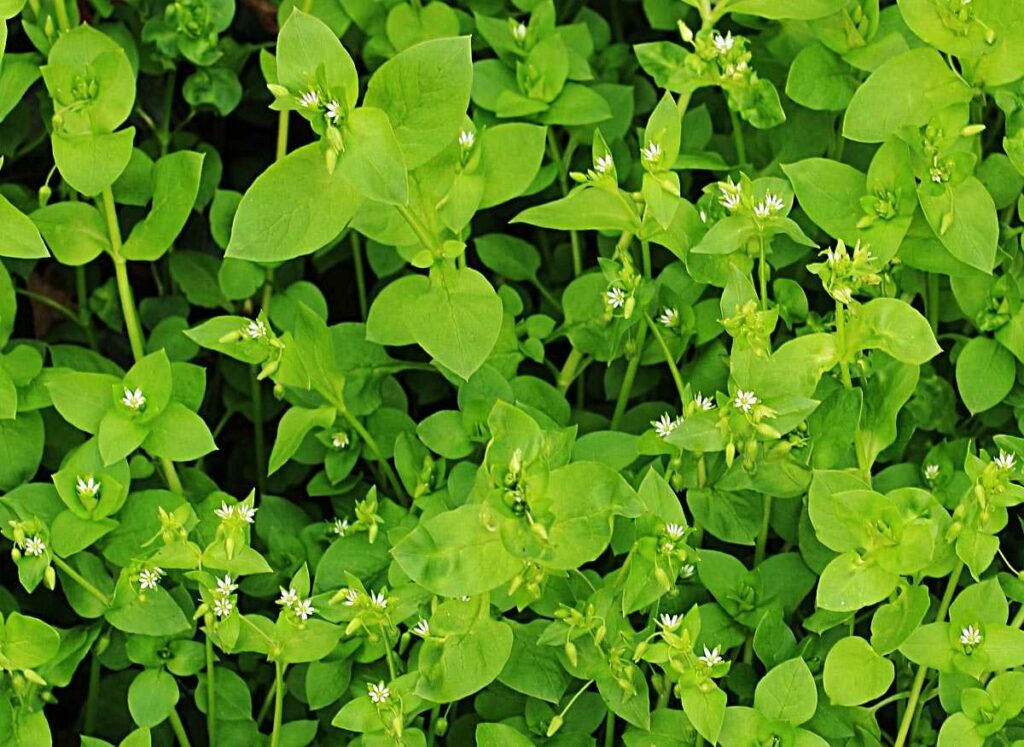
Its pointed oval-shaped leaves grow in pairs opposite each other, fairly far apart on the stem. Leaves can be anywhere from 1/4 to 1 1/4 inch long.
Chickweed flowers are 1/8 to 1/4 inch in diameter and consist of five double-lobed white petals supported by a whorl of five green sepals.
________________________________________________________________________
Read Also : Climate Change, Cost Factor: Why it Takes Months to Subdue Some Wildfires
________________________________________________________________________
The flowers somewhat resemble carnation flowers — chickweed is actually a member of the carnation family, Caryophyllaceae.
It has a few lookalikes but a few distinguishing factors are:
1) Chickweed does not have milky sap. Try pulling the stem apart. If there’s no milky sap, you’re more likely to have chickweed.
2) It has a line of “hair” along the stem, which alternates between the joints.
3) The inner stem of chickweed is elastic, so if you gently pull the stem apart, the outer sheath will separate while the inner part will stretch.
Chickweed is a not only a super plant in terms of its nutritional acclaim, but it’s also delicious.
The flavor is often compared with corn silk. It’s pleasant and mild.
________________________________________________________________________
Read Also : How Goats Are Preventing Wildfires in California
________________________________________________________________________
Chickweed is excellent raw — use it like sprouts; eat it in sandwiches, wraps, etc. And of course it’s a great base for salad.
It’s also great cooked and makes a good substitute for spinach.
Given chickweed’s purported nutritive value, it’s actually strange to me to call it a “substitute” for anything.
It would be more appropriate to call spinach a substitute for chickweed.
NOTE – This article was originally published in wildedible and can be viewed here
Tags: #chickweed, #environment, #flowers, #getgreengetgrowing, #gngagritech, #greenstories, #plant, #soil