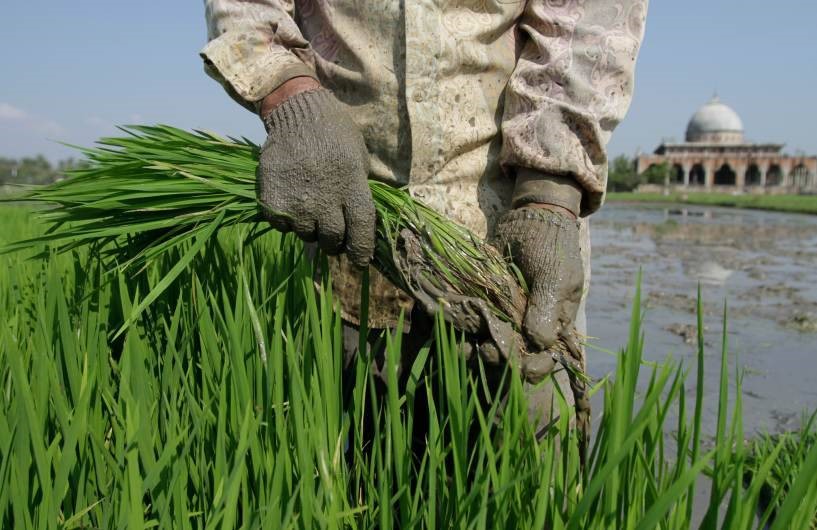
https://news.trust.org/packages/climate-resilient-crops/
Climate-resilient agriculture (CRA) is a method of utilising existing natural resources sustainably in agricultural and livestock production systems to achieve greater long-term productivity and farm revenues in the face of climate change.
In the face of climate change, this work minimises hunger and poverty for future generations. CRA techniques have the potential to change the existing situation and sustain agricultural output on a local, regional, and global scale, particularly in a sustainable way.
________________________________________________________________________
Read Also : The concept of Human Development Needs to be Redefined!
_______________________________________________________________________
Climate-resilient practises result in improved access to and use of technology, transparent trade regimes, higher use of resource conservation methods, and better agricultural and livestock adaptability to climatic stress.
Most nations have experienced disasters and wars; nevertheless, food security has been harmed by insufficient food inventories, basic food price swings, high demand for agro-fuels, and abrupt weather changes.
Climate change adaption strategies and technologies
Crops that are tolerant: Drought patterns may need a variety of adaptive forms. Early mature and drought-tolerant cultivars of green gramme (BM 2002-1), chickpea, and pigeon pea (BDN-708) were planted on selected farmer’s fields in Maharashtra’s Aurangabad area to achieve inadequate downpour conditions (rainfall of 645 millimetres).
This resulted in a 20-25% increase in production over native varieties. Drought-tolerant, early ripening pigeon pea (AKT-8811) and sorghum (CSH-14) cultivars were also introduced in the villages of Maharashtra’s Amravati region (rainfall of 877 mm).
Tolerant breeds in livestock and poultry

https://foodtank.com/news/2016/09/protecting-disappearing-livestock-breeds/
Local or indigenous breeds have a natural instinct to forage for food. The animals in nomadic systems show their owners when it’s time to go in quest of new meadows.
________________________________________________________________________
Read Also : Education along with Research drives Growth & Development of Human Society
________________________________________________________________________
Indigenous breeds have distinct personalities that have evolved to fit into extremely specific eco-systems across the world. Drought resistance, temperature regulation, the capacity to travel long distances, fertility and rearing instincts, the ability to consume and digest low-quality feed, and disease resistance are among these distinct characteristics.
These cattle breeds aren’t particularly productive in terms of meat or milk output, but they are extremely adaptable to the unpredictable nature and have small resource footprints.
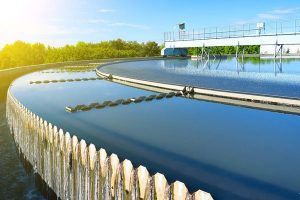
Water management:
https://www.constrofacilitator.com/different-types-of-water-management-methods/
Improving feeding systems as an adaptive technique can enhance cattle production efficiency indirectly. Changing the feeding time or frequency, modifying the diet composition, incorporating agroforestry species in the animal diet, and educating producers in the production and conservation of feed for diverse agro-ecological zones are some of the feeding strategies.
________________________________________________________________________
Read Also : The Science of Climate Change Explained: Facts, Evidence and Proof
________________________________________________________________________
Furrow-irrigated raised beds, micro-irrigation, rainwater gathering structures, cover-crop methods, greenhouses, laser land levelling, reuse wastewater, deficit irrigation, and drainage management are examples of water-smart technology that can help farmers reduce the impact of climate change. Various optimization algorithm on precision crop water needs estimation; groundwater recharge techniques; adoption of scientific water conservation methods; changing fertiliser and irrigation schedules; nurturing less water-demanding varieties; adapting planting dates; irrigation scheduling; and adopting zero-tillage may assist farmers in achieving satisfactory agricultural output, , even in years of little rainfall and high temperatures.
As a result, many international organisations, national government research institutions, farmer organisations, non-profits, and private agencies around the world have been concentrating their efforts on the design and development of cost-effective and environmentally friendly water-saving devices to improve water use efficiency.
Agro-advisory:
Response farming is an integrated strategy; it might be described as farming with technocrat advice based on local meteorological data. Because climate change is not a rapid shift, response farming might be a feasible alternative for climate change adaptation techniques. The major reason for response farming’s effectiveness is due to location and time-specific technology. It’s time to spread the word about responsive farming’s success to the rest of the farming community.
Soil organic carbon: Various agricultural management methods can boost soil carbon reserves while also improving soil functional stability.
By providing a protective soil cover, conservation agriculture technology soil conservation practises (contour farming), and nutrient recharge techniques can replenish soil organic matter.
For long-term soil quality, nitrogen fertilizer management includes the use of organic and inorganic fertilisers, as well as farmyard manure, vermicompost, legumes in rotation, and crop waste.
The cornerstone to the long-term sustainability of Indian agriculture is to nourish the soil rather than applying fertilisers to the crop without using organic inputs.
National adaptation programmes to climate change:
The Government of India has initiated the convergence of multiple policy programmes and sectoral strategies in order to achieve synergy and optimum use of existing resources. The National Mission of Sustainable Agriculture was launched in 2010 as part of the National Action Plan on Climate Change (NAPCC) to encourage prudent resource management. It was one of eight missions within the NAPCC.
The Pradhan Mantri Krishi Sinchayee Yojana (PMKSY) was created in 2015 to solve water resource concerns and give a long-term solution that promotes Per Drop More Crop by encouraging micro/drip irrigation for optimum water conservation.
In collaboration with the Indian Council of Agricultural Research and state and local governments, the Paramparagat Krishi Vikas Yojana mission was implemented to substantially utilise adaption of climate-smart practises and technology.
Green India Mission was established by the Government of India in 2014 under the auspices of the NAPCC with the primary goal of conserving, restoring, and improving India’s decreasing forest cover, therefore minimising the negative consequences of climate change.
To safeguard soil health, the Government of India has developed the Soil Health Card initiative, which aims to analyse cluster soil samples and advise farmers on their land fertility condition. In addition, Neem-Coated Urea was launched to reduce the overuse of urea fertilisers, conserving soil health and providing plant nitrogen.
For the last seven years, the ICAR has been executing agriculture mitigation strategies in roughly 650 districts across India through its network research institutes, state agriculture institutions, and other line departments in order to prepare for climate change.
The SAARC nations will use these models to adapt to climate change consequences like as floods, cyclones, droughts, extreme weather, and saltwater intrusion. ICAR has developed climate-resilient villages in 151 districts throughout India, which are being copied by state governments with the goal of creating carbon-positive villages.
The Mahatma Gandhi National Rural Job Guarantee Act (MGNREGA) was passed in 2005 with the goal of “improving employment possibilities, as well as providing economic stability and environmental protection.”
Way Forward
Climate change has the potential to lower agricultural revenue by 15% to 25%; it is past time to value and execute climate-resilient agriculture (CRA) more rigorously.
In order to combat climate change and attain the Sustainable Development Goals (SDGs) in India, the following are essential:
- To combat climatic stress, effective mitigation strategies, such as the development of resistant breeds, must be adapted.
- Management of water and nutrients for maximum production and resource use.
- Agro-advisories are used to keep track on crops in real time.
- Conservation agriculture methods, such as manure management, are used to increase soil organic carbon and provide a favourable environment for plant development.
With these problems in mind, the Government of India’s Ministry of Agriculture and Farmers Welfare, as well as the Indian Council of Agricultural Research (ICAR), have established a number of proactive initiatives at the village level.
Tags: #agricultural, #climate, #climatechanges, #climatic stress, #farmers, #food, #getgreengetgrowing, #gngagritech, #greenstories, #sustainably, #weather changes