
What Is Climate Change?
Climate change is characterized by the Intergovernmental Panel on Climate Change (IPCC) as for modifications in the state of the environment that can be specified by differences in its properties and that persist for an extensive duration, typically decades or lengthier, due to natural internal procedures or external forcing or to persistent anthropogenic alterations in the configuration of the climate.

Water is essential for all aspects of life and survival. Freshwater resources are insufficient, and therefore their safety and supervision are of utmost implication. Sustainable management of freshwater resources relies on an awareness of how climate, freshwater, and biophysical and socio-economic networks are interconnected at different spatial scales: at waters of hierarchies, at local scales, and a global hierarchy.
________________________________________________________________________
“Buy Organic Products Online at best prices at http://www.getgreen.co.in “.
________________________________________________________________________
Causes of Climate Change
Greenhouse Gases
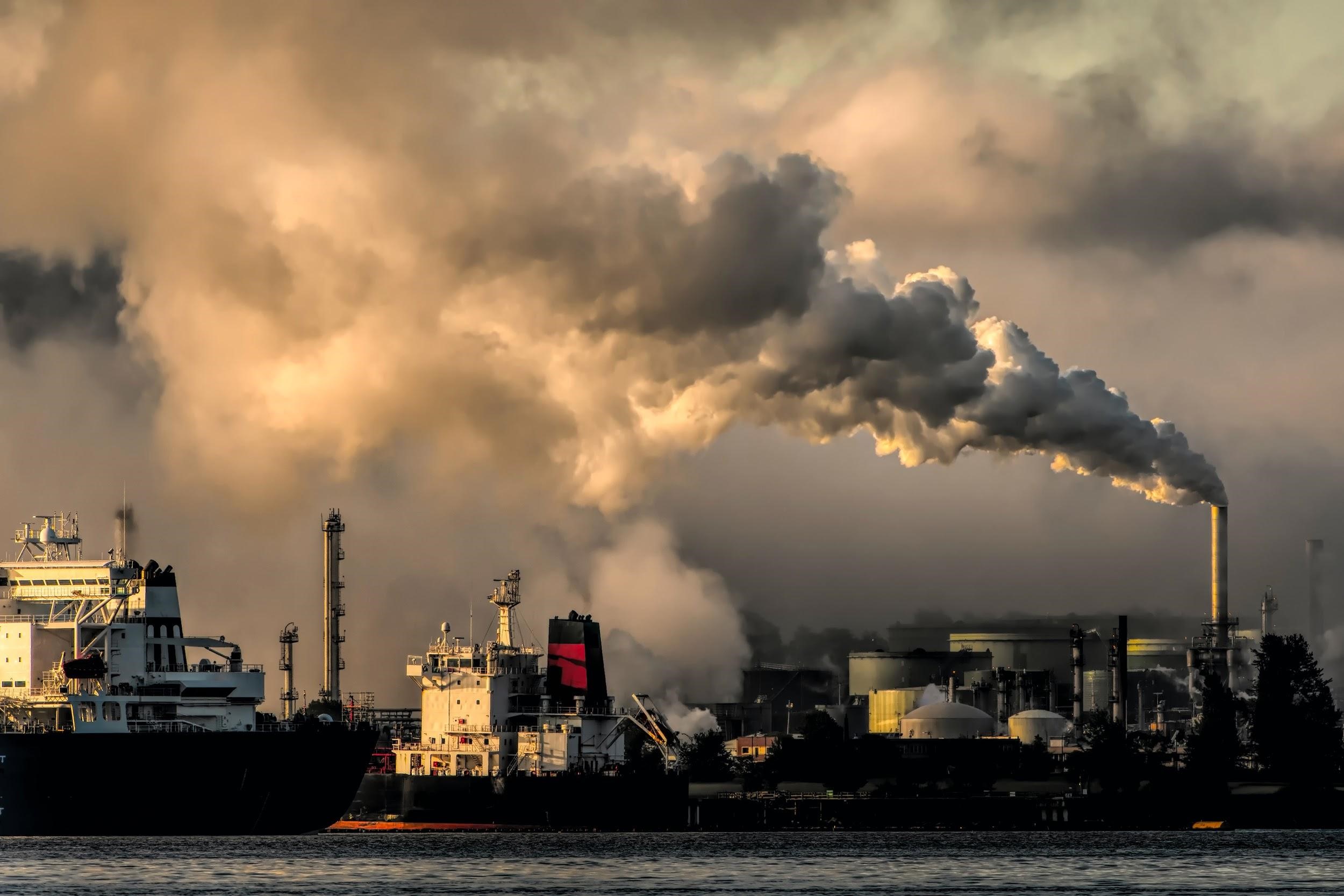
One of the prominent reasons of climate modification in Earth’s environment due to differences in greenhouse gases, aerosols, and fog. The main greenhouse gases, for example, carbon dioxide (CO2), methane (CH4), nitrous oxide (N2O), and halocarbons, are the outcome of human actions, and they collect in the atmosphere, and the specialty improvements with time.
The main reasons of the boost in CO2 are the raised use of fossil fuel use in transportation, building heating and cooling, and the trade of cement and other goods.
Radiative Forcing
The energy equilibrium of the Earth-atmosphere network can be assessed established on radiative forcing, which is usually quantified as the percentage of energy shift per unit area of the earth as gauged at the top of the climate.
The system gives warmer when radiative forcing is favorable; for negative radiative forcing, the energy will eventually reduce, directing to a cooling system.
The major reasons of forcing include rises in greenhouse gases; tropospheric ozone growths contributing to warming; stratospheric ozone reduces participating to cooling; the impact of aerosol fractions through reflection and absorption procedures; the nature of land cover around the globe principally through modifications in croplands, grasses, and woodlands.
________________________________________________________________________
Read Also : Immune System and its link with Eating Healthy and Organic Food
_________________________________________________________________________
Natural Processes
The human effect on climate during this era vastly outperforms that due to known differences in natural procedures, such as solar modifications and volcanic outbreaks. The obliquity or tilt of the Earth’s axis (which influences the measurement of insolation in area and time, the precession of the equinoxes, and the Earth’s eccentricity’s orbit around the Sun. The other normal procedures are volcanic outbreaks that disclose vast quantities of gases by decreasing solar radiation attaining the Earth’s surface, shorter temperatures. They alter atmospheric circulation habits, whereas tectonic activities produce both atmospheric circulation modifications and greenhouse feedback, directly or indirectly.
IMPACTS OF CLIMATE CHANGE ON WATER RESOURCES
Runoff
Current statements and climate predictions indicate that one of the most substantial effects of climate modification will likely be on the hydrological network and, hence, on river flows and local water resources. Variability in climate reasons flooding habits in space and time. During the twentieth century, various studies examined potential directions in quantities of river release at different spatial scales, some detected substantial trends in several pointers of flow, and some indicated statistically considerable links with directions in temperature or precipitation.
Floods
Floods cause substantial harm to the economies of pretentious areas. This is supposed to be one of the commonly occurring natural dangers around many fractions of the world due to the effect of climate modification. The reasons of flooding are many and encompass heavy rain, torrential rain, and snowmelt; their spatial areas since 1985. Serious floods from high rain (of lengthy or short period) have happened in almost all humid provinces of the world and some semiarid zones. The common reason of flooding in India is the significant consequence of monsoonal rain, which results in levy breaks. Serious rainfall of long period provoked severe flooding in five nations of central and Eastern Europe in August 2002.
Drought
Of twentieth-century natural dangers, droughts have remembered the most substantial detrimental consequence. Large-scale intensive droughts have been examined on all mainlands in current decades, influencing large regions in Europe, Africa, Asia, Australia, South America, Central America, and North America. The effects of droughts in the USA has boosted considerably with the raised number of droughts or boost in their harshness. Periodic serious droughts during 1997, 1999, and 2002 in many Northern China regions caused substantial economic and societal casualties.
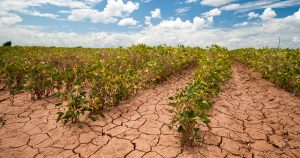
The serious drought of 1997 in Northern China resulted in 226 days with no streamflow in the Yellow River, which is the most extensive drying-up period on record. There has also been a raised risk of droughts since the late 1970s as global warming progresses and generates both elevated temperatures and boosts drying.
Snowmelt and Glacier Melt
Many main river networks worldwide are fed by snowpack and melting glaciers, and global warming is inclined to have a noticeable consequence on snowmelt and correlated runoff.
Glaciers are susceptible to every hydrological variable, encompassing precipitation, humidity, and wind speed, but mostly to temperature, and hence are a good pointer of global warming. There is obvious indication of glacier retreat on every continent, with global warming having an Apparent impact.
High-latitude and high-altitude rivers may encounter a boost in release despite a reduction in precipitation occurring from the melting of glaciers. The difference in volume and release timing may result in substantial fluvial geomorphological modifications in rivers, encompassing channel growth and incision, higher sinuosity, boosted bank erosion, and rapidly channel migration.
Water Quality

There has been a boost in temperature as examined in the past century, and climate modification criteria also indicate boosting climates.
Warmer temperatures can influence water quality in various ways, encompassing reduced dissolved oxygen degrees, boosted contaminant load to water bodies, decreased stream and river flows, improved algal blooms, and a raised likelihood of saltwater intrusion near coastal areas.
Acid rain is one of the main justifications for reducing water quality, and the principal reason of this is sulphuric.
Nitrogen merges from human activities and deviations in streamflow factors will alter chemical burdens in rivers. Due to low flows in rivers, the dilution procedure between water and waste will be influenced, enhancing the mineralization of organic nitrogen in the soil.
Read Also : Smart Farming: The Future of Agriculture
Groundwater
Global warming will likely influence groundwater resources by modifying precipitation and temperature patterns, which will likely be further worsened by overexploitation.
Groundwater recharge is influenced by land-use and land-cover change, urbanization, loss in forest cover, differences in cropping habits and rotation, and differences in soil properties happening over a long period that may encompass infiltration ability.
Still, growing pressure will be the substantial characteristic of concern for the aquifer.
Water resources are crucial to both community and ecosystems. We rely on a reliable, clean allowance of drinking water to maintain our fitness. We also expect water for agriculture, energy creation, navigation, recreation, and manufacturing.
Many of these aims put pressure on water resources, demands that are likely to be worsened by climate change. Climate difference is wanted to increase water demand while shrinking water supplies.
This changeable balance would question water administrators to simultaneously meet the desires of accumulating populations, susceptible ecosystems, agriculturist, ranchers, energy builders, and manufacturers.
Tags: #Causes, #climate, #climatechange, #food, #getgreengetgrowing, #gngagritech, #GreenhouseGases, #greenstories, #Radiativeforcing, #water, #WaterPollution, #waterresources




After study a few of the blog posts on your website now, and I truly like your way of blogging. I bookmarked it to my bookmark website list and will be checking back soon. Pls check out my web site as well and let me know what you think.