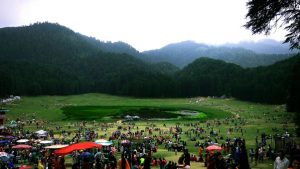
The Himalayas are one of the youngest mountainous system of not only that of India
rather in the whole world. It’s not only a mountainous system but a unique gift
bestowed upon by mother nature, the health of which affects, the lives of fifty percent
population of the world.
_______________________________________________________________________
Read Also: Organic vs. Regular Milk: What’s the Difference?
________________________________________________________________________
The Sanskrit text identifies the Himalayas by various names,Himgiri, Himvan, Himadari, and Himachal. The Himalayas have five natural divisions, Nepal, Karmachal, Kedar, Jallandhar, and Kashmir.
Himachal Pradesh takes its name from the Himalayas. In the north, it is bounded by
Kashmir the valley of saffron, in the southeast by UP the land of Ganges, in the
south by Haryana the plains of Kurukshetra of Mahabharata, in the west by Punjab
the granary of India, while in the northeast it forms India’s frontier with Tibet the land
of lamas.
_______________________________________________________________________
Read Also : 8 Nutrients and 16 Foods to Boost Your Mood — What to Eat to…
________________________________________________________________________
Himachal was named by Acharya Diwakar Dutt Sharma, who was one of
the greatest Sanskrit scholars. The word Himachal translates to “IN THE LAP OF
HIMALAYAS” which could be identified with Jalandhar Khanda Of the Purans.
Himachal dates back to the period of Indus Valley Civilisation which flourished about
4000 years ago.
Himachal is situated in the heart of the western Himalayas. The shadowy valleys,
rugged crags, gigantic glaciers, and great pines, roaring rivers, and exquisite flora
and fauna compose the symphony that is for Himachal. Out of the total geographic
area of 55673 sq. km, 9.79 lakh hectares is owned by 9.14 lakh farmers. The
marginal and small farmers possess 86.4% of the total landholding. Himachal has
five soil zones. First, low hill type which is suitable for wheat, maize, sugarcane,
ginger, paddy, and citrus fruit.
The second is the mid-hill type which is suitable for potatoes, fruits, wheat, and maize. The third is the high hill type which is suitable for seed potatoes and temporary fruits. Fourth is mountainous soil which is not suitable for agriculture. Last is dry hill soil with heavy snowfall suited to dry fruit cultivation. Himachal has vast deposits of minerals like gypsum, limestone, iron ore, mica, and copper.
Forest Survey of India defined the forest cover of Himachal as about 66.52% (37033
sq. km.) of the total state, and a forest cover of only 27.22% (15435sq.kms), report
released on 29th January 2020. To prevent soil erosion, land degradation, and to
ensure the stability of fragile Himalayas, Himachal Pradesh has to maintain a two-
third area under forest cover. In addition to it, the region is facing frequent
occurrences of forest fires that directly affect forest strata, causing soil erosion,
bringing variation in temperature, triggering climatic changes, and also affecting
wildlife finally causing other serious environmental impacts.
Himachal is home to 33 wildlife sanctuaries and two national parks. The animal
symbol of HP is Snow Leopard and the bird symbol is Western Tragopan. The flower
symbol is Pink Rhododendron and the tree symbol is Himalayan Cedar. Kalka
Shimla railway traverses the steepest slope over 5800 ft. The train crosses over 800
bridges and 100 tunnels during a distance of 95 km. Followed by Kerala, HP is the
least corrupt state. HP is home to 17000 educational institutes. HP has the largest
Glacier in Asia. SHIGRI glacier is located in the Lahaul Spiti area and feeds the
Chenab river. At 22360 ft. above sea level, REO PURGYIL is the highest mountain
peak in HP. Built in 1891, the Chail cricket ground located 8018 ft. above sea level is
the highest in the world. There is an endless list of unique features of this
climatically, socially, and culturally rich state.
_______________________________________________________________________
Read Also : Switching to a plant-based diet? Keep an eye on your micronutrients
________________________________________________________________________
But there’s a deep impact on the climate of Himachal Pradesh, because of
unhindered unplanned development activities. The immediate repercussion of
climate change on the forests are visible in the form of shifting of the tree line to
higher altitudes. By 2100 the temperature of Himachal will increase by 3”C, which in
turn will reduce the precipitation by 20% affecting the rainfall.
Any change in temperature or rainfall pattern will adversely affect the entire ecosystem. Observed impacts of historical trends include movement of apple orchards to higher altitudes, loss of certain tree species, drying of traditional water resources, reduction in crop yields, and increased vulnerability of winter cropping due to changes in rainfall
patterns.
The districts of Hamirpur, Una, Solan, Bilaspur, and Sirmaur have been
categorized as highly exposed and vulnerable to climate change. Whereas Kullu and
Shimla are a little less vulnerable to climate change in comparison to these districts.
We need to be very sensitive to climate change happening in our hilly states. Hilly
States are the Head to the body of our country India.