Climate change exhibits its impacts with a wide and indiscriminate reach, affecting communities, ecosystems and economies across the globe. Yet, amid this vast canvas of change, the brush strokes of its effects paint a picture of disproportionality, with marginalised communities — often least responsible for the emissions driving this crisis — bearing a heavier burden.
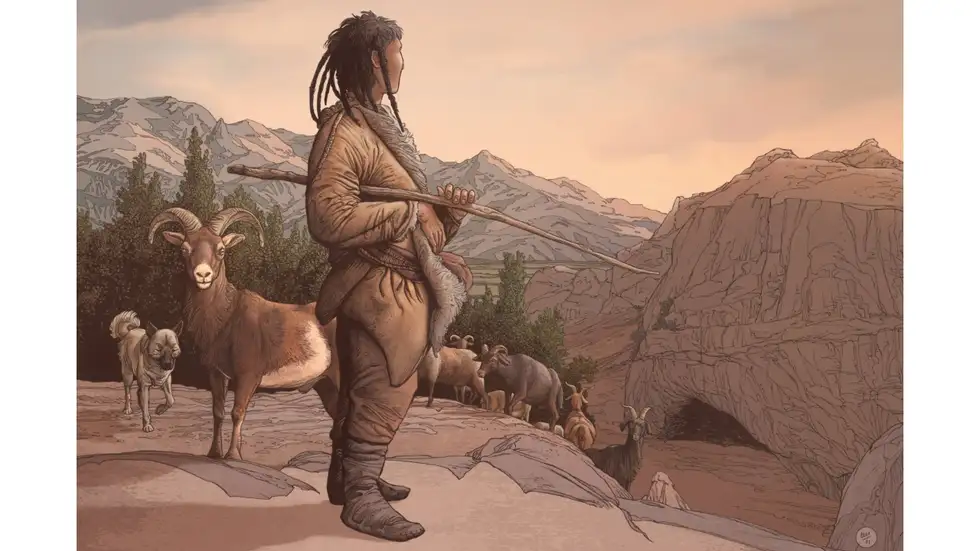
Intriguingly, recent research by Ralph Großmann and colleagues from Kiel University has shown that this partiality of climate change is a tale that stretches back thousands of years. Their study suggests that climate change has influenced the fluctuations in human populations and social equality since the Neolithic and Bronze Ages.
________________________________________________________________________
Read Also : Is it possible to prevent Global Warming?
________________________________________________________________________
To explore these historical connections, the researchers embarked on an expedition through rich archaeological remains and geological climate data from Central European regions. They focused their attention on three areas: the Circumharz region in central Germany, the Czech Republic/Lower Austria region, and the Northern Alpine Foreland of southern Germany.
Their toolkit comprised over 3,400 published radiocarbon dates from archaeological sites in these regions, acting as indicators of ancient populations. The underlying premise is that larger populations leave more materials and, consequently, more radiocarbon dates.
In parallel, climate data was gathered from cave formations in these regions, providing valuable insights into past climate conditions. This dataset spans from 3550 to 1550 BC, encompassing the transition from the Late Neolithic to the Early Bronze Age.
________________________________________________________________________
Read Also : WEIGHT LOSS: 7 NEGATIVE CALORIE FOODS YOU CAN ADD TO YOUR DIET
________________________________________________________________________
The study unveiled a compelling correlation between climate and human populations. During warm and wet periods, populations tended to surge, likely driven by improved crops and economic opportunities. Conversely, during cold and dry periods, populations often dwindled.
Remarkably, the colder periods also witnessed significant cultural shifts, hinting at increased social inequality. Notably, the emergence of high-status “princely burials” for select individuals in the Circumharz region points to growing disparities during these colder epochs.
These findings underscore that climate change has played a substantial role in shaping human population trends and social structures over time. However, the authors acknowledge that these insights are subject to potential biases arising from limitations in the archaeological record in these regions. Consequently, further data collection and analysis will be essential to strengthen these conclusions.
________________________________________________________________________
Read Also : 7-DAY WEIGHT-LOSS MEAL PLAN FOR INSULIN RESISTANCE, CREATED BY A DIETITIAN
________________________________________________________________________
This research not only delves into our historical past, but also emphasises the pressing need to understand the intricate relationship between human societies and their environments, particularly in the context of the ever-evolving landscape of climate change.
NOTE – This article was originally published in weather and can be viewed here
Tags: #climate, #climatechange, #climatecrisis, #climaterisk, #environment, #getgreengetgrowing, #gngagritech, #greenstories, #human, #nature