In 1994, palaeontologists from Harvard University dug out a pair of well-preserved skulls in Jameson Land, East Greenland. But, would you believe that it took nearly three decades for palaeontologists to figure out that this was a hitherto unknown species of dinosaur.
________________________________________________________________________
Read Also : Climate Change and how can YOU fix it
________________________________________________________________________
The researchers initially thought that the skulls belonged to the Plateosaurus, an already known species of dinosaurs that roamed Germany, France, and Switzerland during the Triassic Period. But recently, these fossils were reanalysed by an international team of researchers from Portugal, Denmark, and Germany, led by Martin Luther University Halle-Wittenberg (MLU). A detailed examination of the skulls—one of a juvenile and the other of a late-stage juvenile or sub-adult—was followed by comparisons with other recent fossil discoveries.
To their surprise, researchers discovered that this was an entirely new species—an addition to the Late Triassic dinosaur family tree.
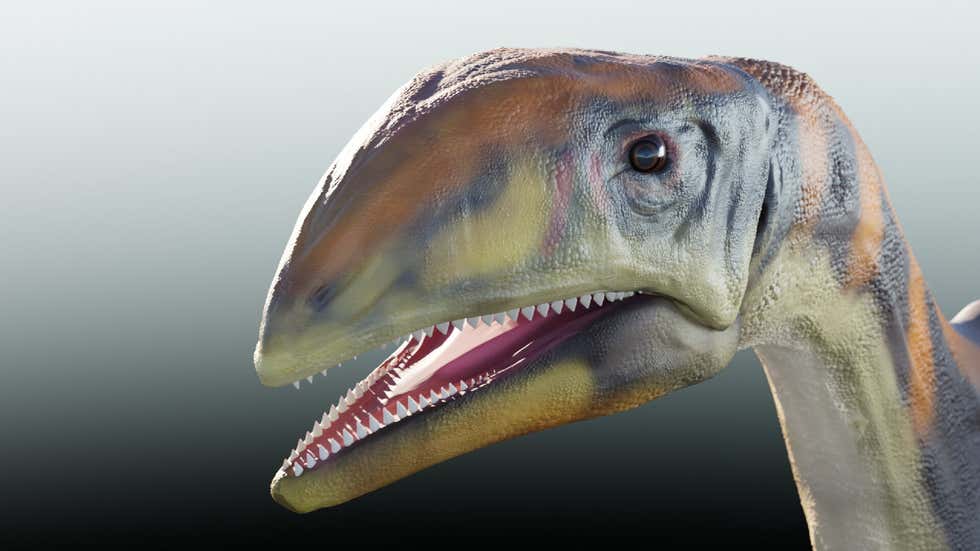
The creature, named Issi saaneq (comes from the Inuit language of Greenland and means “cold bone”), was a two-legged, vegetarian dinosaur that lived around 214 million years ago. Cold bone was medium-sized with a long neck and a predecessor of the sauropods, the world’s largest-known terrestrial mammals.
________________________________________________________________________
Read Also : What Should the SEC Require in Climate Change Disclosures?
________________________________________________________________________
“The anatomy of the two skulls is unique in many respects, for example, in the shape and proportions of the bones. These specimens certainly belong to a new species,” says lead author Victor Beccari, who carried out the analyses at NOVA University Lisbon.
Nearly complete skeletons and extensive trackways have been discovered in Jameson Land, East Greenland before. But only a handful of their bones have been processed and have never been thoroughly described. This new revelation shed light on the immense possibilities that the fossils from the region might be hiding.
Researchers suggest that cold bone likely lived when the supercontinent Pangaea broke apart and the Atlantic Ocean began forming. As a result, Greenland served as a transitional environment between Pangea’s arid interior and its humid periphery. East Greenland’s fauna was rich at the time, including huge fishes, amphibians, phytosaurs, pterosaurs, and some of the first dinosaurs.
“At the time, the Earth was experiencing climate changes that enabled the first plant-eating dinosaurs to reach Europe and beyond,” explained Professor Lars Clemmensen from the University of Copenhagen.
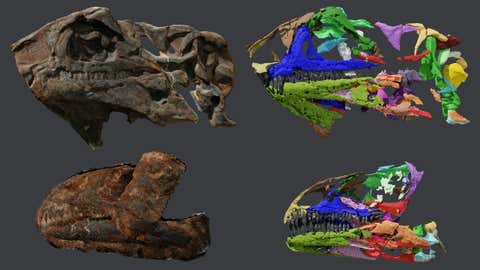
(Victor Beccari)
While the exact size of the Issi saaneq is still up for debate, if it were anything like other plateosaurids, it would’ve spanned a length of an estimated 3-10 metres (up to almost 33 feet). The researchers used a micro-CT (Micro-Computed Tomography) scan, which is a type of X-ray technique, for the bones to build digital 3D reconstructions of the internal components and the bones that were still coated in sediment.
________________________________________________________________________
Read Also : How Climate Change Is Fueling Extreme Weather
________________________________________________________________________
Cold Bone has several characteristics that set it apart from any other sauropodomorphs (long-necked, herbivorous dinosaurs) reported thus far. Still, it must’ve been similar to Plateosaurus, as well as the Macrocollum and Unaysaurus, two closely related species found in modern-day Brazil that are almost 15 million years older. These dinosaurs, together with the European Plateosaurus and Cold Bone, make up the plateosaurid sauropodomorph clade.
Another fascinating aspect of this discovery is that the sauropodomorphs were the forerunners of the sauropods, the largest animals to ever walk the face of the Earth—making it an essential piece of the evolutionary puzzle.