Sixty years of data from more than 80,000 wild great tits in the UK reveal a troubling pattern: cold snaps and heavy rain can stunt nestling growth and slash their odds of surviving to adulthood. The culprit, researchers say, is a changing climate that is making extreme weather events both more frequent and more severe.

The findings, published March 11 in Global Change Biology by scientists at the University of Oxford, draw on records from Wytham Woods in Oxfordshire, one of the longest-running wildlife monitoring programs in the world. By pairing individual bird data with detailed daily weather records across six decades, the team was able to isolate precisely when extreme weather hits hardest during a nestling’s brief but critical development window.
What makes the study particularly significant is its scale. With over 83,000 individual observations spanning 60 breeding seasons, researchers could detect effects that shorter studies would almost certainly miss, including rare, unpredictable events that are notoriously difficult to analyze with statistical confidence.
Cold Snaps and Heavy Rain Are the Most Damaging Threats
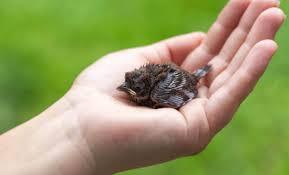
The research pinpoints two weather extremes as especially damaging, and their timing matters enormously. According to the study, extreme cold during the first week after hatching is particularly detrimental, a period when chicks have no feathers and cannot yet regulate their own body temperature. Rather than converting food into growth, hatchlings in a cold snap must burn energy simply staying warm, often falling behind in body mass in ways that can never be fully recovered.
As nestlings age into their second week, heavy rainfall becomes the more pressing danger. Extreme precipitation doesn’t just chill birds, it actively reduces the food supply. Rain knocks caterpillars off vegetation, the primary prey great tit parents bring back to the nest, while simultaneously discouraging adults from foraging at all. The study found that both cold and rain extremes can reduce fledging mass, the body weight at which a bird leaves the nest, by as much as 3%.

That number might seem modest, but lead researcher Devi Satarkar of Oxford’s Department of Biology emphasizes its downstream consequences: “Even small early-life deficits can have large implications for survival. It will only get tougher for birds to keep up as extreme weather increases in frequency and intensity with climate change.“
The Worst Outcomes Happen When Extremes Combine
If cold or rain alone can trim fledging mass by 3%, the interaction of multiple weather extremes is far more severe. According to the study’s findings, when extreme heat and heavy rainfall occur simultaneously during early development, fledging mass can drop by as much as 27%, particularly for broods that hatched later in the breeding season.
That figure, a predicted reduction of more than 3 standard deviations in body mass, represents a genuinely alarming compounding effect. The researchers suggest the mechanism involves hatchlings’ limited ability to thermoregulate being pushed beyond its breaking point when both high humidity and heat stress coincide with reduced prey availability caused by rainfall. Conditions like these, the study notes, can also favor nest-dwelling ectoparasites, though warmer nest microclimates may partially offset that risk by desiccating parasites and their larvae.

Late-season broods bear a disproportionate share of this burden. The data show that nestlings from clutches laid relatively late in the season exposed to six consecutive days of extreme heat during the hatchling phase were predicted to fledge at weights more than 4 standard deviations lighter than those from early clutches, despite experiencing nearly identical absolute temperatures of around 16–17°C. The difference, researchers explain, comes down to resource availability and seasonal timing, not temperature alone.
________________________________________________________________________
Breeding Early Offers Protection, But Not a Guarantee
One of the study’s more nuanced findings is that birds which begin breeding earlier in the season appear substantially buffered against many of these weather-related harms. According to the researchers, earlier broods benefit from peak caterpillar abundance, which supports better growth and gives parents more flexibility to time feeding with their nestlings’ peak energy demands. Early broods can even benefit slightly from warm extremes, experiencing moderate heat as a growth booster rather than a stressor, because insect activity rises and thermoregulatory costs fall.
Satarkar explains the tradeoff: “In the Wytham population, great tits have adjusted to warmer springs by breeding earlier to track peak abundance of their main prey, caterpillars. This overall earlier laying is beneficial, buffering them against many impacts of extreme weather — but it also exposes them to cold spells early in the season.”
That paradox sits at the heart of what makes these findings so important for conservation. The Wytham great tit population has already shifted toward earlier laying dates over recent decades, an adaptive response to warming springs. But that shift inadvertently increases exposure to cold extremes early in the breeding season, precisely the conditions the study identifies as most damaging to hatchlings.
Earlier breeding, in other words, is both a solution and a new source of vulnerability, a tension that researchers say underscores the urgent need for fine-scale habitat monitoring, targeted nestbox placement, and adaptive woodland management as extreme weather events continue to intensify.
NOTE – This article was originally published in Indian Defence Review and can be viewed here