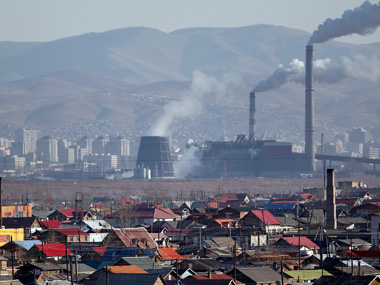
The humid heatwave in parts of Asia including India is at least 30 times more likely due to the deadly effects of climate change caused by human activity, according to rapid attribution analysis by an international team of leading climate scientists as part of the World Weather Attribution group.
The study noted the record high temperatures experienced in the last two weeks of April 2023, in parts of India, Bangladesh, Thailand and Laos.
It pointed out that extreme humid heat in South and Southeast Asia in April 2023, largely driven by climate change, is detrimental to vulnerable and disadvantaged communities.
_______________________________________________________________________
________________________________________________________________________
Spotlight on heatwave in India
In India, several northern and eastern cities recorded maximum temperatures above 44°C on 18th of April.
On April 16 alone, at least 11 persons reportedly died of heat stroke while attending the Maharashtra Bhushan Award ceremony at Kharghar in Navi Mumbai, the Chief Minister’s Office had said.
The study said that in India and Bangladesh, such “humid heat event(s) could be expected every 1-2 years”.
India’s heatwave planning ‘most advanced’: Study
The study also highlighted a range of solutions to heat-related harms from the individual to the regional levels respectively.
_______________________________________________________________________
Read Also : How Indians consume, drives the business of rubbish
________________________________________________________________________
They are currently implemented as patchwork, to various degrees, across the countries studied, with India having the most advanced heatwave planning, it said.
“In fact, heat-related fatalities have decreased in regions where heat action plans have been in place, e.g. in the city of Ahmedabad and the region of Odisha in India,” the study said in its summary of findings.
It, however, added that these solutions are often out of reach for the most vulnerable people, and highlighted the need to improve vulnerability assessments and design interventions that account for group-specific needs.
_______________________________________________________________________
Read Also : Biomass Briquettes Market to Cross USD 700 Million With a CAGR of 7.4% by 2028 | BlueWeave Consulting
________________________________________________________________________
Heatwaves one of the deadliest disasters: Expert
According to Chandra Sekhar Bahinipati of Indian Institute of Technology (IIT), Tirupati, while the world has “recognised heat waves as one of the deadliest disasters”, there is a lack of knowledge with respect to who is vulnerable, loss and damage estimation, household coping mechanisms, and the most effective heat action plans.
“As it often happens, marginalised people are the worst affected. Many of them are still recovering from the pandemic, and from past heat waves and cyclones, which leaves them trapped in a vicious cycle. It is fundamental to implement mitigation and adaptation strategies to avoid visible and invisible loss and damage,” said Emmanuel Raju, Director of Copenhagen Centre for Disaster Research at the University of Copenhagen.
NOTE – This article was originally published in wionews and can be viewed here
Tags: #climate, #climatechange, #climatecrisis, #climaterisk, #climatescientists, #environment, #getgreengetgrowing, #gngagritech, #greenstories, #heatwavecrisis, #weather