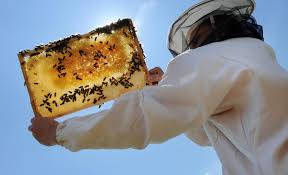
The project is aimed at improving awareness on habitats, diversity, population trends and behavioural traits of native bee species, NCBS said.

In an initiative to bridge knowledge gaps that impede the conservation of native bees, the museum facility at the National Centre for Biological Sciences (NCBS) in Bengaluru is putting together a collection of bees from different parts of India, primarily from biodiversity hotspots, including the Western Ghats and the north-eastern regions.
The project is aimed at improving awareness on habitats, diversity, population trends and behavioural traits of native bee species, NCBS said.
________________________________________________________________________
HM Yeshwanth, museum and collections in-charge, NCBS, said that specimens have been collected from different honey bee species, including the giant honey bees Apis dorsata, Apis laboriosa, Apis binghami and Apis breviligula. “Of the four, A. laboriosa is particularly a spectacular species, in large part because it usually nests on inaccessible cliff crevices in the Himalayas”, he said.
Three NCBS scientists — Axel Brockmann, Sanjay Sane and Krushnamegh Kunte — are part of a collaborative study by 74 scientists from 13 Asian countries and beyond that is preparing a road map to take research on the Asian bees forward.
The collection of Indian bees has, in addition to the honey bees, a unique collection of 1,200 bumble bee specimens belonging to 24 different species from north-east India, collected by Brockmann and his collaborators from Germany and the Rajiv Gandhi University in Arunachal Pradesh.
_______________________________________________________________________
Read Also : New species of African violets found in Mizoram
________________________________________________________________________
While scientific studies, along with conservation and management solutions, are being extensively explored to address the rapid global decline of insect pollinators, especially bees, most of these studies — carried out in North America and Europe — may not entirely represent bee population patterns in the rest of the world, NCBS said in a statement.
Bees pollinate nearly 35 per cent of the food crops, thus providing essential ecosystem services that are crucial for food security. Maintaining bee diversity is imperative to ensure sustainable development in the region, NCBS said.
NOTE – This article was originally published in deccanherald and can be viewed here
Tags: #Apisdorsata, #conservation, #crop, #food, #getgreengetgrowing, #gngagritech, #greenstories, #Museum, #NCBS, #scientists, #sustainable