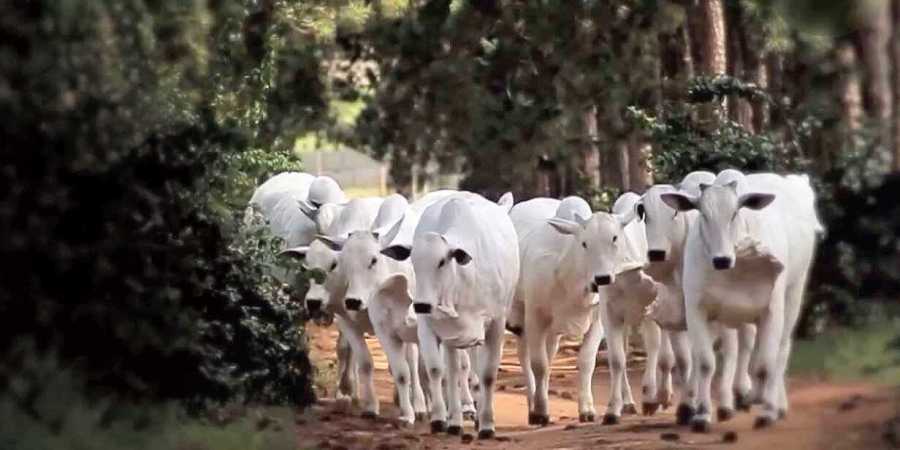
Image Source – The New Indian Express
India with its rich history and culture has traditionally given due importance to the cattle, not just as a feedstock, but as part of our overall way of life. Since ancient times, cows have a very important place in Hindu mythology and are considered to be a very sacred animal. As per the historical facts available in our scriptures, the cow has been the backbone of rural life for the last five thousand plus years.
________________________________________________________________________
Read Also : The U.S. Chicken Industry Must Stop Boiling Birds Alive
________________________________________________________________________
We can also say that it has been our way of life since the Vedic period. This was the time when social customs laid great emphasis on the protection, preservation, and development of cows. At that time, measuring social esteem and economic prosperity in the society was done based on the possession of the number of herds of cows.
The Rishis (ascetic) maintained an ashram along with GAUSHALA with hundreds of milking cows. Bigger gaushala or number of gaushalas where thousand of cows used to be kept, were called GOKULS. Gazing areas for cattle or grasslands were called GOCHAR BHUMI. Thus the entire culture of India was GO- SANSKRITI or CULTURE BASED ON COW.
This long-cherished spirit has ensured, that today India is home to the largest cattle pool in the world. Unfortunately, today cow shelter or goshala is considered to be confined to the sheltering of OLD, ABANDONED, UNPRODUCTIVE, INFERTILE, and INFIRM cows.
During the medieval period, the cow and its progeny were protected by rulers. Even during the Muslim regime, and particularly the Mughal period, right from Humayun to Shahjahan, there was a complete ban on the slaughter of cows.
The rich heritage of India which comprised the rural economy, rural craft, and Hindu culture, had been the way of life. Later on, it was completely damaged and decimated by the British. They were successful in developing and shift in the perception of cow, which has been our way of life, to be a cattle only.
________________________________________________________________________
Read Also : Air Purifying Plants – Natural Alternate to Expensive Air Purifiers,
________________________________________________________________________
After independence with the adoption of western culture and its deep and intense impact, the entire socio-economic and socio-cultural patterns of life were changed completely. Materialistic considerations became the sole basis of life, sacrificing the very roots of rural connection. With the augmentation of the Green Revolution, the situation further worsened, where mechanical and chemical inputs were introduced blindly and in a big way, cows were left to be meant only for milk, and later on, they became a burden on the farmer.
Although we still perceive cow to be a holy animal with religious zealots and ready to take on anyone harming the divine creature, the growing number of stray and abandoned cows is proving to be a bane for both, for we Indians and our bovine God’s. Fortunately, there is a ray of hope although very bleak, which has just started getting visible in the last few years. Because of the advancement of the concept of ORGANIC FARMING, the gaushalas are entering into a new phase.
People have started realizing the immense potential available in terms of biofertilizers, biopesticides, bioenergy, and other miscellaneous products made out of cow urine and dung. These products are not only environment friendly, rather have started creating a demand in the market and that too by the elite class. If this potential of bio-organic which is directly connected with the quality of life can be harnessed scientifically and systematically, gaushalas can be made self-sustainable.
There’s an immediate need to come out with an innovative, integrated, and holistic approach, where all the stakeholders from the public to the government, and social organizations to NGOs must work in tandem to make the existing 4000 gaushalas economically viable.
It is not only an accepted fact that the chemical fertilizers and pesticides have left adverse effects on the soil, but they are very harmful to human health also. The grave impact of this is visible in the form of an increase in cancer cases, heart disease, and other severe ailments.
Regular and excessive use of chemicals has led to a situation where land has started getting sick, become unproductive, and converting barren, because of the destruction of microbes, which only create life in the soil. It is only the organic manure which helps in the plant nutrition and reproduction of microbes. With the help of organic manure, the soil becomes porous and more aeration makes it healthy.
Humus elements so vital for crops also increases with the regular use of organic manure. It also helps in fighting fungus, pests, and insects, etc., and cuts down the use of toxic chemicals that are present in everything that we eat today. It also adds fertility to the soil in a big way and improves the whole ecosystem affecting the quality of air in the sky, quality of water underneath the earth crest, and the quality of food that we eat.
Today it is being perceived that gaushalas which were opened, would take care of cows only, which had run out of their milking period. But it is not the right approach. We need to look at gaushalas on a bigger canvas of, what we used to see and nurture them in our ancient times. With the change of time, we too should go for an innovative approach and integrate it by using modern science and technology to induce efficiency.
There are only 1821 gaushalas across India, which are registered with the Animal Welfare Board Of India. Whereas, there are an estimated 5000 shelters across the country according to a survey done by the Federation Of Indian Animal Protection Organization. According to the last livestock census conducted in 2012, MP has 19.7 million cattle (cows and bulls), the most in any state of India. There’s one cow for every third person in MP. About 50% of the entire cattle population is in the non-breedable category and could be turned unproductive.
According to the latest figures, the number of unproductive cattle in UP is 5.29 million which has grown to 13.40 million in 2013. In Rajasthan, the cattle population is 13 million, the fifth-largest in the country. Haryana has 410, UP has 486, Gujrat has 667, MP has 1500 and Rajasthan has 1934 gaushalas. The above data are not confirmed. Out of all these cow shelters or gaushalas, most of them, except very few are run but shabbily. Most of these shelters are dependent on inadequate donations or government grants.
The outcome is, that they face a regular and acute shortage of resources. It leads to that cows are left to roam about freely on the roads of the cities and also have become a menace to the standing crops in the fields in rural areas. About 10% of the country’s livestock becomes unproductive every year.
There’s no food or shelter is available to more than seventy percent of the stray and abandoned cows. As per the data available, stray animals caused 1604 road accidents in 2016, leading to 629 human casualties. It is a common sight to have a group of cattle sitting right in the middle of the roads in the cities and the towns. In addition to it, in the present, it has become a religious issue also. What’s the solution then?
________________________________________________________________________
Read Also : Cows are Turning Desert Back Into Grassland by Grazing Like Bison
________________________________________________________________________
Like a nation or a state or a city which has its economy, villages or panchayat too can have their economy. Since our rural economy is still based on agriculture, an ecosystem can be developed and build around a single or series of gaushalas in the whole country. We can develop the most unproductive and barren land for the development of these gaushalas.
In addition to it, the most important need of the hour is shifting from crop culture to the animal culture in our rural areas especially for those who have very small landholdings. What is required, is to appreciate the economic potential available and the environmental sensitization we can develop and promote with the help of the process of cattle rearing in the country. India with its vast livestock and market demand for animal products has a lot of potential available.
There is a need to change the mindset of agriculture scientists from crop culture to sustainable animal culture, in rainfed areas of the country, where livestock contribution to the family income can be increased by more than 70% from current levels. There must be an emphasis on shifting crop dependence to animal husbandry as a major livelihood option. It depends on us, whether we make this livestock a liability or convert it into a long term and ever-growing asset. The choice is only ours.
Tags: #animals, #calf, #cattle, #cow, #cows, #cowsofinstagram, #farm, #farmlife, #getgreengetgrowing, #gngagritech, #greenstories, #love, #milk, #nature