“The least movement is of importance to all nature. The entire ocean is affected by a pebble.”
– Blaise Pascal
https://www.bmbf.de/en/deep-sea-mining-ecological-impacts-1431.html
The ocean floors have a wide range of minerals and deposits which we humans have a great need for. It is like a treasure trove of different metals down there. With the rise in population, we need to provide more resources, and the growing population needs more land to settle. We have already used up most of the resources that were already available to us from the Earth’s surface but it is still not enough. So we look to deep sea mining to provide for the people
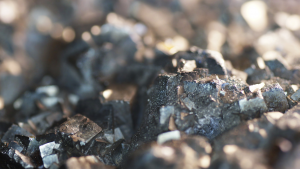
How did metals get under the sea in the first place? Under the sea is a vast collection of geological features. Many underwater volcano mountains, hydrothermal vents, and even trenches like the Mariana trench are found deep within the sea. These large features leave globular or massive sulfide deposits which contain these minerals.
Many minerals such as manganese, nickel, cobalt, and copper are held within the rock in the sea beds. In some of the areas under the ocean, there are massive sulfide deposits that can even contain valuable metals like gold and silver. The greed for these precious metals increases among the human population, so people considered themselves very lucky when they stumbled upon these areas in the sea.
One question arises- How is deep sea mining achieved? Obviously, it is too dangerous for humans to go that deep into the ocean because of pressure change. Technology helps us even in this area. Remotely Operated Vehicles (ROVs) were created to go deep into the sea and search for these minerals. First, these ROVs collect samples from various rocks to check if they are the metals we require. Once the mineral sample has been verified from a certain area, a mining station is set up to mine that area.
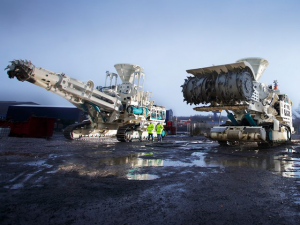
Once the metals have been verified, the next step is extraction. There are two main methods of extracting metals from the sea beds- Continuous-Line Bucket System (CLB) and Hydraulic Suction System. CLB is achieved by using conveyor belts that go from the mining station to the ocean floor bringing up the minerals to the station. Here, the desired minerals are extracted from the rocks, and the tailings are sent back into the sea through conveyor belts. In Hydraulic suction mining, the nodules containing the minerals are sent up to the mining stations through a pipe. The required minerals are again extracted from the ores and the tailings are sent back down through pipes.
Read Also : New coral species discovered on seabed marked for deep-sea mining
Despite our need for these minerals, deep sea mining has immense environmental impacts. Due to the increasing depletion of mineral resources on land, it has resulted in men turning their attention to the mineral deposits in the deep sea bed. Even though most of it was deep sea exploration after a particular point, exploration will definitely turn into exploitation if we do not keep our activities in check.

https://dsmobserver.com/2017/06/impacts-deep-ocean-mining/
The disturbance of the seafloor by machines is harmful and can destroy the deep sea habitats which lead to the loss of species and loss of ecosystem, structure, and function. Many endemic species (species pertaining to that particular area) living in the deep sea floor can be completely wiped out just by physical disturbances on the sea floor. This is one of the biggest printing impacts due to deep sea mining.
Deep sea mining can stir up fine sediments on the sea floor which consists of silt, clay, and the remains of microorganisms, creating plumes of suspended particles that can affect marine life by polluting the clear water needed for filter-feeding species like krill and whale Sharks.
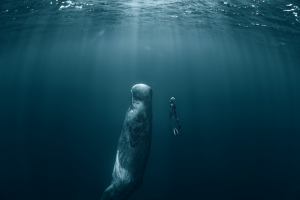
The noise, vibrations, and light pollution that are caused by mining equipment and surface vessels affect many species that are sensitive to sound like whales, tuna, and sharks. Potential leaks and spills of fuel and toxic products also contribute to pollution.
A proper understanding of the deep sea is needed to guide the strategies and regulating proper enforcement to ensure the protection of the deep sea. Comprehensive baseline studies to properly understand the species living in the deep sea and how they would be affected by the deep sea mining should be done along with frequent high-quality environmental assessments which are needed to assess the full range, extent, and situation of environmental damage due to the mining.
Enhanced regulation is done by the ISA who operates with the dual mandate of promoting the development of deep sea minerals whilst ensuring that this is not harmful to the environment.
Read Also : First-ever study of all Amazon greenhouse gases suggest the forest is worsening climate change
The deep sea is a fascinating and beautiful place that we do not know about enough to entirely appreciate or preserve the way it deserves to be. Man notoriously exploits the resources and blessings that nature has bestowed upon us and in continuing to do so without trying to preserve the environment we could lose it completely.
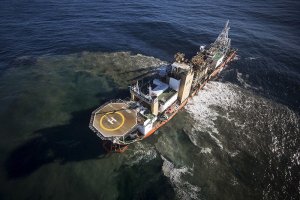
https://www.nature.com/articles/d41586-019-00757-y
Deep sea mining will not only disrupt marine life but also contributes to the growing pollution we are facing today. Therefore, it is our responsibility as human beings to take care of our environment and follow the regulations which enable us to properly take care of the resources that are provided in front of us. After all, having unlimited resources is not going to be of any use if there is no longer an environment safe enough for us to live in. So, we have to take everything into account before destroying our home.
“It is a curious situation that the sea, from which life first arose, should now be threatened by the activities of one form of that life. But the sea, though changed in a sinister way, will continue to exist: the threat is rather to life itself.”
– Rachel Carson
Tags: #bitcoin, #bitcoinmining, #blockchain, #btc, #construction, #crypto, #cryptocurrency, #ethereum, #getgreengetgrowing, #gngagritech, #greenstories, #heavyequipment, #mine, #miner, #mining, #miningengineering, #mininglife, #seamining, #tambang