Scientists discovered an ancient underwater volcano, once thought extinct, still erupting with heat—and covered in a million mysterious deep-sea eggs.

Deep beneath the Pacific Ocean, nearly a mile below the surface, an ancient volcano thought to be long extinct has revealed itself to be very much alive—and covered in up to a million giant eggs.
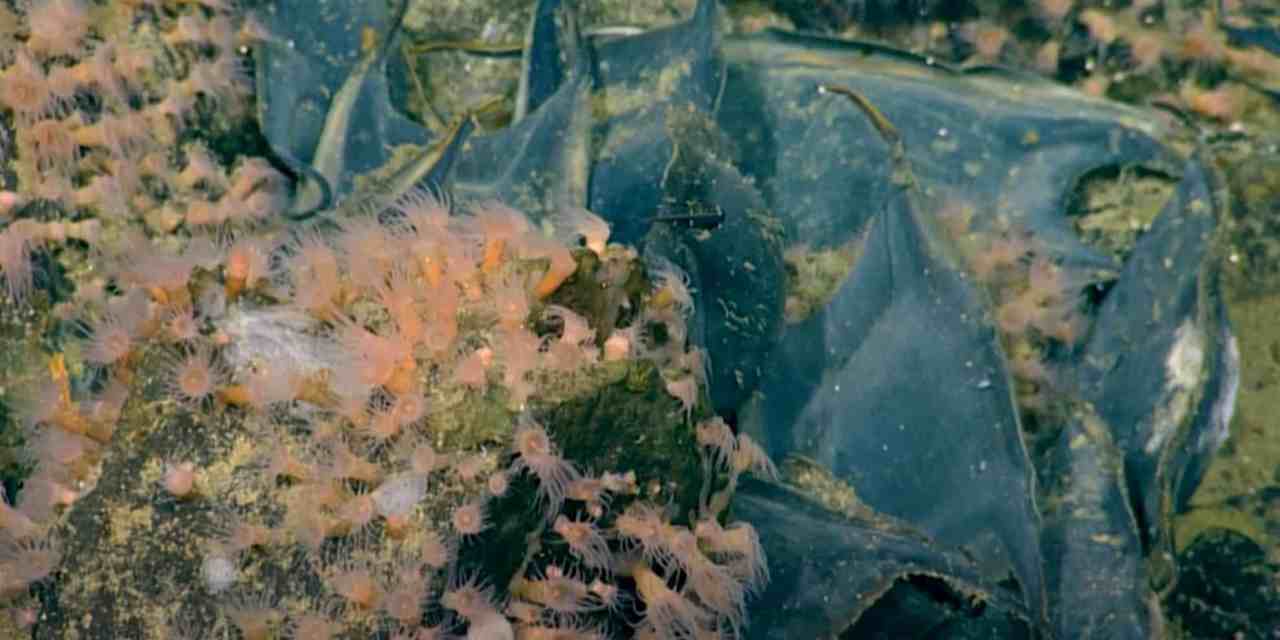
A recent expedition off the Pacific coast of Canada stunned scientists when they discovered hot fluid still spouting from the summit of this massive underwater seamount, a submerged mountain towering 3,600 feet (1,100 meters) above the seafloor. Even more astonishing, researchers found that this active geological hotspot has become an incubator for deep-sea life, with thousands upon thousands of Pacific white skate eggs scattered across its summit.
________________________________________________________________________
Also Read : Zero Budget Natural Farming: A Robust Policy That Needs Work
________________________________________________________________________
These bizarre, ravioli-shaped eggs, laid by a deep-dwelling relative of sharks and rays, are thought to be using the volcano’s heat to speed up development—a strategy that could mean the difference between survival and extinction in the frigid depths of the ocean.
A Volcano That Should Have Been Extinct
Before the expedition, scientists assumed the volcano was dormant. Cold, dark, and lifeless—that was the expectation for this isolated seamount. Instead, what they found was a thriving ecosystem, fueled by volcanic activity that no one knew still existed. The discovery, originally reported in Live Science, has reshaped how researchers view deep-sea volcanic environments.
“It’s a really special place on top of a really special place,” said Cherisse Du Preez, a deep-sea marine biologist with Fisheries and Oceans Canada and the principal investigator of the study.
The team used deep-sea submersibles and remotely operated vehicles (ROVs) to explore the summit, where they found warm, mineral-rich water seeping from cracks in the rock. These hydrothermal flows create an environment that supports life in an otherwise uninhabitable region, acting as an oasis in the deep sea.
The discovery raises major questions about how many other “extinct” underwater volcanoes might still be secretly active, shaping deep-sea ecosystems in ways previously unknown.
________________________________________________________________________
Also Read : This Farmer Won the Padmashri for His Zero Budget Natural Farming Model
________________________________________________________________________
A Hidden Nursery for Deep-Sea Predators
The expedition’s biggest surprise wasn’t just that the volcano was still active—but that it was covered in eggs. Thousands upon thousands of Pacific white skate embryos were spread across the summit, a scene unlike anything ever recorded in the region.
“I’d estimate the summit of the seamount, which was covered in eggs, had—I don’t know—100,000? A million?” Du Preez speculated.
This deep-sea skate species (Bathyraja spinosissima) is one of the most elusive in the world. Found between 2,600 and 9,500 feet (800 to 2,900 meters) deep, these relatives of sharks lay large, rectangular eggs known as “mermaid purses”, which take an astonishing four years to hatch.
________________________________________________________________________
Read Also :Melting glaciers, rising seas: Approaching climate tipping points
For a species with such a long incubation period, the warmth of hydrothermal vents could be a crucial advantage. In 2018, a similar discovery was made near the Galápagos Islands, where scientists found skate eggs clustered near hydrothermal vents. This new finding reinforces the idea that these deep-sea predators have adapted to use volcanic heat as a natural incubator, giving their offspring a better chance at survival in the freezing abyss.
“The warm water likely speeds up the gestation period of the eggs, resulting in more successful juveniles,” Du Preez explained. “The shallow summit of the seamount is almost a coral garden and a safe nursery for juveniles to grow before they descend to the deep—it’s a win-win.”
NOTE – This article was originally published in indiandefencereview and can be viewed here
Tags: #climate, #climatecrisis, #discovered, #environments, #getgreengetgrowing, #gngagritech, #greenstories, #MysteriousEggs, #oceans, #pacificocean, #scientists, #sea, #underwater, #volcano